
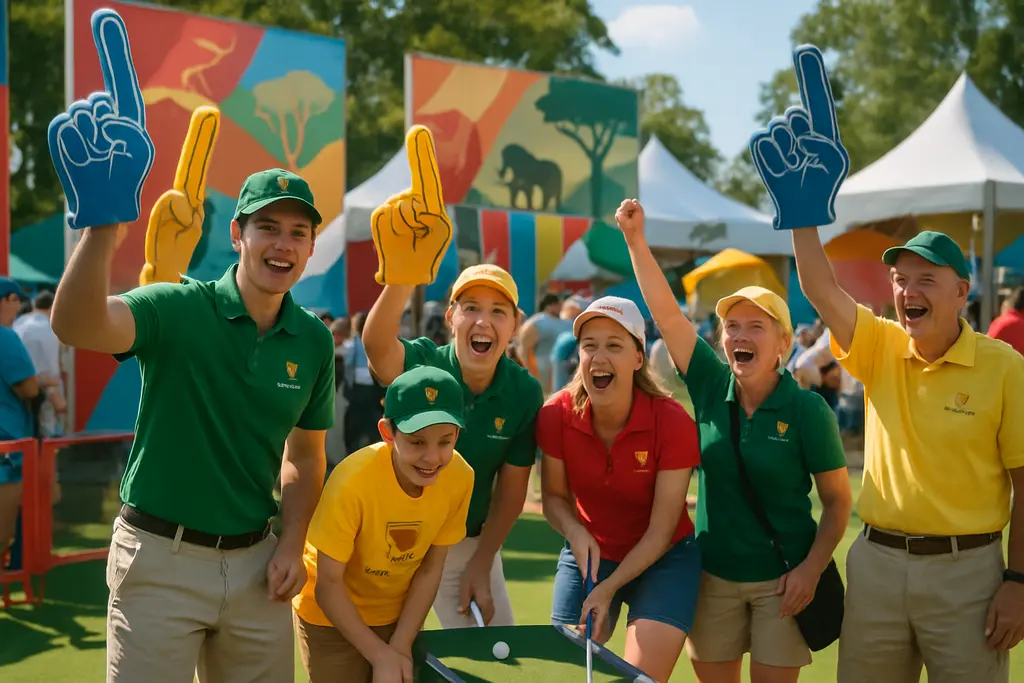
The Presidents Cup fan experience at Medinah Country Club is scheduled to open on September 22, 2026, with the event running through September 27, 2026, in the Chicago area. As of September 21, 2026, the event had not yet begun, so any evaluation of the fan plan has to be based on announced features rather than crowd-flow results or attendee feedback.
The most useful way to assess the plan is not as a collection of perks, but as an operational model. The tournament is trying to solve familiar golf-event problems: limited sightlines, long walks between groups, pressure around first-tee ceremonies, food access, phone battery drain, and the difficulty of understanding match status across a large property. Those issues matter because the Presidents Cup format can create fast swings in momentum, and spectators who cannot track those shifts are more likely to miss the moments that define a session.
What Defines The Presidents Cup Fan Experience
The announced changes at Medinah point to a more structured spectator environment than a traditional walk-the-course setup. That does not mean every fan will have the same day. Golf remains spread across acres, weather can change crowd behavior, and high-demand viewing areas can fill early. Still, the planning emphasis is clear: concentrate energy around signature spots, reduce uncertainty through digital tools, and use Chicago identity as part of the event presentation.
Presidents Cup Fan Experience And First Tee Access
One of the most direct upgrades is at the 1st Tee. The tournament announced that the Opening Circle will include a stadium arena-style grandstand with seating for up to 3,000 spectators, with free RFID wristbands used to secure daily seats on a first-come, first-served basis, according to the Presidents Cup announcement. For a team event built around introductions, pairings, crowd noise, and national-team rhythm, that seating decision has real sporting context.
From a scouting and event-analysis view, the first tee is not just a ceremonial site. It is where early pressure becomes visible. A larger grandstand can help more spectators observe body language, pre-shot routines, and the reaction of teammates and captains before matches begin. The wristband system also creates a defined access process, though its success will depend on communication, queue management, and how quickly filled seats turn over across different sessions.
Course Routing And Match Visibility
The redesigned routing on Medinah’s Course No. 3 is another major piece. The research notes show that member hole 5 becomes Presidents Cup No. 1, member 18 becomes No. 14, member 1 becomes No. 15, and member 2 becomes No. 16. The stated purpose is to make the finishing stretch more central, especially because historically fewer than 40 percent of matches reach hole 17.
That statistic gives the routing decision a strong competitive rationale. In match play, late holes can be irrelevant if a contest ends early, so the practical question is where the most decisive shots are likely to happen. By moving important holes into positions that more matches should reach, organizers are trying to align spectator access with competitive probability. The Presidents Cup fan experience will be judged partly on whether that change puts more fans near meaningful pressure moments, rather than spreading them toward holes that may never be played in many matches.
Chicago Identity Across The Grounds
Medinah is not in downtown Chicago, but the tournament has leaned into Chicago references through its announced fan-zone plan. Five neighborhood-inspired zones are set for the course: The Loop, Southside, West Town, Lakeview, and Northside. Each is tied to food and beverage offerings intended to reflect those parts of the city.
Neighborhood Fan Zones And Food
The food program is one of the clearest efforts to make the venue feel tied to its host market. The research notes list at least nine Lettuce Entertain You Restaurants in the culinary offering, including RPM Seafood, Sushi-san, and Summer House. Local names such as Billy Goat Tavern and Sweet Baby Ray’s are also part of the plan, along with specialty drink locations including Buffalo Trace Bourbon and Hendrick’s Gin Bar.
That approach has two potential benefits. First, it can spread crowds by giving fans reasons to stop in several areas rather than concentrating only near marquee holes. Second, it gives out-of-market visitors a defined sense of place without asking them to leave the course. The caution is that restaurant branding does not automatically solve service speed, line length, or seating availability. Those are execution questions that can only be fairly assessed once tournament traffic begins on September 22, 2026.
Hospitality Signals For Different Fans
The tournament’s access model also includes several tiers. General parking passes are listed in the research at $17 plus fees, with three lots requiring shuttle rides of roughly 10 to 20 minutes to the West Entrance. The passes must be purchased in advance and are not available on site. Premium venues include the Captains’ Club, with 360-degree views of holes 3 through 5 and upgraded food and beverage, and the International Club, with local and international cuisine plus elevated views of holes 9 through 12.
That split reflects a common structure at major golf events: baseline access for grounds spectators, then paid hospitality designed around fixed sightlines and lower-friction service. From an analyst’s view, the most relevant question is not whether premium spaces exist, but whether the public areas remain functional. A strong Presidents Cup fan experience requires the general spectator to track matches, find services, and reach viewing points without feeling detached from the competition.
Technology, Access And On-Course Movement
The digital layer at Medinah is designed to reduce the uncertainty that often comes with following match play in person. A Smart Map in the official app is set to provide real-time player and match locations, plus turn-by-turn directions to fan zones, concessions, and 11 on-site local Chicago restaurant partners. Practice round tracking is also planned through the app.
Smart Map, Practice Tracking And Probability
For serious golf observers, the practice round tracker may be more useful than it first appears. Practice days can reveal who is spending extra time on specific holes, which pairings draw attention, and how players approach green complexes. That does not produce guaranteed performance signals, but it can help fans and analysts make better choices about where to stand.
The Live Probability feature is also notable. It is described as a tool showing match and tournament win probabilities shot by shot, based on statistical models using player history and course data. This should be treated as informational context, not a betting product or a substitute for watching shot quality. Match play can shift quickly because one conceded putt, one missed fairway, or one opponent’s error changes the state of a hole. If presented clearly, the tool can help spectators understand leverage points without reducing the event to numbers alone.
To explore further how event technology interacts with fan experiences, you might find insights at CAD/CAM Net, which is part of the same content network.
Amenities, Health And Accessibility
Several announced amenities address basic friction points. Complimentary Wi-Fi is planned throughout tournament grounds via the Credit Union 1 network. Portable phone chargers are set to be available free through PGA TOUR Pass at Information Tents. A Stanley 1913 engraving station next to the Fan Shop is also planned, with free customization available with Stanley 1913 drinkware purchases.
Health and accessibility planning is part of the same operational picture. UChicago Medicine AdventHealth is listed in the research as the Official Fan Health Care Provider, with four scattered first aid stations plus a central headquarters, a climate-controlled Family Care Suite, and 12 sunscreen dispensers across the course. ADA-compliant accommodations include accessible parking near shuttle and drop-off zones, ADA shuttle carts, reserved viewing platforms at public grandstands, and accessible restrooms in fan zones and spectator areas.
These details may not carry the same attention as the first tee or finishing stretch, but they affect the length and quality of a spectator’s day. Heat, phone battery, mobility, family care, and wayfinding all shape how long fans can stay engaged with the golf. The Presidents Cup fan experience is strongest if those support systems work quietly in the background.
Operational Questions For Medinah And The Presidents Cup
The most promising parts of the plan are also the areas that carry the most operational risk. A 3,000-seat first-tee grandstand can create a strong atmosphere, but it can also produce early crowd surges. RFID wristbands can make access clearer, but only if distribution points are visible and consistently managed. Fan zones can spread traffic, but food service has to match demand during session breaks and weather delays.
The course routing change has a similar balance. Bringing likely decision holes into a more central part of the property should improve viewing value. Yet golf crowds are fluid, and spectators often move toward recognizable player groups rather than ideal architectural viewing points. The Smart Map may help redirect fans, but app adoption, battery life, cellular performance, and Wi-Fi reliability will all influence its real effect.
There is also a sporting angle. Presidents Cup sessions can have different rhythms depending on format, pairings, and match score. A strong setup for four-ball may not feel identical during foursomes or singles. The tournament has addressed the big structural issues in advance, but the test will be how the system reacts once competitive pressure, crowd movement, and Chicago-area weather meet on the same property.
Medinah’s Presidents Cup Fan Experience Test
Medinah’s plan is ambitious without being easy to grade before the gates open. The available facts show a clear focus on first-tee atmosphere, match visibility, Chicago food identity, app-based movement, health services, and accessibility. Those are the correct areas for a modern international team golf event to target.
The cautious read is that design quality and delivery quality are separate. The Presidents Cup fan experience has strong announced components, but its true value will depend on crowd flow, service speed, technology reliability, and whether spectators can stay close to meaningful golf rather than spending too much time solving basic logistics. If those pieces hold from September 22 through September 27, 2026, Medinah could offer a useful case study in how match-play golf can be built around both competitive drama and fan movement.