
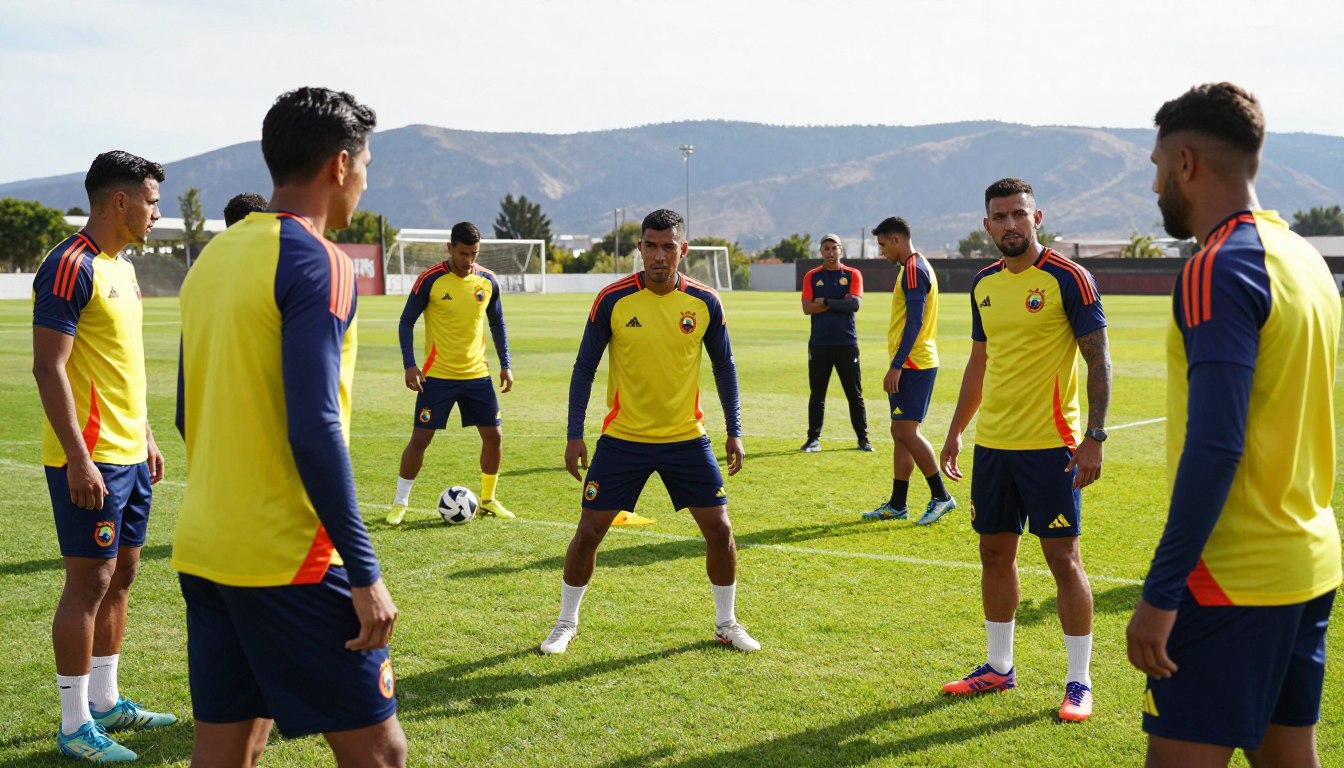
Bolívar’s next challenge is now defined. The Bolivian club will face Cruzeiro, LDU Quito and Olimpia in Group C of the CONMEBOL Libertadores Femenina 2026, following the September 14 draw in Luque, Paraguay. The tournament will take place in Ecuador from October 15 to 31, giving supporters a clear continental target after the team’s domestic title success. CONMEBOL’s confirmed tournament groups establish the opposition and the route into the quarterfinals.
For Bolivian football, the interesting question extends beyond whether the draw looks favorable. Bolívar must show which parts of its domestic performance can withstand a different competitive setting. Match management, defensive spacing and the quality of its attacking opportunities offer more useful starting points than judging opponents by their names alone.
The Domestic Final Offers Evidence, Not a Continental Forecast
Bolívar earned its first Bolivian women’s league championship on September 6, defeating Astor FC on penalties after a 1–1 draw at the Estadio IV Centenario in Tarija. Danelly Angulo opened the scoring in the fifth minute, and Jhenifer Cuba equalized late for Astor. EFE’s account of the national title victory records both the early advantage and the late setback that preceded the shootout.
That sequence gives the coaching staff two different passages to review. The opening goal provides an attacking action worth examining and rehearsing. The equalizer creates questions about defending the closing stages of a narrow game.
Neither passage should become an exaggerated verdict. One late concession does not establish a permanent defensive weakness, and winning a shootout does not predict success in Ecuador. The final is most useful as a collection of specific decisions: where players positioned themselves, how possession was used and what changed as the match approached its end.
The preparation task is to preserve effective actions and identify situations requiring a clearer response.
Three Group Matches Leave Little Room for Wasted Opportunities
The official competition format places 16 clubs in four groups of four. Each team faces its three group opponents once, and the top two advance to the quarterfinals. From that stage, the tournament continues through single-match knockout rounds.
The structure changes how supporters should assess an individual result. A draw cannot be labeled good or bad without examining the other group match and the remaining fixtures. A narrow defeat may leave a team competitive in the standings, but it still reduces the opportunities available to recover.
Consider a hypothetical opening round: one match finishes level and the other produces a winner. The four teams immediately face different priorities for their second appearances. The table, rather than an assumption made before kickoff, should guide the discussion.
Bolívar’s preparation should cover several score situations instead of relying on one ideal match plan. What changes at 0–0 late in a game? Who supports the attack when a goal is required? Which passing options remain available when protecting a lead? Those are practical questions for a short group stage.
Defensive Organization Should Be Judged Beyond Possession
FIFA’s analysis of the 2023 Women’s World Cup group stage found teams defending in narrower, more compact shapes than in 2019. The purpose was to restrict central passing routes and make opponents work around or over the defensive structure. FIFA highlighted coordinated movement and selective pressing rather than treating constant chasing as the only sign of defensive effort.
That historical analysis provides a useful viewing framework, not a forecast of how Bolívar will play.
Against its Group C opponents, supporters can watch the distance between the midfield and defensive lines. Are opponents receiving centrally with room to turn? Does the nearest midfielder have support when applying pressure? Can the team move across the pitch without leaving an obvious gap?
Having less possession is not, by itself, evidence of losing control. The more revealing question is what the opponent can accomplish with the ball.
A disciplined defensive passage should be assessed by the spaces protected and the chances prevented. A possession percentage alone cannot describe those actions.
Attacking Width Needs a Purpose
FIFA’s post-tournament review of the 2023 Women’s World Cup identified attacking width as one way teams challenged compact opponents. Wider positioning could stretch the defensive structure, create opportunities outside it or open gaps between defenders as they moved across. The line-breaking analysis connects that spacing with the decisions required to progress toward goal.
For a Bolívar match review, the useful question is what happens after a player receives in a wide area. Does a teammate offer a short combination? Is someone moving into the penalty area? Is there an option to move the ball back across the pitch?
These questions avoid treating every cross as productive or every backward pass as a failure. The objective is to identify whether the attack creates a better opportunity.
Supporters should look for repeated relationships between players rather than isolated moments of skill. A promising attack becomes more significant when the team can reproduce the movement that created it. That is the difference between recording a highlight and identifying an attacking pattern.
A Run to the Final Would Test More Than the Starting Lineup
A finalist would play six matches: three in the group stage, followed by a quarterfinal, semifinal and final. That potential sequence sits inside the October 15–31 tournament window, making preparation for different match roles a relevant part of the competitive challenge.
FIFA’s physical analysis of the 2023 Women’s World Cup found that match tempo increased substantially in the semifinals and final. That finding belongs to a different tournament; it does not establish the physical demands Bolívar will face. It does support asking how a team prepares for changing demands as a competition progresses.
For Bolívar, squad depth should be discussed through responsibilities rather than an unsupported ranking of substitutes. Who can provide a different passing option? Which change could preserve defensive organization? Who might offer a different route into the penalty area?
The answers will depend on the confirmed squad and the matches themselves. The analytical point is that substitution planning should account for the job required, not simply the name replacing another name.
Keep Fixture Information Separate From Commercial Coverage
CONMEBOL’s draw announcement confirms the host country, tournament dates and group opponents. It does not provide Bolívar’s individual kickoff times or match venues. Supporters should wait for match-specific information before treating a proposed viewing schedule or travel plan as settled.
A practical match record should distinguish the local kickoff time from the time displayed in Bolivia or another viewing location. Keep the match date, venue and source of the announcement together so a subsequent change is easy to identify.
Commercial research belongs in a separate category. Adults comparing MyBookie vs regulated betting apps can consult OddsTrader’s operator review; that comparison does not provide evidence about Bolívar’s preparation or confirm tournament arrangements. Competition notices and club communications remain the appropriate starting points for those sporting details.
The same distinction applies to player information. A footballer’s appearance in the domestic final should not be presented as confirmation of a continental starting role. Assess the announced team when that information becomes available.
What Progress Should Look Like in Ecuador
Bolívar’s Libertadores Femenina 2026 campaign deserves evaluation at two levels: results and repeatable performance.
The results determine advancement. The performance review should explain how those results were produced. Can the team protect central areas without surrendering useful attacking options? Can it create chances through coordinated movement rather than depending entirely on an individual action? Does its response to conceding a goal preserve the structure needed to compete?
Those standards leave room for ambition without inventing certainty. A victory can contain problems worth addressing, and a defeat can contain passages worth retaining. Neither should be reduced to a slogan about national pride or the reputation of the opposition.
For Bolivian supporters, the strongest continental assessment will identify concrete actions that transfer from one match to the next. The domestic title has established a result to build from. Ecuador will provide the next evidence of what this team can repeat against international opposition.