
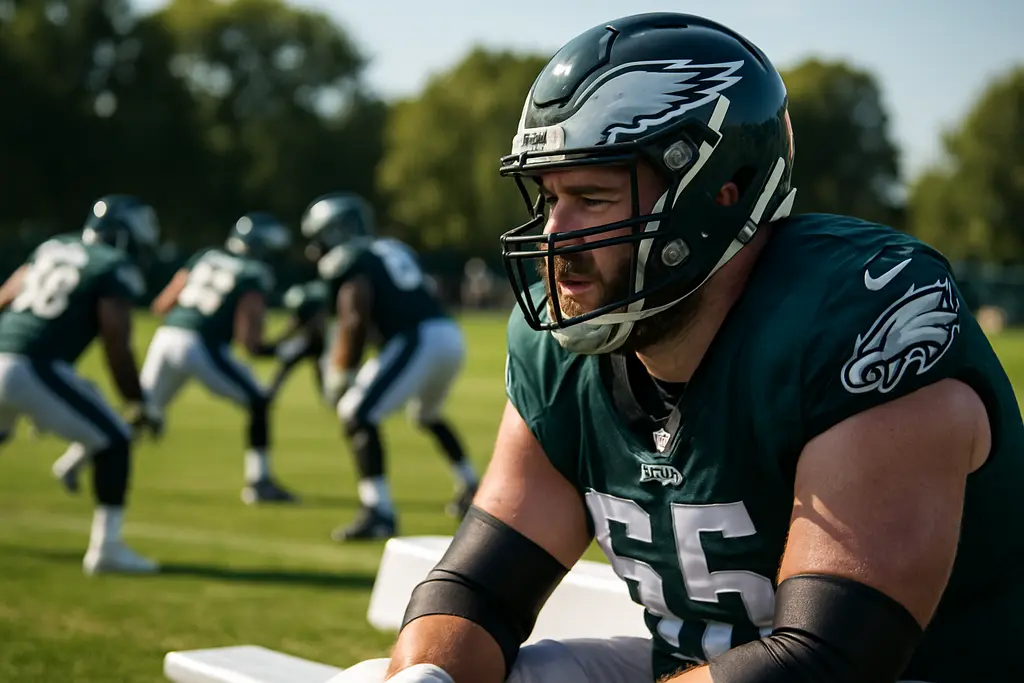
Offensive Line Depth became one of the more useful indicators of the Philadelphia Eagles’ roster priorities after the August 30, 2026 cutdown. The initial 53-man roster kept 10 offensive linemen, a number that reflects both confidence in the starting five and a clear interest in protecting developmental options behind them.
The retained group, as reported when the Eagles announced their initial 53-man roster, included Jordan Mailata, Landon Dickerson, Cam Jurgens, Tyler Steen, Lane Johnson, Markel Bell, Fred Johnson, Drew Kendall, Willie Lampkin, and Micah Morris NBC10 Philadelphia. That structure gave Philadelphia veteran anchors at tackle and guard, while also keeping several younger players whose preseason work appears to have changed the depth discussion.
The caution is that roster math does not confirm role size. Keeping a player on the initial 53-man roster is not the same as identifying him as the next starter. It does, however, show where the club was unwilling to expose depth immediately after cutdown. For an Eagles team built around line play in recent years, the post-preseason shape of this position group is worth tracking with care.
Roster Cutdown And Offensive Line Depth
Offensive Line Depth Baseline
The Eagles’ first-layer structure looked stable after the cutdown. Mailata, Dickerson, Jurgens, Steen, and Johnson were the projected front-line group in the research notes entering the roster deadline. Their presence on the initial 53 meant the Eagles did not have to solve a starting vacancy during the cutdown process. That matters because roster decisions behind the starters can be more patient when the top group remains intact.
The backup picture was more fluid. The retained linemen behind the projected starters included Bell, Fred Johnson, Kendall, Lampkin, and Morris. That set of names points toward a split between tackle coverage and interior competition. Fred Johnson offered an experienced reserve option. Bell represented a younger tackle profile. Kendall, Lampkin, and Morris were the interior names tied most closely to development in the supplied reporting.
What Changed At The Deadline
The deadline also removed players from the immediate roster competition. On August 30, 2026, the Eagles cut 16 players, with guard Michael Jordan and tackle Myles Hinton among the offense-related departures listed in the supplied reporting. Tight end Stone Smartt was also removed from the roster in that cutdown group Northeast Times.
Those moves narrowed the available practice and game-week options at guard and tackle on the 53-man roster. The effect was not only numerical. It shifted more developmental weight onto Kendall, Lampkin, Morris, and Bell. Each stayed on the roster at a point when the team had to decide which young linemen had done enough to justify protection.
Interior Development Signals
Kendall, Lampkin And Morris
The most notable post-cutdown thread was the interior. According to the research, Howie Roseman identified the progress of Drew Kendall, Willie Lampkin, and rookie Micah Morris as a positive from training camp and the preseason. The same notes indicate that the interior depth entered camp in a less settled place than in prior years, so the retention of all three players suggests the summer evaluation eased at least part of that concern.
That does not mean all three are ready for the same role. Kendall’s value is tied to center and guard flexibility in the research notes. Lampkin’s case appears connected to interior performance across camp and preseason work. Morris, as a rookie, fits the longer-range development track. The shared point is that Philadelphia left cutdown with multiple young interior options rather than leaning on a single reserve.
Bell Adds A Tackle Variable
Markel Bell’s retention gave the line room another developmental angle. The research describes Bell as an undrafted rookie who earned a roster spot and generated enough preseason notice to be viewed as a possible emergency rotational tackle or longer-term heir-type player. That phrasing should be handled carefully. A roster spot is confirmed; a future succession role is not.
Still, Bell’s presence has practical value. Tackle depth is difficult to carry if a team does not trust the player to survive regular-season snaps. The Eagles kept Bell alongside Fred Johnson, which indicates they wanted more than one answer behind Mailata and Lane Johnson. For related roster coverage across the network, a broader NFL news feed can be found on SportsWire News.
Preseason Evidence And Roster Risk
How The Patriots Game Framed Evaluation
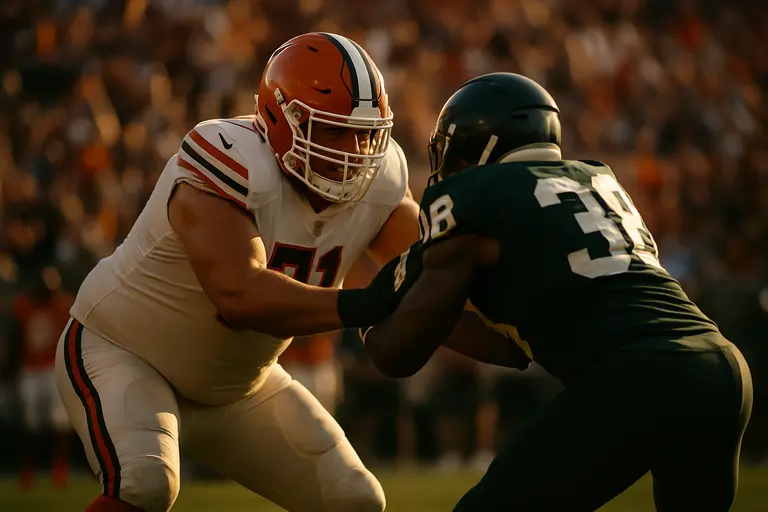
One data point from the supplied research came from the August 24, 2026 preseason game against the Patriots. The Eagles’ second-string offensive line was described as performing strongly, with Kendall, Lampkin, and Bell standing out against New England’s backup defensive front. Preseason evidence has limits because opponents are rotating personnel and testing depth, but it can still affect roster decisions when coaches are comparing players at the back end of the 53.
That game appears to have supported the broader summer trend: Philadelphia’s young linemen gave the front office enough confidence to keep a larger line group. The scouting question is whether that confidence translates under regular-season pressure. Preseason wins in individual matchups can show traits, play strength, and assignment growth. They do not prove week-to-week reliability against starting defensive fronts.
Why Ten Linemen Matter
Keeping 10 offensive linemen is not a neutral decision. It uses roster space that could have gone to another position. The Eagles’ choice points to a priority: maintain protection against attrition up front while continuing to develop young blockers inside the building. That is especially relevant for a team with established veteran starters and younger reserves who may need regular practice reps rather than immediate full-game responsibility.
The approach also fits a broader preseason pattern across the league. Teams often use August to test whether developmental players can handle multiple assignments, especially as roster deadlines force choices between short-term special teams value and longer-term positional scarcity. A related breakdown of how summer evaluation shapes roster calls can be found in this analysis of NFL preseason development.
For Philadelphia, Offensive Line Depth is now less about finding names and more about role readiness. The roster contains the numbers. The regular season will test the hierarchy. If the starters remain available, the young reserves can develop on a measured track. If a reserve is needed, the preseason investment will face a much sharper evaluation.
Eagles Offensive Line Depth After Cuts
The clearest post-cutdown read is that the Eagles protected both experience and upside. Mailata, Dickerson, Jurgens, Steen, and Johnson formed the retained starting foundation. Fred Johnson added veteran reserve presence. Bell, Kendall, Lampkin, and Morris gave the club younger options across tackle and the interior.
Offensive Line Depth should be viewed through that balance. The Eagles did not simply keep extra bodies. They kept a group that reflects specific developmental bets, especially inside. Kendall, Lampkin, and Morris were tied in the research to improved confidence at guard and center depth, while Bell’s spot showed that tackle development also mattered at the deadline.
The remaining uncertainty is role order. The initial 53-man roster identifies who survived cutdown, not who would be first into a game at every spot. That is where practice performance, game plans, and weekly availability will matter. Based on the confirmed cutdown information, Philadelphia exited August 30, 2026 with a deeper and younger line room than the one that entered the final week of preseason decisions.