
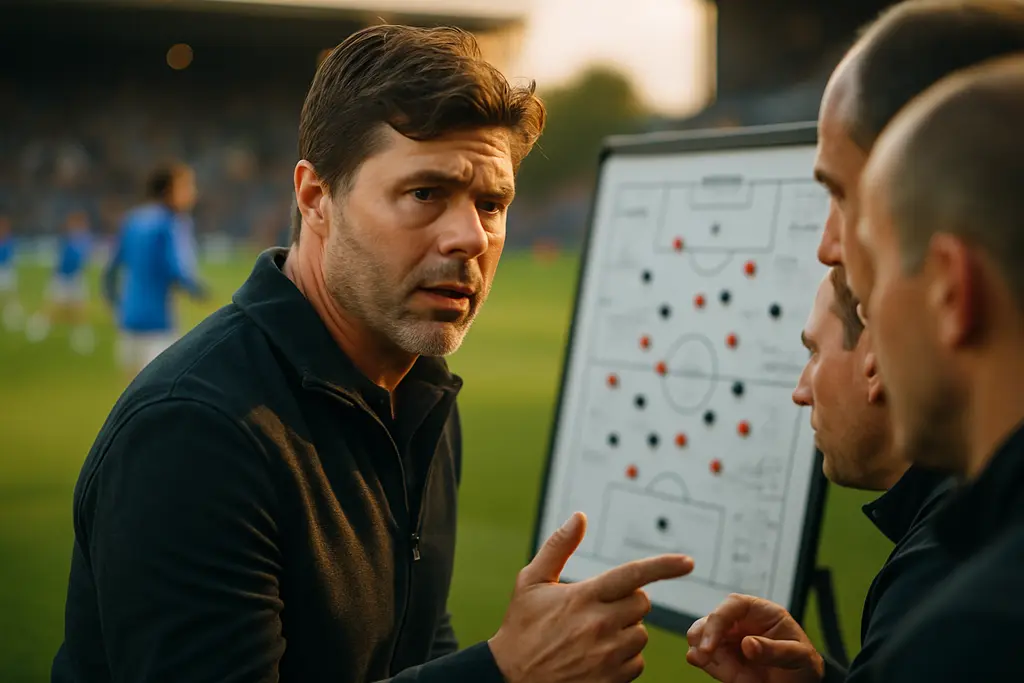
Pochettino USMNT Strategy is entering a new checkpoint on September 14, 2026, with the coach under contract through 2030 and four home friendlies scheduled before the end of the next international window. Mauricio Pochettino signed a new deal in August 2026 extending his tenure into the 2030 FIFA World Cup cycle, with U.S. Soccer framing the period around connection, culture and a longer runway for team-building U.S. Soccer update. That context matters: these matches are not isolated exhibitions, but early sorting points for a roster that must keep winning while widening its pool.
The next fixtures, as listed in the research notes for this assessment, are Peru on September 26 in Orlando, Chile on September 29 in St. Louis, Mexico on October 3 in Glendale and Canada on October 6 in St. Paul. The 26-player roster is scheduled to be announced on September 17, 2026, and Pochettino has indicated it will contain a mix of experienced and young players. Until that list is public, any player-specific projection should stay limited. The more useful question is structural: what does the staff need to learn from these games?
Why Pochettino USMNT Strategy Starts With Control
Possession As A Platform
The central thread in Pochettino’s work has been control through possession, territory and pressure after losing the ball. Research notes from the 2025-26 period credit the USMNT with averages just under two goals per match and just under two expected goals per match under Pochettino, alongside about 54.8 percent possession. Those figures suggest the attacking output was broadly aligned with chance creation rather than being driven only by finishing spikes.
The June 12, 2026 World Cup opener against Paraguay offered the cleanest example cited in the research set. The United States won 4-1, had 65 percent possession, produced 16 shots and generated an expected-goals edge of 1.42 to 0.54. The box-touch gap was also significant: 53 for the United States and 11 for Paraguay. Those numbers match the eye-level description of the approach: multiple passing angles, central overloads, players willing to dribble at the back line and wing-backs or wide players stretching the field.
The caution is that control is not the same as safety. A team can hold the ball, push fullbacks or wing-backs high and still leave stress points behind the press. That is why the Peru and Chile friendlies should be useful before the Mexico and Canada matches, which carry a different tempo and regional edge. The friendlies give the staff a controlled window to test how much attacking freedom can be kept without exposing the center backs and holding midfielders.
Pochettino USMNT Strategy And Player Mix
The roster announcement on September 17, 2026 will be the first concrete sign of how aggressively Pochettino wants to refresh the group after the 2026 World Cup. His stated plan for a blend of experienced and young players is sensible, but the balance is difficult. Too much continuity can slow the evaluation of emerging options; too much turnover can weaken the tactical rhythm the staff has spent two years building.
For development-minded scouting, the September and October games should be read by function rather than reputation. Which younger players can receive under pressure? Which wide players can press, recover and still offer one-on-one threat? Which central midfielders can protect rest-defense positions when the team attacks with numbers? Those are the questions that matter most before names become fixed in the 2030-cycle conversation.
Shape, Midfield Balance And Defensive Trade-Offs
The Back Three Question
The Pochettino USMNT Strategy has often leaned on flexible shapes, with research notes describing a 3-4-2-1 in attacking phases and a shift toward a back four when defending more compactly. That flexibility can help the United States progress the ball with an extra center-back line, push wing-backs higher and keep two advanced players between the opponent’s midfield and defense. It can also create a cleaner route into the penalty area when the opponent sits off.
The cost comes in transition. If both wing-backs are high and the double pivot is not staggered well, the team can be vulnerable to direct passes into the channels. Research notes also state that defensive metrics under Pochettino have shown concern at points, including more expected goals against and more shots against per 90 minutes compared with some past cycles. That does not erase the attacking gains, but it makes the next four friendlies valuable defensive tests.
The Washington Post’s early tactical look at Pochettino’s USMNT against Panama in October 2024 described a team pressing high, reacting quickly after turnovers and using a more aggressive structure in selected moments Washington Post analysis. Nearly two years later, the same principles remain relevant, but the evaluation standard is higher. The question is no longer whether the United States can press; it is whether the team can press without giving up cheap exits against opponents with better midfield technicians.
The Double Pivot Test
Pochettino’s comments in May 2026, according to the research notes, emphasized the value of a double pivot, with Tyler Adams and Weston McKennie cited as one possible pairing. That concept fits the roster’s strengths if both midfielders are available and sharp: one can screen and win second balls, while the other can carry or connect play into advanced zones. It also gives the staff a way to protect the center of the field when the attacking shape becomes ambitious.
The double pivot should not be judged only by tackles or recoveries. Its real value shows up in spacing. If the two midfielders stand on the same horizontal line, the buildup can become flat. If one steps higher at the wrong moment, the back line can be exposed. If they rotate with clarity, the U.S. can sustain attacks, counter-press immediately and still have a defensive base. These friendlies are a chance to separate midfield pairings that look good on paper from pairings that solve game-state problems.
Friendlies As A Scouting Filter
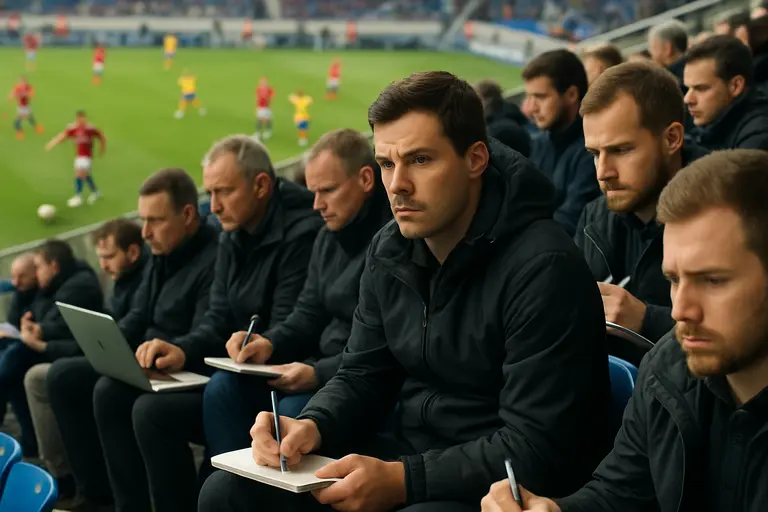
What Each Match Can Reveal
The four-game run is compact enough to force choices. Peru on September 26 can help measure patience against a South American opponent. Chile on September 29 offers another test of tempo changes and midfield pressure. Mexico on October 3 should raise the intensity around duels, pressing triggers and emotional control. Canada on October 6 can challenge transition defending, wide coverage and set-piece concentration.
- Peru, September 26 in Orlando: useful for assessing buildup rhythm and chance quality.
- Chile, September 29 in St. Louis: useful for testing midfield spacing and controlled pressure.
- Mexico, October 3 in Glendale: useful for evaluating duels, tempo and composure.
- Canada, October 6 in St. Paul: useful for reviewing transition defense and wide-area decisions.
Because the roster will include both veterans and younger players, minutes distribution may say as much as selection. A young player brought in only for training exposure should not be judged the same way as one given a start or a defined second-half assignment. Pochettino’s staff can use these games to see who understands the tactical language quickly: pressing angle, cover shadow, back-post responsibility, third-man run and the timing of central rotations.
There is also a federation-wide angle. U.S. Soccer’s broader 2030 project, as reflected in the research notes, includes alignment across youth development, coaching and facilities. That connects directly to senior-team selection. If the national team wants younger players to enter camp ready for Pochettino’s demands, the principles have to be taught before they arrive. For broader cross-sport roster analysis within the same network, Texas Sportsmen carries related coverage of team-building decisions.
Pochettino USMNT Strategy Before The Friendlies
The Practical Evaluation Standard
The safest read before the roster is announced is that Pochettino is not choosing between style and experimentation. He is trying to use experimentation to sharpen the style. The United States already has evidence that its attacking model can create volume, territory and high-value possessions. The 4-1 win over Paraguay on June 12, 2026 showed how dangerous the team can be when possession, box entries and pressure all work together.
For now, Pochettino USMNT Strategy should be assessed through three practical measures in the friendlies: whether the team creates chances without relying on broken plays, whether the midfield protects the back line during attacking phases, and whether young players can carry senior-team responsibilities rather than simply appear in camp. The contract through 2030 gives Pochettino time, but these matches still matter. They are the first public steps in determining which players fit the next cycle and which tactical trade-offs the USMNT can live with against stronger opposition.