

As the 2026 preseason moves through its main August windows, NFL Preseason Development is less about polished first-team football and more about usable evidence. Coaches are testing how players respond to install periods, joint practices, preseason snaps and roster pressure. That makes this stretch especially important for late-round rookies, UFL additions, young quarterbacks, defensive rotation players and specialists trying to turn practice work into a roster argument.
The structure gives teams a clear evaluation runway. For the fifth straight season, 30 NFL teams are scheduled to play three preseason games, while the Arizona Cardinals and Carolina Panthers have four because they opened the preseason in the Hall of Fame Game on August 6. The main preseason weekends fall on August 13-15, August 20-23 and August 27-29. Those dates matter because coaches are sorting development plans under a compressed clock: teach, test, adjust, then decide.
That process is not limited to game nights. Public practices, closed team periods and scrimmage-style sessions all feed into the same evaluation file. For more on how practice access shapes team planning, this site has covered how open training camps influence preparation and fan visibility. In addition, those interested in a wider range of sports-related insights within the same network can head over to Back2Tap for more related coverage.
NFL Preseason Development In Joint Practices
NFL Preseason Development Under Controlled Contact
Joint practices have become one of the clearest signs that teams want competitive reps without turning every evaluation into a full preseason game. In 2026, 28 NFL teams are participating in at least one joint practice, and 15 teams are taking part in multiple sessions, according to Sports Illustrated’s joint-practice tracker. Those numbers show how widely clubs now use shared practice fields to test young players against unfamiliar schemes.
The value is practical. A receiver fighting for a roster spot can face press coverage from another club rather than the same cornerbacks he has seen for weeks. A backup offensive tackle can be stressed by a different pass-rush plan. A young safety can be judged on communication against routes his own defense did not script. Those details help coaches separate camp comfort from transferable football.
There is also a developmental balance. Preseason games remain the cleaner public measurement, but joint practices can offer coaches more total reps and more repeatable situations. A staff can script red-zone work, third-down periods or two-minute drills, then review the tape with a focus on assignment, technique and response. In that setting, NFL Preseason Development becomes a daily record rather than a single-night audition.
Why Practice Evidence Carries Weight
For young players, the most valuable preseason trait is often consistency. A one-play flash can open the door, but repeated execution keeps a player in the roster conversation. That is why coaches lean heavily on practice evidence: alignment, communication, conditioning, special teams readiness and the ability to correct mistakes from one day to the next.
Joint sessions can also clarify depth-chart questions without forcing starters into extended preseason workloads. If a second-year linebacker handles run fits cleanly against another offense, or a rookie guard holds his ground through multiple team periods, that can affect how much work the staff needs to see in the next game. The evaluation is still cautious, but it is grounded in football reps.
Roster Spots And The UFL Pipeline
Spring Football As A Testing Ground
The UFL-to-NFL movement is one of the more notable personnel threads of this preseason. Nearly 50 UFL players had joined NFL training camps by mid-August 2026, and the pace was tracking toward last season’s reported record of 102 UFL players transitioning to NFL opportunities. That does not guarantee roster spots, but it does show that teams are treating spring football as a serious scouting filter.
For front offices, the appeal is clear. UFL players arrive with recent professional tape, conditioning from a live season and experience handling game-week routines. They are not mystery prospects in the same way many undrafted rookies can be. The challenge is whether their spring production carries over against NFL size, speed and playbook demands.
For NFL Preseason Development, that pipeline adds pressure to the back end of rosters. A young player drafted on traits may be competing with an older UFL signing who has cleaner professional habits. A special teams coordinator may prefer the player who can cover kicks immediately. A position coach may value the athlete with the higher ceiling. Preseason is where those competing priorities meet.
How UFL Arrivals Change Depth Evaluations
UFL players can be especially useful at positions where depth is difficult to judge in practice alone. Offensive line, defensive line, linebacker and defensive back all require physical and mental evidence across multiple situations. If a UFL signing can handle special teams and provide competent reserve snaps, he can force a longer discussion in the personnel room.
Still, the evaluation should be measured. A camp signing is not the same as a roster breakthrough. Teams may use these players to raise practice quality, cover preseason workloads or create competition. The meaningful development question is whether the player can keep improving once the playbook expands and the roster tightens.
Position Battles Built On Practice Evidence
Quarterbacks And Role Clarity
Quarterback competitions remain the easiest preseason story to follow, but the internal grading is rarely simple. The Cleveland Browns’ reported competition involving Deshaun Watson and second-year player Shedeur Sanders reflects how much teams can place on August performance and daily command. Coaches are not only judging throws. They are weighing huddle operation, timing, protection communication, decision speed and response to pressure.
For younger quarterbacks, preseason games can reveal whether practice progress is stable. A quarterback may look comfortable in scripted seven-on-seven work but struggle when protections change or when a drive starts poorly. That is why coaching staffs tend to treat preseason snaps as one part of a larger file. The development target is not just a clean box score; it is evidence that the quarterback can manage the offense in changing conditions.
Specialized Roles And Two-Way Planning
Jacksonville’s development plan for Travis Hunter as a two-way player is one of the more distinct player-usage stories in this preseason cycle. The reported approach uses his skills on both offense and defense, which creates a different kind of evaluation. Coaches must weigh workload, assignment volume and how quickly he can shift between roles without losing detail.
That type of plan is rare because it asks a player to process two sets of responsibilities. It also places a premium on practice design. Reps have to be purposeful, not simply divided. If a player is working both sides of the ball, the staff needs to know which situations are most useful and which ones risk slowing his growth. In that sense, the preseason is less about novelty and more about evidence.
Other reported camp standouts, including Isaac TeSlaa with Detroit, Kayshon Boutte and Tanner Arkin with New England, Caleb Downs with Dallas and Daylen Everette with Pittsburgh, fit a broader pattern. Camp impressions can shift attention, but roster impact requires repeat performance. The next step is whether practice momentum shows up in preseason game roles, special teams usage and coaching trust.
Roster Designations And Availability
Development Is Also A Roster Math Issue
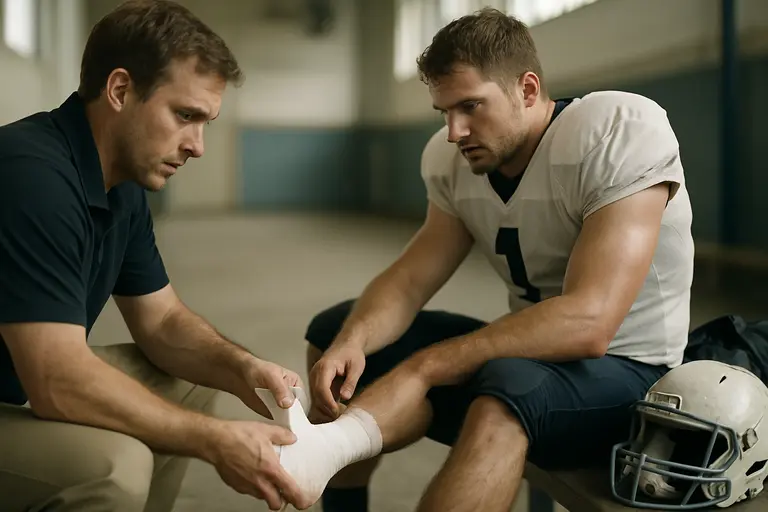
Player growth is shaped by availability rules as much as by practice performance. Teams use designations such as injured reserve, the physically unable to perform list, waivers and practice squads to manage roster space and player timelines, as explained in The Washington Post’s roster explainer. Those rules can affect who practices, who plays in preseason games and who remains in a team’s plans after cutdowns.
This is where development and roster management overlap. A young player may need more live reps, but the team may also need to protect depth at another position. A veteran may not need many preseason snaps, which gives a younger player a longer audition. A player on the edge of the roster may need to show special teams value because there are not enough game-day spots for single-role reserves.
No injury status should be assumed without confirmed information. The broader point is procedural: designations influence opportunity. Availability rules can shape whether a player receives preseason snaps, lands on a practice squad track or remains in consideration for a later role. For evaluators, that means context matters when comparing two players with different workloads.
Fundamentals Still Decide Many Battles
Not every preseason development story is about a new signing or a high-profile competition. Chicago’s reported emphasis on pass-rush fundamentals is a useful example. The Bears led the NFL in 2025 with 23 interceptions and 33 takeaways, while recording 35 sacks. A staff trying to improve rush technique is dealing with a concrete gap between ball production and pressure production.
That kind of coaching focus can change preseason priorities. Defensive linemen may be judged on get-off, hand placement, rush-lane discipline and how they finish pressures. Linebackers and defensive backs may be judged on whether coverage and rush timing work together. Development is often quiet work, but it affects which players are trusted when the regular season starts.
What NFL Preseason Development Can Clarify
The Evaluation Questions That Matter
The strongest value of NFL Preseason Development is that it answers specific questions. Can a young player handle a new role against different opponents? Can a UFL signing move from camp depth to trusted reserve? Can a quarterback competition produce clear separation? Can a two-way plan be organized without weakening assignment detail? Can fundamentals improve enough to change a unit’s ceiling?
Washington’s reported emphasis on competition across positions after a 5-12 season shows how preseason can reset internal standards. Competition alone does not solve roster issues, but it gives coaches a clearer view of which players respond to pressure. The most meaningful evaluations will come from repeated evidence: practice reps, joint-session tape, preseason snaps and special teams work.
That is why this preseason should be read carefully. Standouts are worth noting, but August performance can be uneven. The more reliable signals are role growth, assignment consistency and how coaching staffs allocate reps over time. If teams use the schedule well, the 2026 preseason will not just trim rosters; it will reveal which developing players are ready for real jobs.