
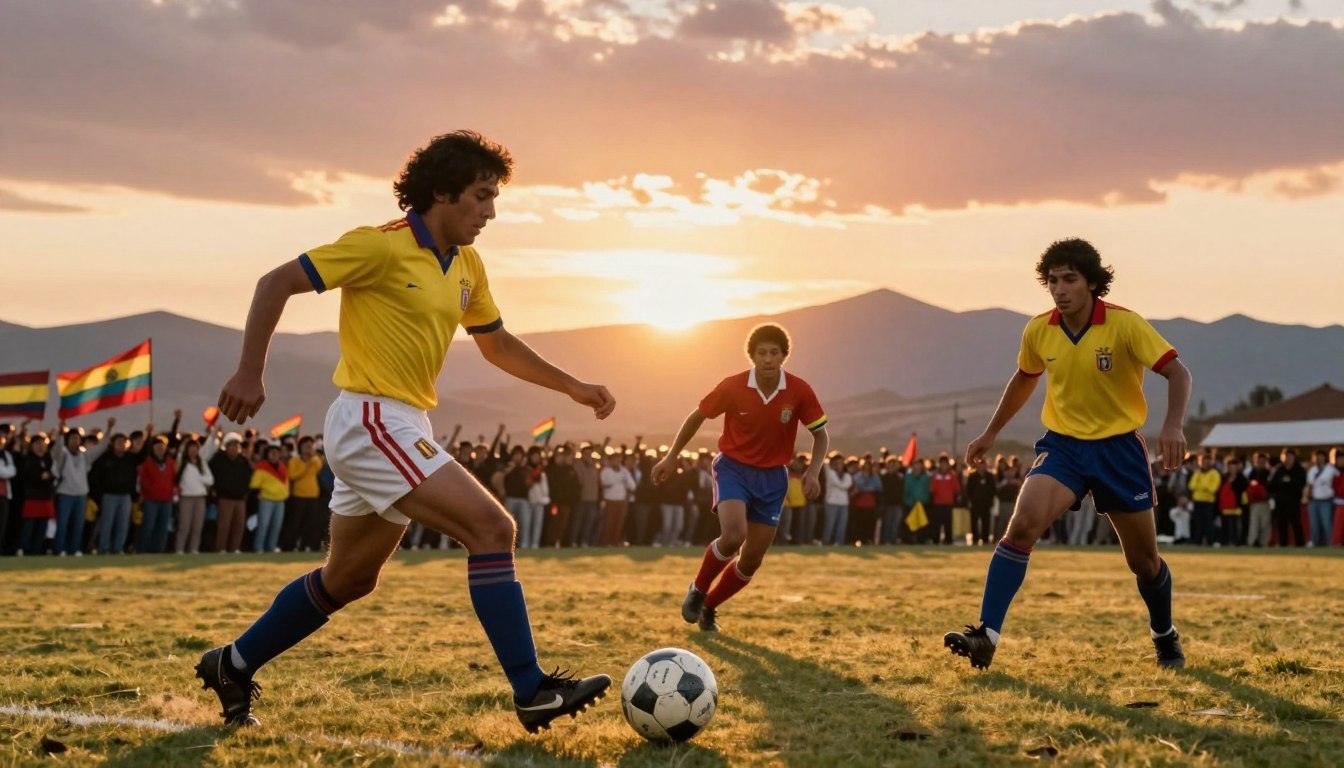
The 1970s were a key time for soccer in South America, and Bolivia was at the heart of it. This decade set the stage for a soccer revolution that would change the game in the region. While Johan Cruyff was making waves globally, Bolivia was growing its own soccer stars.
Marco Etcheverry and Jaime Moreno were among the talents that emerged. They trained at the Tahuichi Academy, founded in 1978. This academy became a place where future soccer legends were made.
This era was marked by significant changes in politics and society. Soccer played a big role in bringing people together. The impact of these early stars is felt today, showing how the 1970s laid the foundation for Bolivia’s soccer legacy.
Socio-political Context of Bolivian Football in the 70s
The 1970s in Bolivia were filled with political turmoil. This decade saw many military regimes, like Hugo Banzer’s. His rule brought economic troubles.
Yet, football united the Bolivian people. Clubs like Bolívar, The Strongest, and Oriente Petrolero stood for pride. They gave people a break from their daily struggles.
In 1978, the Tahuichi Academy in Santa Cruz de la Sierra changed Bolivian soccer. It was a place for young talent to grow. Players from there went on to play for Bolivia internationally.
Bolivia’s high-altitude stadiums, like those in La Paz, were a big advantage. They challenged visiting teams. This made Bolivia’s teams more competitive.
During the 1970s, Bolivian clubs started playing in the Copa Libertadores. This was the start of their international dreams. Players like Ramiro Blacut inspired others with their careers.
In summary, the 1970s in Bolivia were tough but shaped football. Players and fans showed great resilience. For more on Bolivia’s football team, visit this link. For famous records and achievements, check this page.
Key Icons and Career Highlights
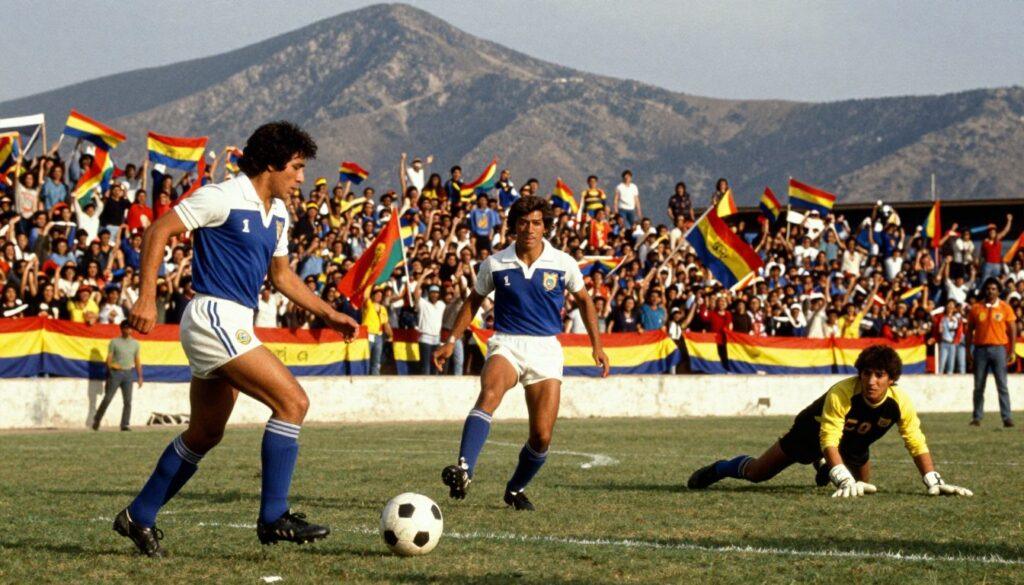
The 1970s were a turning point for Bolivian football. Players like Ramiro Blacut made a lasting impact. Blacut was known for his skill on the field and as a coach. He helped Bolivian football gain international recognition.
Blacut’s playing style was unmatched. He dominated the Bolivian league and played abroad. His coaching career further cemented his legacy in Bolivia.
Carlos Borja was another key player of the 1970s. He played a big role in the national team’s growth. Borja’s hard work and talent raised the bar for Bolivian football.
Domestic league heroes of the era also deserve praise. Players from Bolívar and The Strongest competed in the Copa Libertadores. Their efforts enriched Bolivian club football history.
The decade saw the rise of future stars. The Tahuichi Academy, founded in 1978, was a key factor. It produced legends like Marco Etcheverry and Jaime Moreno.
Etcheverry, who started at the academy, became a decorated player. He played for D.C. United and won several MLS Cups. His success inspired many young Bolivian players.
| Player | Position | International Caps | Goals | Clubs |
|---|---|---|---|---|
| Ramiro Blacut | Midfielder | 40 | 5 | Bolívar, The Strongest |
| Carlos Borja | Forward | 30 | 10 | Bolívar, The Strongest |
| Marco Etcheverry | Midfielder | 71 | 13 | D.C. United, Bolívar |
Impact on National Success
The 1970s were a key time for Bolivia’s football. Even though they didn’t make it to the World Cup, their efforts laid the groundwork for later success. These players helped create a strong football culture that would benefit Bolivia in the 1990s.
Marco Etcheverry was a standout from this era. He scored four times in the 1994 World Cup qualifying. His goal against Brazil in La Paz was a historic win. It was Brazil’s first loss in World Cup qualifying, helping Bolivia reach the World Cup for the first time in 44 years.
The 1997 Copa América showed Bolivia’s growth. They made it to the final, playing at home. This achievement was a result of the strategic improvements made in the 1970s. La Paz’s Estadio Hernando Siles, with its high altitude, became a key advantage for the team.
Players like Julio César Baldivieso and Jaime Moreno were key to this success. They honed their skills in the domestic leagues. Their experience and talent made a big impact on the international stage.
In summary, the 1970s were critical for Bolivia’s football success. The legacy of these players enriched the sport. It also set the stage for future generations to build on.
| Player | Key Achievement | Year |
|---|---|---|
| Marco Etcheverry | Scored against Brazil in World Cup Qualifying | 1994 |
| Jaime Moreno | Contributed to Copa América Final | 1997 |
| Julio César Baldivieso | Part of the 1994 World Cup squad | 1994 |
Where Are They Now?
The 1970s soccer icons from Bolivia are remembered worldwide. Marco Etcheverry, a key figure, retired in 2003. He now coaches young players, helping them grow.
In 2023, he joined D.C. United as an academy coach for the under-15 boys. His Hall of Fame induction in 2022 shows his lasting impact.
Ramiro Blacut, who died in 2024 at 79, left a lasting mark. He was both a player and coach, shaping Bolivian football for years. His coaching taught the next generation, keeping the 1970s spirit alive.
Carlos Borja and others have stayed in football, coaching or working behind the scenes. The Tahuichi Academy is a key place, producing talented players. It keeps the 1970s legacy alive.
Etcheverry was honored by the Bolivian Congress in 2006. He was also named to the Copa América Historical Dream Team in 2011. These honors show the 1970s football culture’s global recognition.
This legacy continues to influence Bolivian soccer today. It shapes youth academies and the national team’s success in South America.