
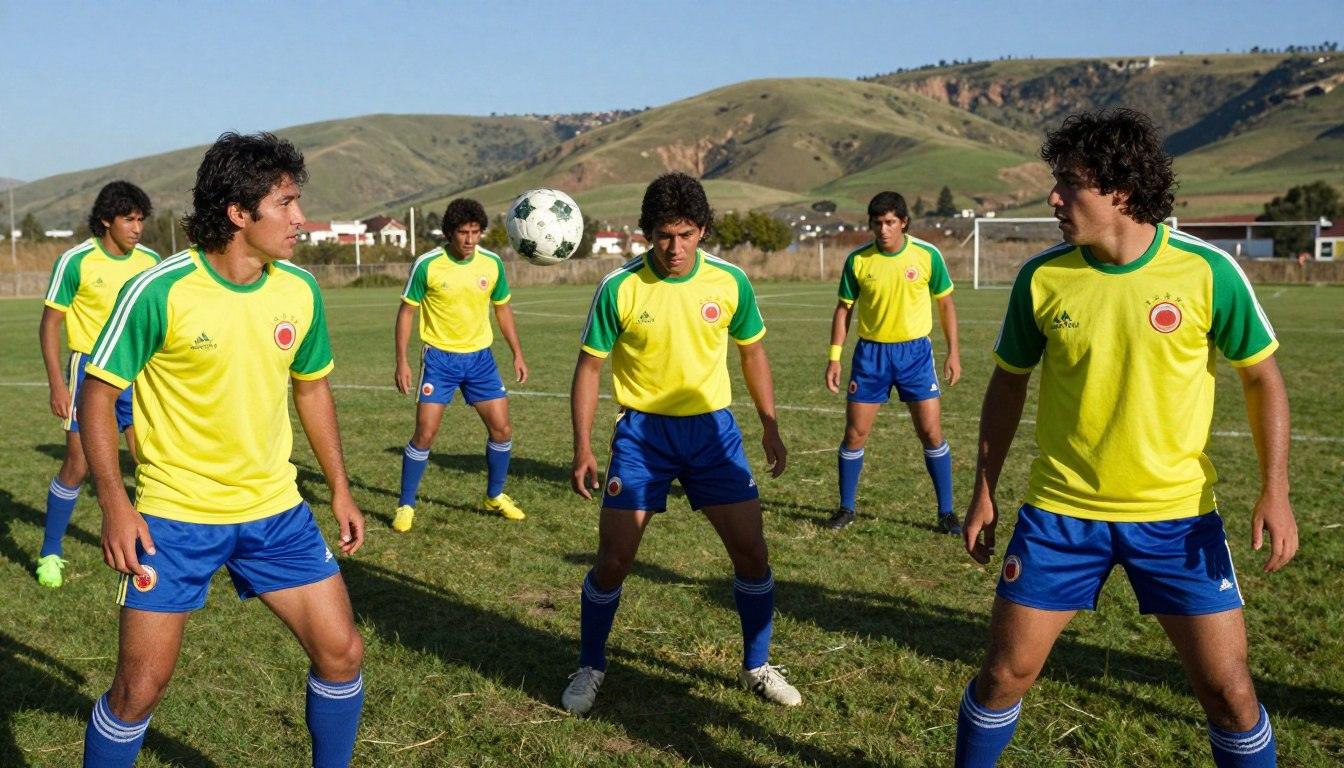
The term “golden generation” describes a group of athletes who broke records and set new standards. In soccer, Bolivia’s golden generation came from the Tahuichi Academy. This academy has been a big name in soccer for over 40 years.
In 1993, this group made history by beating Brazil in a World Cup qualifier in La Paz. This win was a big shock to the soccer world. It also made Bolivia a force to be reckoned with globally.
The team had many players from the Tahuichi Academy. They had played together for years. This team made it to the 1994 FIFA World Cup in the United States. It was Bolivia’s first time in 44 years, showing their skill and teamwork.
This section will look at how these athletes changed their careers and Bolivian soccer. From their start at the academy to their world achievements, their story is one of success and teamwork.
To learn more about these key players, check out football player profiles.
Profiles of Standout Athletes
The 1990s were a key time for Bolivia, with players making a lasting impact on the sport. This generation showed incredible talent, helping both club and national teams. Here are some of the most notable athletes from that time.
| Player | Position | Caps | Club Highlights |
|---|---|---|---|
| Marco Etcheverry | Midfielder | 71 | DC United (MLS Cups: 3) |
| Jaime Moreno | Forward | 75 | MLS All-Time Leading Scorer (4 MLS Cups) |
| Erwin Sanchez | Midfielder | 60 | Benfica, Boavista (Portuguese League Champion) |
| Carlos Trucco | Goalkeeper | 51 | 1994 World Cup Starter |
| Juan Manuel Peña | Defender | 85 | Valladolid, Villarreal (La Liga) |
Marco “El Diablo” Etcheverry was a creative force on the field. His vision and playmaking made him key for Bolivia. He later became an MLS legend with DC United, winning three MLS Cups.
Jaime Moreno’s journey is impressive. He moved from Club Blooming to the English Premier League and became MLS’s all-time leading scorer. His goal-scoring and longevity helped DC United win four MLS Cups.
Erwin “Platini” Sanchez was a trailblazer, being the first Bolivian in a European club with Benfica in 1990. He helped Boavista win the Portuguese league in 2001, opening doors for future Bolivian talents in Europe.
On defense, Juan Manuel Peña, Marco Sandy, and Luis Cristaldo were key. Peña’s career in Spain’s La Liga showed his tactical smarts and toughness. Sandy and Cristaldo provided solid defense.
Goalkeeper Carlos Trucco, born in Argentina, was Bolivia’s last line of defense in the 1994 World Cup. He earned 51 caps for his country. Midfielders José Milton Melgar and Carlos Fernando Borja played for Argentina’s rivals, Boca Juniors and River Plate, showing Bolivia’s talent during this era.
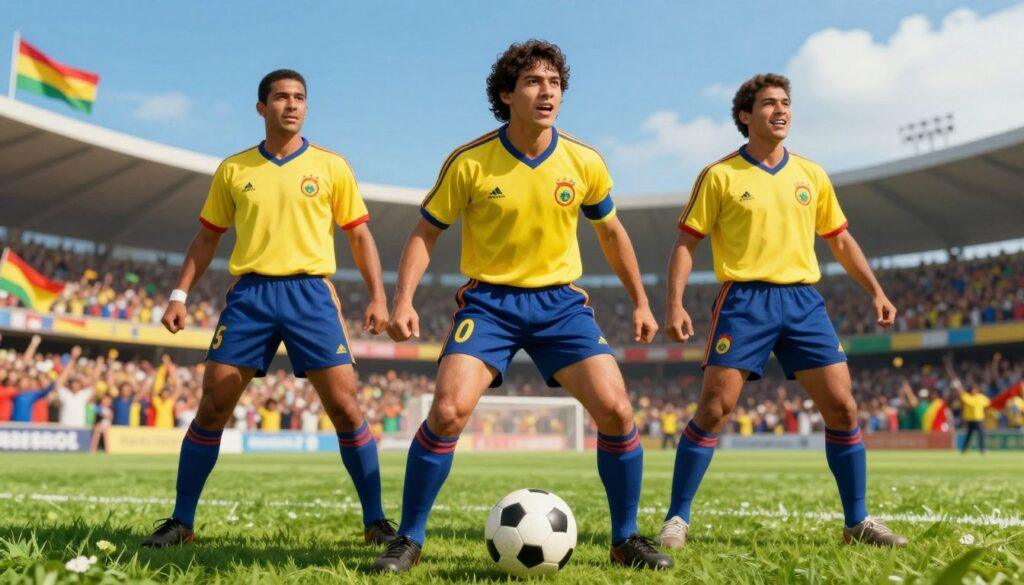
Copa América 1997 Run
In the summer of 1997, Bolivia embarked on a remarkable journey in the Copa América 1997. They captured the hearts of fans across the nation. As the host country, Bolivia showcased its talent and determination, winning every match leading up to the final.
The squad was filled with some of the Bolivia’s greatest players of the 1990s. Marco Etcheverry, Carlos Trucco, and Jaime Moreno were among them. These athletes played key roles in each game, showing skill and tactical discipline. The tournament was played at high altitude in cities like La Paz, Cochabamba, and Santa Cruz de la Sierra. This gave Bolivia a significant home-field advantage.
Bolivia’s journey through the tournament was spectacular. They started strong in the group stage, defeating opponents with strategic play and passionate performances. In the knockout rounds, the team continued to shine, showing resilience and teamwork.
The final was a big challenge. Bolivia faced Brazil, a powerhouse with global icons like Ronaldo, Roberto Carlos, and Cafu. Despite being underdogs, Bolivia fought bravely, competing with courage and skill. Key performances from Etcheverry and Trucco were instrumental in the team’s success.
Though Bolivia lost to Brazil, the final was not seen as a failure. It was the pinnacle of a generation’s journey. It proved that Bolivian soccer could compete with the world’s elite. This historic run in the Copa América 1997 cemented the legacy of these players and gave the nation lasting pride.
For a deeper dive into this unforgettable chapter in Bolivian soccer history, check out this article on Bolivia’s near miss in the Copa América: Bolivia’s 1997 Copa América near miss.
Club Careers and International Upsets
The 1990s were a big change for Bolivian football. A new generation of players shone in both their home leagues and abroad. Marco Etcheverry, a key figure, started in Bolivia and later played in Spain, Colombia, and Chile. His move to Major League Soccer (MLS) in 1996 with DC United was a turning point. He won three MLS Cups, leaving a lasting impact on American soccer.
Jaime Moreno also made a name for himself in MLS. After playing in the English Premier League, he joined DC United. There, he became the league’s top scorer and won four MLS Cups. His success helped grow the league in its early years.
Erwin Sanchez was the first Bolivian in a European club, joining Benfica in 1990. He later won the Portuguese league with Boavista in 2001. Juan Manuel Peña also thrived in Spain, playing for Real Valladolid and Villarreal. His defensive skills showed the talent coming from Bolivia.
Marco Sandy and Luis Cristaldo played in Spain, showing the depth of Bolivian football talent. José Milton Melgar and Carlos Fernando Borja played in Argentina, for Boca Juniors and River Plate, respectively.
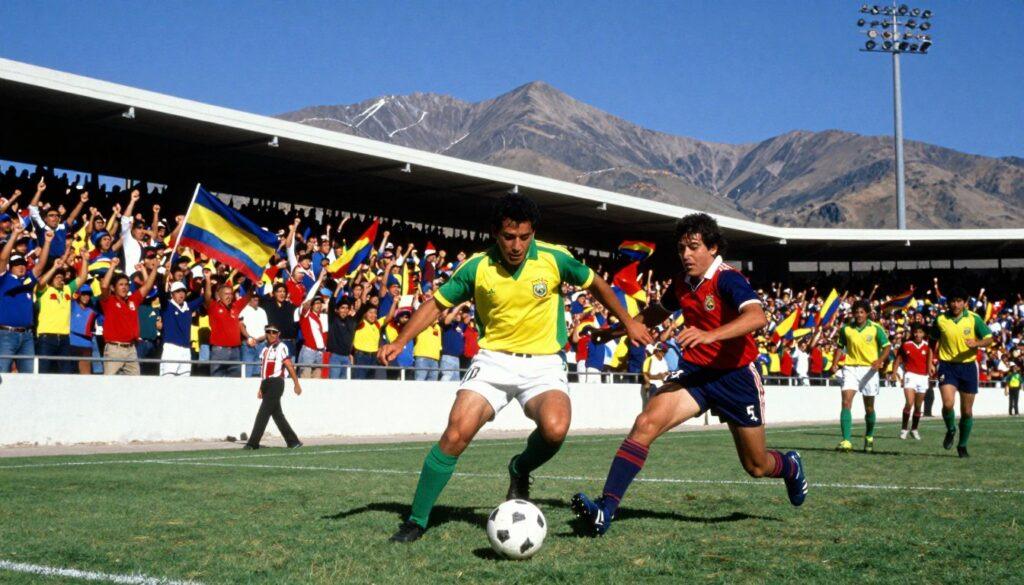
In 1993, Bolivia beat Brazil in a South American World Cup qualifier in La Paz. This victory was a huge moment for Bolivian football. It showed the team’s growing strength in South American soccer.
Bolivia also played in the 1999 FIFA Confederations Cup in Mexico. At the Estadio Azteca, they made a lasting impression. This marked their rise from local heroes to international competitors.
These players broke barriers for Bolivian soccer and gained global respect. Their achievements inspire future Bolivian athletes. They paved the way for the next generation of talent.
For more information on Bolivian football history, you can check out Club Bolívar.
Scouting the Generation’s Impact on Today
The legacy of Bolivia’s greatest players from the 1990s is strong in soccer. The Tahuichi Academy was key in growing talent. It got six Nobel Peace Prize nominations for helping underprivileged kids through sports.
This effort helped shape the golden generation. Their impact is seen today.
Players like Jaime Moreno and Marco Etcheverry made big marks. Moreno works with young players in the U.S., keeping the 1990s spirit alive. Etcheverry’s career in Major League Soccer made him a legend, inspiring many.
Marcelo Martins is Bolivia’s top scorer, showing the nation’s talent is ongoing. He won the UEFA Europa League with Shakhtar Donetsk. Ronald Raldes has 102 caps, showing dedication. Joaquín Botero’s 2002 scoring record shows Bolivian attacking skills are strong.
Even though Bolivia hasn’t been to a World Cup in 28 years, the golden generation’s success is inspiring. Their win in the Copa América 1997 is a cherished memory. It motivates future players to strive for greatness.