

Juan Carlos Prado Angelo enters the final weeks before the 2026 US Open with something Bolivian tennis has rarely possessed: a 21-year-old player already producing ATP Tour victories, carrying Grand Slam experience and approaching the world’s top 150 while still early in his professional development.
As of August 10, Prado Angelo is ranked around No. 151 in the ATP singles standings. That position makes New York an increasingly realistic target, although his participation in the 2026 US Open should not yet be described as officially confirmed. The tournament has announced that its men’s and women’s player fields will be revealed on August 20.
The 2026 US Open schedule places singles qualifying from August 24 through August 27 at the USTA Billie Jean King National Tennis Center in New York. The qualifying tournament contains 128 men competing for 16 places in the main draw, which begins August 30.
For Prado Angelo, reaching New York would continue a 2026 season in which several career barriers have already disappeared.
He qualified for his first Grand Slam main draw at Roland Garros, recorded his first ATP Tour main-draw victory in Umag and climbed to the highest ranking range of his career. Those achievements do not guarantee success on the hard courts of the US Open, but they change the expectations surrounding the most important young player in Bolivian men’s tennis.
Prado Angelo Has Already Changed His Career In 2026
Prado Angelo’s breakthrough did not begin with one isolated result.
The Santa Cruz native entered 2026 after years of strong junior performances and Challenger-level development. He had already reached No. 1 in the ITF junior rankings in July 2023 and became the first Bolivian to reach a junior Grand Slam singles final when he played for the Roland Garros boys’ title that year.
His transition to professional tennis took longer.
That is normal. Junior success does not automatically translate into ATP-level victories, particularly for players from countries without a large domestic calendar of high-level professional tournaments.
Prado Angelo gradually accumulated ranking points through the ITF World Tennis Tour and ATP Challenger Tour. He won his first Challenger title in Lima and later reached the final of the 2026 Santa Cruz Challenger, where Hugo Dellien defeated him in the first all-Bolivian Challenger final. The ATP’s official Prado Angelo biography describes his progression from the junior No. 1 position into the ATP top 200 during 2026.
That progression became more significant in May.
Prado Angelo won three qualifying matches at Roland Garros and secured his first appearance in a senior Grand Slam main draw. The achievement made him only the fourth Bolivian man in the Open Era to reach a Grand Slam singles main draw.
Hugo Dellien also qualified in Paris, producing another first: two Bolivian men appeared in the same Grand Slam singles main draw for the first time in the Open Era.
For a country with a limited professional tennis base, that was more than a statistical curiosity. It showed that Bolivia could simultaneously produce an established tour professional in Dellien and an emerging player from the next generation. (Bolivia’s Next Athletics Generation Reaches Oregon: Can Wilmer Santos and Nelci Rojas Build Toward LA28?)
Roland Garros Gave Prado Angelo A Real Grand Slam Test
Prado Angelo’s Roland Garros debut ended in the first round, but the match provided more evidence of his developing level than a routine defeat would have.
He faced Spain’s Martín Landaluce in a five-set contest lasting approximately four and a half hours. Landaluce eventually won 6-3, 4-6, 6-2, 6-7(3), 6-4 after Prado Angelo fought back repeatedly in difficult conditions.
The Bolivian suffered physical problems late in the fifth set but still recovered from 5-1 down to 5-4 before Landaluce completed the victory.
That match mattered because it introduced Prado Angelo to a part of professional tennis that Challenger events cannot completely reproduce.
Grand Slam matches test physical endurance, emotional control and tactical adaptability over five sets. A young player can spend years developing technical weapons and still discover major weaknesses when a match extends beyond four hours.
Prado Angelo left Paris without a main-draw victory, but he proved he could remain competitive deep into a five-set match against another highly regarded player from his generation.
New York would present a different examination.
Roland Garros was played on clay, the surface on which Prado Angelo developed much of his early professional game. The US Open is played on hard courts, where points can accelerate, returns become more important and weak second serves are punished quickly.
That surface transition is one of the central questions around his next stage.
Umag Produced His First ATP Tour Victory
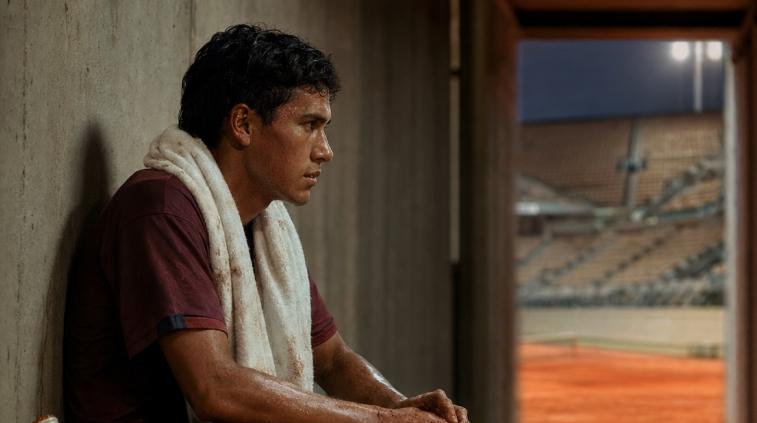
Prado Angelo crossed another important threshold on July 14 at the Plava Laguna Croatia Open Umag.
He first had to qualify.
The Bolivian defeated Marc Majdandzic 6-4, 6-3 in the opening qualifying round and then beat Nikolas Sanchez Izquierdo 6-3, 7-6(4) to reach the ATP 250 main draw.
His first-round opponent became Austria’s Lukas Neumayer, who entered the main draw as a lucky loser.
Prado Angelo won 6-3, 7-6(6).
It was the first ATP Tour main-draw victory of his career.
The ATP’s report on Prado Angelo’s breakthrough noted that he entered the tournament at No. 173 in the rankings and moved toward approximately No. 154 in the live standings after the victory.
That is an important distinction from winning at Challenger level.
ATP Tour events expose players to deeper fields, more experienced opponents and greater ranking opportunities. Winning one match does not establish a player as a permanent ATP competitor, but it demonstrates that he can translate Challenger results to the next level.
Prado Angelo’s run ended against Bosnian veteran Damir Dzumhur in the Round of 16. Dzumhur won 7-6(2), 6-1.
Again, the defeat provided useful context.
Prado Angelo stayed close through the opening set but lost control after the tiebreak. Against experienced tour players, maintaining a high level for one set is not enough. The next development step is learning to recover immediately when a close set disappears.
New York Would Be Familiar Territory In A Different Role
The US Open would not be Prado Angelo’s first experience in New York.
As a junior, he reached the 2022 US Open boys’ doubles final alongside German partner Dylan Dietrich. Two years later, that result matters because Prado Angelo would return to Flushing Meadows as a senior professional rather than a junior prospect.
The environment would also be considerably different.
Senior qualifying at the US Open brings together established professionals attempting to return to the main draw, rising Challenger players, former top-100 competitors and younger prospects trying to make their first major breakthrough.
There are no easy pathways.
The 2026 qualifying competition will contain 128 men competing for only 16 main-draw places. A player must generally win three matches to advance.
For Prado Angelo, that format would test more than talent.
He would need to manage consecutive matches on hard courts, adjust quickly between different opponent profiles and remain physically fresh despite the pressure attached to every round.
His growing ranking helps, but rankings only determine access and positioning. They do not remove the competitive difficulty once the tournament begins.
His Ranking Progress Changes Bolivia’s Expectations
Prado Angelo’s rise toward approximately No. 151 represents an important shift.
A player in that range can realistically build a schedule around ATP qualifying, Grand Slam qualifying and Challenger events rather than relying heavily on lower-level ITF tournaments.
That changes both the quality of opposition and the economics of a professional career.
More important for Bolivia, it creates the possibility of having two men consistently operating near major-tournament level.
Dellien remains a significant reference point. The veteran Bolivian has spent years competing across ATP and Challenger events and was listed around No. 141 in the latest rankings data. Prado Angelo’s rise means Bolivia is no longer dependent on only one internationally competitive male player.
That creates internal competition as well.
The Santa Cruz Challenger final between Dellien and Prado Angelo was symbolic because it connected two stages of Bolivian tennis development. Dellien represented the generation that proved a Bolivian player could establish a sustained professional career. Prado Angelo represents the attempt to build on that precedent rather than start again from zero.
| Career Marker | Juan Carlos Prado Angelo |
|---|---|
| Birthplace | Santa Cruz, Bolivia |
| Date of birth | March 6, 2005 |
| Former junior ranking | World No. 1 |
| Junior Grand Slam milestone | Roland Garros singles finalist, 2023 |
| US Open junior milestone | Boys’ doubles finalist, 2022 |
| First senior Grand Slam main draw | Roland Garros 2026 |
| First ATP Tour main-draw victory | Umag, July 14, 2026 |
| Current ranking range | Around ATP No. 151 |
| Next major target | 2026 US Open |
The challenge now is ensuring that his ranking continues moving forward rather than becoming a temporary peak.
Hard Courts Are The Next Development Test
Prado Angelo has built much of his professional résumé on clay.
That background is understandable for a South American player. Clay tournaments are more accessible throughout the region and often reward the movement, patience and point construction developed in Latin American tennis systems.
A sustained ATP career requires more.
Hard courts dominate significant parts of the global calendar, including the Australian Open and US Open. Masters 1000 tournaments in North America and Asia also make hard-court development essential for players hoping to move inside the top 100.
Prado Angelo’s game contains tools that can transfer.
At 1.85 meters, he has enough physical size to develop a more productive first serve without sacrificing movement. His ability to compete in long rallies is already established. The next question is whether he can shorten points when conditions demand it.
On hard courts, that can mean taking the ball earlier, improving first-strike patterns after the serve and becoming more aggressive when returning second serves.
It also requires better transition play.
A player who remains several meters behind the baseline for too many points can surrender court position against opponents comfortable attacking on faster surfaces.
New York would provide an immediate measurement of how much that part of Prado Angelo’s tennis has advanced.

Bolivia Needs More Than One Successful Player
Prado Angelo’s progress should also generate a broader conversation about Bolivian tennis.
Producing one top-150 player is an achievement. Building a sustainable national system requires repeated development of players capable of reaching Challenger and ATP competition.
Prado Angelo benefited from a strong junior career and international exposure. He also received financial assistance through the ITF-operated Grand Slam Player Development Programme, which supports players from countries with fewer resources and competitive opportunities.
That support highlights one of Bolivia’s structural challenges.
Professional tennis is expensive.
Young players need coaches, physical trainers, travel, accommodation, equipment and entry into tournaments across different continents. Rankings require constant competition. A player cannot develop only through events in Bolivia and expect to maintain a global schedule.
Prado Angelo’s trajectory should therefore be studied as a development model.
Which parts came from domestic coaching? Which opportunities required international assistance? How much did junior Grand Slam exposure prepare him for senior tennis? And what can the Federación Boliviana de Tenis reproduce for players several years younger?
Those questions may ultimately matter more than whether Prado Angelo wins one match in New York.
A US Open Breakthrough Would Carry Historic Weight
Bolivian tennis has produced respected international players, but Grand Slam success remains rare.
Prado Angelo is already part of that history.
His qualification for Roland Garros made him the fourth Bolivian man to contest a Grand Slam singles main draw in the Open Era. His appearance alongside Dellien established another national milestone.
A successful US Open qualifying campaign would expand that progress onto a different surface and in one of the most demanding tennis environments in the world.
Yet the definition of success should remain realistic.
If Prado Angelo reaches New York qualifying and wins matches, that would represent progress. Reaching the main draw would be a significant breakthrough. Winning a senior US Open main-draw match would move him into even rarer territory for Bolivian tennis.
None of those outcomes should be assumed.
As of August 10, the official US Open player field is scheduled to be announced on August 20. Prado Angelo already has an official tournament player profile, but that page alone should not be interpreted as confirmation of his final entry status.
That uncertainty actually makes the next few weeks more interesting.
Prado Angelo Is Approaching The Stage Where Potential Must Become Consistency
For several years, Juan Carlos Prado Angelo could comfortably be described as one of Bolivia’s most promising tennis players.
That description is beginning to become outdated.
He has been the world’s No. 1 junior. He has reached a junior Grand Slam final. He has won a Challenger title. He has qualified for a senior Grand Slam. He has played a five-set major match and recorded his first ATP Tour victory.
Those are professional achievements, not projections.
The next phase requires repetition.
Prado Angelo must qualify for major events more than once, defeat ATP-level opponents regularly and become competitive on surfaces beyond clay. Moving from around No. 150 into the top 100 is particularly difficult because every ranking point must be defended while the quality of opposition continues increasing.
New York represents the right type of test.
The US Open would place Prado Angelo in a fast, intense environment against players fighting for the same career breakthrough. It would test his hard-court development, physical recovery and ability to handle pressure over consecutive matches.
Bolivia does not need him to become a Grand Slam contender immediately.
What the country needs is evidence that Roland Garros and Umag were not isolated peaks.
If Prado Angelo can turn those breakthroughs into regular appearances at tennis’s largest tournaments, Bolivia will have something it has rarely possessed: a young professional capable of building a sustained Grand Slam career while still having several seasons of development ahead of him.
The road to New York is therefore about more than one tournament.
It is the next measurement of whether Bolivian tennis has produced a promising player—or the foundation of a new international era.