

The USMNT Youth Roster became one of the clearest storylines of Mauricio Pochettino’s September and October 2026 friendlies. After the 2026 FIFA World Cup, the United States did not simply run back a veteran-heavy group. Pochettino named a 28-man squad for matches against Peru on September 26, Chile on September 29, Mexico on October 3, and Canada on October 6, with the roster carrying an average age of 22 years, 9 months, according to U.S. Soccer’s roster release. That age profile, paired with 13 uncapped players entering camp, gave scouts a useful snapshot of how the staff evaluated the next layer of the player pool.
The results of individual matches matter, but this window was best read through usage, age, pathway, and role clarity. Pochettino’s selections leaned into players who had already been tested in youth national team settings, especially recent U-20 and U-17 World Cup groups. The approach did not remove experience from the squad. Tyler Adams and Antonee Robinson, each listed with 58 caps, gave the group senior reference points. Still, the defining feature was opportunity for younger players in a post-World Cup reset.
Why The USMNT Youth Roster Changed
Post-World Cup Turnover Was Clear
The September–October camp came after a major tournament, which made rotation more logical from a scouting standpoint. The research notes show Pochettino called in only about half of the key players from the World Cup roster during the fall window. That does not confirm a permanent hierarchy change, but it does show a staff willing to use friendlies as evaluation matches rather than continuity exercises alone.
For a national team, friendlies immediately after a World Cup often carry two purposes: measuring the next tier and protecting the meaning of the senior standard. Pochettino’s group leaned toward the first purpose. A 28-player list gave the staff room to compare players across positions, pathways, and age groups while still keeping experienced leaders in camp.
USMNT Youth Roster Age Profile
The numbers were striking. The full roster averaged 22 years, 9 months, more than four years younger than the squad Pochettino selected for the 2026 FIFA World Cup. The 13 uncapped players averaged 19 years, 6 months. That age profile makes the USMNT Youth Roster more than a branding phrase. It reflected a real shift in selection toward players who could still fit future tournament cycles.
| Roster Marker | Reported Figure | Scouting Meaning |
|---|---|---|
| Total players called | 28 | Large enough for broad evaluation across four friendlies |
| Uncapped players entering camp | 13 | Major opening for first senior-team impressions |
| Full roster average age | 22 years, 9 months | Younger profile than the 2026 World Cup squad |
| Uncapped group average age | 19 years, 6 months | Heavy emphasis on early senior exposure |
| MLS players selected | 12 | Domestic league remained a major source of evaluation |
What The Peru Lineup Revealed
Teenage Starters Were Not Token Picks
The September 26, 2026 friendly against Peru offered the clearest early view of Pochettino’s intent. The confirmed U.S. lineup included 16-year-old Cavan Sullivan, 18-year-old Peyton Miller, and 19-year-old Justin Ellis, with Sports Illustrated noting their inclusion among fresh young starters in the match setup against Peru. Starting those players, rather than limiting them to late substitute minutes, gave the staff a cleaner read on tempo, physical adjustment, and decision-making from kickoff.
That matters in scouting. Late friendly minutes can be useful, but they can also be distorted by fatigue, substitutions, and broken match rhythm. Starts place young players into the match plan from the first whistle. They must process pressing triggers, spacing, buildup angles, defensive recovery runs, and rest-defense positions against an organized opponent. The Peru match, based on the confirmed lineup, therefore served as a sharper evaluation tool than a brief cameo would have provided.
MLS Form Fed Into Selection
The research notes identified Sullivan, Miller, and Ellis as players with significant MLS performances leading into the Peru match. MLS also supplied 12 players on the 28-man roster, and 9 of those MLS players were uncapped before the window. That combination points to a practical scouting pattern: Pochettino’s staff used domestic first-team minutes as part of the filter for senior national team exposure.
This does not mean MLS performance alone was enough to secure long-term national team status. It does show that the staff valued competitive club environments for teenagers and early-career players. For more context on how this camp fit a broader selection reset, the related analysis on the USMNT youth movement connects the roster to academy roots and senior-team planning.
Pathway Signals From U-20 And U-17 Players
Youth World Cup Experience Carried Weight
The internal logic of the USMNT Youth Roster was not only about age. It was also about prior national-team exposure. Five uncapped players from the 2025 U-20 squad were part of the call-up group: Cole Campbell, Zavier Gozo, Peyton Miller, Brooklyn Raines, and Frankie Westfield. Three players from the 2025 U-17 group also appeared among the new call-ups: Mathis Albert, Julian Hall, and Cavan Sullivan.
That pattern is significant because youth World Cups offer a different evaluation setting than club matches. Players face international styles, compressed preparation, and tournament pressure. Senior friendlies are a step above that level, but prior youth-tournament experience can help staff judge whether a player has already handled some of the demands that come with representing the United States.
Veterans Kept The Floor From Dropping
The youth push did not leave the squad without guardrails. Adams and Robinson brought the most experience in the camp at 58 caps each. Their presence mattered because younger players often benefit from clear reference points in training and match structure. A camp filled only with debutants can become difficult to evaluate if the collective standard drops too far. By keeping senior professionals in the group, Pochettino gave the staff a better chance to assess young players inside a functioning team environment.
- Age: The roster tilted young, with the uncapped group averaging under 20 years old.
- Pathway: Recent U-20 and U-17 World Cup players received senior attention.
- Domestic form: MLS supplied 12 players, including 9 uncapped selections.
- Leadership: Adams and Robinson gave the camp experienced anchors.
Scouting Takeaways From Pochettino’s Approach
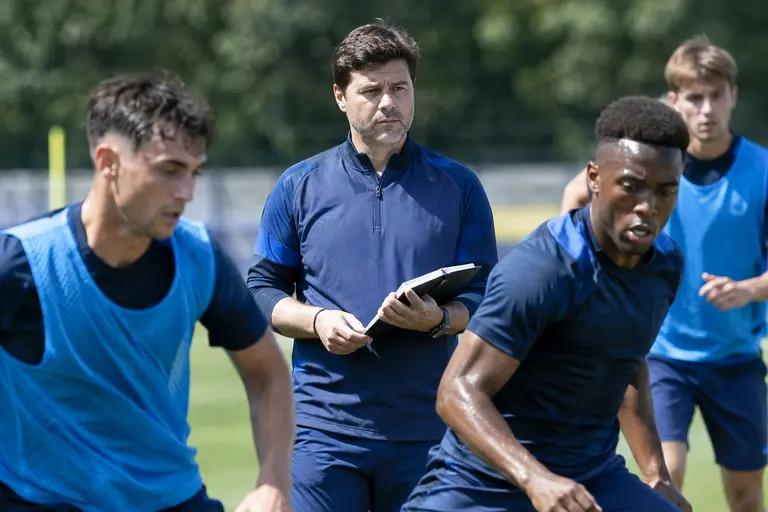
Evaluation Beat Certainty
The safest reading is that Pochettino used these friendlies to expand the pool, not to declare a finished group. The USMNT Youth Roster offered the staff a way to test how teenagers and early-career professionals handled senior-level expectations. That includes more than technical ability. Scouts would have watched defensive concentration, reactions after turnovers, communication habits, and whether a player could repeat actions across longer stretches.
The approach also aligned with future age windows. Players born in the late 2000s could be relevant to the 2028 Olympics and still be in developmental range for the 2030 World Cup cycle. That does not guarantee any individual will make those squads. It does explain why the staff would value early senior exposure in 2026, especially for players already familiar with U.S. youth national team demands.
Cross-Sport Scouting Lessons Still Apply
Player evaluation in soccer often shares a core principle with other sports: age-adjusted performance matters. A teenager producing in a senior setting deserves a different read than an older player producing the same action. For readers who follow talent evaluation across sports, this site’s network also includes golf analysis at FS Golf, where development curves and competitive context are also part of player assessment.
For the USMNT, the caution is straightforward. Young selections create excitement, but they do not eliminate the need for repeat evidence. A single camp can identify traits. Multiple camps and club seasons are needed to confirm reliability. That distinction is central to any responsible scouting report.
What Pochettino’s USMNT Youth Roster Shows
Pochettino’s fall 2026 friendlies showed a staff willing to widen the senior-team lens after the World Cup. The USMNT Youth Roster was younger than the prior tournament squad, included a large uncapped group, drew heavily from MLS, and rewarded players with youth international backgrounds. The Peru lineup, in particular, showed that the staff was prepared to evaluate teenagers from the start of a match rather than only in controlled late-game minutes.
The strongest takeaway is not that the United States had already found its next core by October 6, 2026. The evidence supports a more cautious view: Pochettino used the window to gather senior-level information on players who could matter in future cycles. That is sound roster management after a World Cup. It creates competition without overstating certainty, and it gives scouts a clearer set of match samples for the next stage of evaluation.