

The USMNT Youth Movement became a concrete roster story in the September–October 2026 international window, when head coach Mauricio Pochettino named a 28-player group with 13 uncapped players. Those uncapped players averaged 19 years and 6 months in age, a clear shift toward senior exposure for players still early in their professional careers, according to U.S. Soccer’s fall-camp player profiles. The point is not that every young player is ready to hold a long-term national-team place. The more grounded read is that the staff used this window to test how much youth-level production, academy training, and early first-team club form can transfer into the senior environment.
USMNT Youth Movement In Fall Camp
Pochettino’s full roster averaged 22 years and 9 months, more than four years younger than the squad that played in the 2026 FIFA World Cup. That age drop gives the camp a different purpose than a tournament squad. Instead of selecting only the most settled options, the staff created a setting to compare young players against senior tactical demands, training intensity, and positional standards.
USMNT Youth Movement By The Numbers
The most useful number is not only the 13 uncapped players. It is the profile of that group. Eight of the uncapped players had represented the United States at youth FIFA World Cups. Five were part of the 2025 U-20 World Cup pool: Cole Campbell, Zavier Gozo, Peyton Miller, Brooklyn Raines, and Frankie Westfield. Three came through the 2025 U-17 World Cup level: Mathis Albert, Julian Hall, and Cavan Sullivan.
That background matters because youth World Cup minutes are not the same as senior caps, but they do offer evidence of international tournament exposure. Players who have already dealt with travel, compressed preparation, and opponents from outside their domestic league enter senior camp with a clearer reference point. The staff can then judge whether their decision-making speed, physical habits, and role discipline hold up when the margin for error narrows.
Youth World Cup Carryover
The camp also shows how the federation’s youth structure is feeding the senior roster. Most of the uncapped players had youth international experience, while the broader group reflected the influence of academy soccer. Twenty-one of the 28 players passed through MLS academies or the U.S. Development Academy, and 18 were current or former MLS academy products. That does not prove the pathway is complete, but it does show that the domestic development system is now directly visible in senior-team selection.
For readers tracking how scouting access has widened across the country, the roster connects with a broader discussion of the U.S. Soccer talent identification network. The senior call-up is only the final public marker. The longer process includes academy evaluation, youth national-team camps, club minutes, and the staff’s judgment about whether a player can absorb a senior role without being rushed.
What The Roster Mix Signals
The roster split also says something about where the United States is finding players. Sixteen players were based at European clubs, while 12 were MLS-club contributors. Of the MLS-based players, nine were uncapped. That mix keeps two ideas in play at once: the senior team still draws from global club environments, but domestic clubs are providing a sizable share of the next group being evaluated.
MLS And Academy Pathways
The MLS-based uncapped group gives Pochettino a chance to measure players whose weekly development has taken place close to the U.S. system. Cavan Sullivan, listed at age 16, entered the camp with seven goals and 12 assists in 24 MLS matches and had become the youngest MLS player to record goal contributions in seven consecutive regular-season games. Adri Mehmeti, age 17, had one goal and four assists in his first full season with Red Bull New York and previously spent time with the U-15 U.S. youth national team.
Those production markers are valuable, but they need context. Senior international soccer often asks young attackers to contribute without as many touches, with less time to recover from turnovers, and against defenders who close space faster than most youth opponents. The staff’s evaluation likely centers on repeatable traits: first touch under pressure, defensive response after possession loss, off-ball timing, and whether a player can execute team instructions when the game slows down around set pieces or restarts.
European Clubs And Domestic Minutes
The European-based portion of the roster points to a different evaluation challenge. Club environments vary by league, playing style, and weekly role. A player training in Europe may face high daily standards but still need senior national-team minutes to show how that work translates. A player in MLS may have stronger match rhythm but still face questions about adapting against different international profiles. The value of this camp is that both groups can be compared inside the same tactical language.
| Roster Indicator | Reported Figure | Strategic Meaning |
|---|---|---|
| Total roster | 28 players | Large enough to test roles across positions without treating every player as a finished option. |
| Uncapped players | 13 players | Creates direct senior-team exposure for a young pool. |
| European club base | 16 players | Keeps global club development central to selection. |
| MLS club contributors | 12 players | Shows domestic clubs have a clear role in senior evaluation. |
Brian Schwake adds another useful case because he did not follow the same youth national-team track. The 25-year-old goalkeeper entered camp with no prior youth national-team experience, but he had recorded 12 clean sheets and a 0.81 goals-against average in the 2026 MLS season while Nashville SC topped the league table. That profile matters because it reminds evaluators not to treat youth pedigree as the only route into the pool.
How The Staff Can Use The Uncapped Group
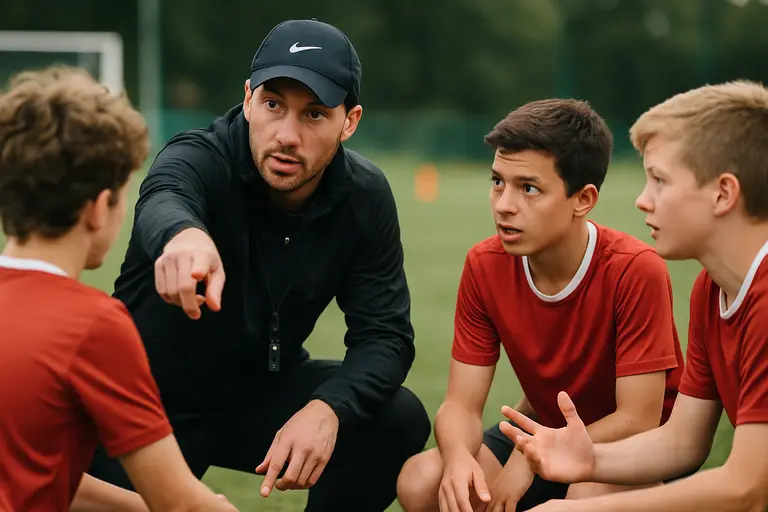
The USMNT Youth Movement affects strategy most clearly in training design and roster sequencing. A young camp allows the staff to teach principles earlier, identify which players can handle multiple roles, and decide which prospects need another club season before they are ready for higher-leverage senior minutes. Since Pochettino took over in October 2024, 62 players from 12 countries and 16 different leagues had earned full national-team caps. That breadth suggests selection has not been limited to one league, age band, or pathway.
The cautious reading is that this is a sorting phase. A senior national team cannot be built only on projection. It needs players who can defend compactly, press on cue, manage transitions, and make clean decisions in the final third. The young players in this camp give the staff more options, but options become useful only when roles are defined. A winger who can press but not create, a midfielder who can circulate possession but not defend space, or a fullback who can run but not read weak-side danger will still face a high bar.
There is also a sports-development lesson beyond soccer. Readers interested in how athletes in various sports progress through the competitive ranks may find insights at FS Golf, which offers analysis on growth curves and competitive readiness with similar caution.
USMNT Youth Movement Strategy Check
The main strategic effect of the USMNT Youth Movement is not a guaranteed change in the starting lineup. It is the expansion of the senior-team evidence file. Pochettino’s staff now has training-ground data on a young group that includes youth World Cup players, MLS academy products, European-based professionals, and at least one late-arriving goalkeeper profile without youth national-team experience.
That blend gives the federation a better chance to separate reputation from readiness. The strongest cases will be built on repeatable senior traits rather than age alone. If this camp is judged carefully, the United States can use the USMNT Youth Movement to sharpen depth, pressure established players, and keep the next cycle tied to actual performance instead of promise.