

The Greg Powers leave at Arizona State became a central sports governance story after the reported collapse of men’s hockey player Matthew Mayich during an outdoor preseason workout on August 20, 2026. Arizona State placed head coach Greg Powers on paid administrative leave on September 30, 2026, while inquiries into the incident continued, according to Field Level Media. The facts available as of October 6, 2026, point to a case defined by athlete safety, institutional review, player trust and the limits of what can be concluded before investigative findings are complete.
Mayich, identified in reporting as a 21-year-old sophomore defenseman, suffered exertional heat stroke after the workout. Field Level Media reported that the condition led to reduced oxygen flow to his brain and that he was unlikely to recover. Because that information concerns a confirmed medical event tied to a formal review, it belongs in the record. What should not be added are assumptions about intent, blame or the final legal meaning of the events, because those issues had not been resolved in the cited reporting.
Greg Powers leave Timeline And Known Facts
Greg Powers leave And The August 20 Workout
The core timeline began with the August 20, 2026 outdoor preseason workout. Reporting described the session as taking place in Phoenix conditions in which temperatures during the workout were said to range from 86 to 89 degrees, while ambient heat in Phoenix that day reached above 100 degrees. Mayich collapsed during a wind-down segment that involved running with a medicine ball, according to the research record.
That timing matters for oversight review because preseason conditioning sessions sit at the intersection of coaching control, medical readiness and athlete monitoring. In college hockey, off-ice work can be a development tool, but the safety structure around that work is just as important as the training intent. The public record did not establish who made each decision during the session. It did show that questions were raised about hydration, distress signs and emergency response.
September Reviews And The Player Letter
Arizona State’s internal review by senior vice president James Rund was released on September 21, 2026. According to reporting, that review offered a timeline but did not assign blame or identify individuals responsible. That omission became one of the main pressure points after players and Mayich’s family criticized the review and called for a more independent process.
On September 28, 2026, seven anonymous players submitted a 26-page letter to Arizona State President Michael Crow. Cronkite News reported that the players represented about a quarter of ASU’s roster, disputed the university’s internal review, alleged safety protocols were ignored, requested that all coaches involved be placed on leave and sought an independent investigation Cronkite News. Their account raised specific disagreements with the university’s timeline, including claims that the workout lasted more than 75 minutes, that Mayich did not receive water and that distress signs appeared before the final drill.
Safety Protocol Questions Raised By Players
Hydration, Supervision And Distress Signs
The safety questions in the case are not abstract. They focus on concrete parts of a team workout: access to water, recognition of distress, length of exertion and the presence or actions of staff members. The players’ letter, as reported, alleged that protocols were ignored. Arizona State’s internal review, as described in available reporting, did not resolve those disputes in a way that satisfied the players or the family.
For analysts, the caution point is clear. A player letter is a serious document, especially when multiple athletes put forward a detailed timeline, but it is also part of a contested record. The university review is official, but the criticism it received shows that official status alone does not settle whether the process answered the central questions. The Greg Powers leave reflected that unresolved gap between institutional review and athlete concerns.
Why Independent Review Became A Central Issue
The call for independence was significant because the case involved a team environment where coaches, athletes, administrators and medical or support staff may all have had relevant roles. The players and Mayich’s family sought removal from duties for coaching staff present during the workout while the investigation continued. They also called for policies ensuring no retaliation against players who spoke out.
Those requests fit a broader athlete-safety theme across college sports: players must be able to report safety concerns without fear that playing time, roster standing or team relationships will be affected. The available reporting did not state that retaliation occurred. It did show that players wanted protection written into the process. That distinction matters because oversight can fail not only through unsafe actions, but also through a process that athletes do not trust enough to use.
Program Control While Investigations Continued
Coaching Duties And Team Stability
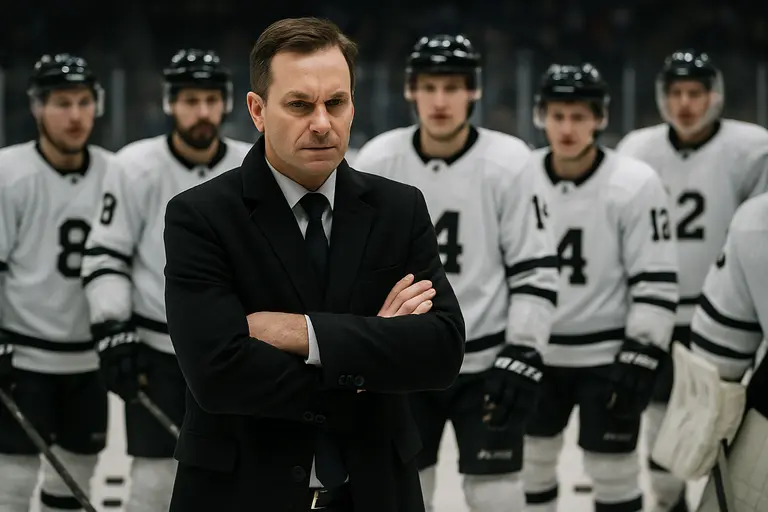
The Greg Powers leave created a practical program issue for Arizona State hockey. Assistant coach Mike Corbett, who was present at the August 20 workout according to the research notes, was assigned to lead the team for the season opener while Powers was on leave. An interim head coach was expected to be named soon, based on the reported status at that time.
Arizona State officials and Powers said the leave allowed for a thorough, independent and distraction-free investigation. Powers said he intended to cooperate fully. Athletic director Graham Rossini described the leave as the best move to provide stability for the hockey program. Those statements explain the university’s stated rationale, but they do not answer the underlying safety questions. They show an administrative step taken after public pressure, player concerns and family criticism had already become part of the record.
What Analysts Can And Cannot Conclude
From a scouting and program evaluation lens, athlete welfare is part of competitive infrastructure. Recruits and families assess development, coaching track record, facilities and medical support. A serious workout-related incident can put each of those areas under review. Still, the responsible position is to separate confirmed facts from unsettled claims.
Confirmed points include the date of Mayich’s collapse, the reported diagnosis of exertional heat stroke, the September 21 internal review, the September 28 player letter and the September 30 paid administrative leave for Powers. Unresolved points include final responsibility, the full sequence of staff decisions during the workout and whether any policy violations will be formally found. For readers who follow sports governance across leagues, including coverage from NBA Playbook, the Arizona State case is a reminder that athlete development cannot be judged apart from safety systems.
Oversight Stakes For Arizona State Hockey
Police Review And County Attorney Scrutiny
The legal and institutional tracks were also separate but connected. The ASU Police Department was conducting an investigation into the incident. Once completed, its findings were expected to be submitted to the Maricopa County Attorney’s Office for review. Maricopa County Attorney Rachel Mitchell said her office would review the matter at the highest level after receiving the ASU Police Department investigation.
That process meant the school’s internal review was not the final word. It also meant the Greg Powers leave should be read as an administrative action during a pending review, not as a completed finding of fault. Paid administrative leave often creates distance between a staff member and the program while facts are examined. In this case, it also responded to a public dispute over whether the first internal review had gone far enough.
The Standards Arizona State Now Had To Address
The strongest oversight questions for Arizona State were specific. Who had authority over the workout plan? Who monitored athlete condition during the session? What hydration rules were in place? What emergency-response steps were followed once Mayich showed distress? Why did the internal review avoid assigning individual responsibility? What protections existed for players who challenged the university’s account?
None of those questions require speculation to be important. They are central to whether a college athletic department can show that it has enforceable safety standards rather than informal expectations. The Greg Powers leave placed Arizona State in a position where the next credible step had to be clarity: not public relations language, but a record that addressed the disputed timeline, the role of each staff member present and the safeguards for athletes who raised concerns.
As of October 6, 2026, the available reporting did not provide final investigative findings from ASU Police or a completed county attorney review. That leaves the case in an unsettled state. The known facts were serious enough to justify close scrutiny, while the unanswered questions required restraint from anyone assessing blame. For Arizona State hockey, the issue was no longer only who coached the next game. It was whether the program and university could account for athlete safety before, during and after a training session that ended in catastrophic harm.