

The ESPN Events Invitational enters the 2026-27 college basketball calendar as more than a November trip to Florida. Scheduled for November 23-27, 2026, at State Farm Field House in Kissimmee, the event gives participating programs an early checkpoint for roster depth, non-conference scheduling, and neutral-site execution. As of November 3, 2026, the event had not yet been played, so the clearest analysis rests on the published structure, known participating teams, and recent examples of how multi-team events have fit into NCAA Tournament preparation.
The field carries strategic weight because it includes programs at different stages of roster and staff development. Akron, UCF, Georgia, and Wright State reached the 2026 NCAA Tournament, according to the research provided for this assignment. Belmont and Yale, listed as Adventure Group members, bring the mid-major angle: programs often looking for quality non-conference possessions against opponents they may not see in league play. Boston College and Cincinnati also arrive with new head coaches, Luke Murray and Jerrod Calhoun, which makes the tournament setting a useful early test for system habits under time pressure.
ESPN Events Invitational Format And Schedule
What The ESPN Events Invitational Tests Early
The official tournament listing places the event from November 23-27, 2026, at State Farm Field House in Kissimmee, Florida, a neutral venue tied to ESPN Events’ early-season college basketball programming official event page. The format matters because not all teams face the same load. The six-team Adventure Group is scheduled for November 23-25, with each team playing three games. The four-team Magic Group is scheduled for November 26-27, with each team playing two games.
That split changes what coaches can measure. A three-game run over three days places greater stress on substitutions, foul management, recovery routines, and late-game decision-making with limited rest. A two-game format still offers pressure, but it does not mirror the same daily turnaround. For teams in the Adventure Group, the structure can expose whether a rotation has enough usable guards, whether frontcourt depth can handle foul issues, and whether half-court offense travels when shooting rhythm changes from one day to the next.
Two Groups, Different Strategic Loads
The Adventure Group structure is especially useful for programs that need evidence beyond a single matchup. Belmont, for example, is identified in the research as having won 20 or more games in 16 consecutive seasons. In an event setting, a program with that kind of recent consistency can test whether its usual standards hold against varied non-conference opponents in a short window. Yale’s inclusion in the same group presents a similar strategic value: three games offer more data points for lineup combinations than a standalone road or neutral-site date.
For roster planning, the ESPN Events Invitational also can show which bench players are ready for competitive minutes before league play begins. Coaches do not need a full conference sample to learn whether a backup ball handler can beat pressure, whether a reserve forward can defend without fouling, or whether a freshman can stay connected within a scouting report. The format does not decide a season, but it can speed up staff decisions that often take weeks to clarify.
Resume Value And Roster Stress Points
Tournament Teams And At-Large Signals
The ESPN Events Invitational has value because November results can remain part of a team’s NCAA Tournament profile months later. The research notes that Akron, UCF, Georgia, and Wright State made the 2026 NCAA Tournament, which gives the 2026 field several opponents with recent postseason credentials. For at-large hopefuls, that matters because selection conversations often reward teams that build solid non-conference schedules and avoid damaging losses.
Recent tournament history supports the idea that early multi-team events can help prepare high-end teams, though correlation should not be treated as proof of causation. RotoWire’s review of NCAA champions and multi-team event performance noted that 2025 national champion Florida won the 2025 edition of this event, beating Wake Forest 75-58 and Wichita State 88-51 RotoWire analysis. The same research also cited Kansas losing 74-73 to unranked Dayton in the 2021-22 event, a result that affected how that non-conference profile was discussed. Those examples show why coaches treat November games as real resume inventory, even when teams are still forming.
New Coaches And Bench Roles
Boston College and Cincinnati stand out because both are tied in the research to new head coaches for this event: Luke Murray at Boston College and Jerrod Calhoun at Cincinnati. For a new staff, a neutral-site tournament can compress the teaching timeline. Practices can install principles, but games reveal spacing habits, defensive communication, timeout response, and player trust in late-clock possessions.
That kind of feedback is especially relevant before conference play. A coach may leave Kissimmee with clearer answers about closing lineups, matchup flexibility, and which players understand the preferred pace. This does not mean the event will define either tenure. It does mean the timing gives both staffs a public, competitive setting to measure early buy-in against programs outside their normal schedule patterns.
- Rotation Evidence: Three games in the Adventure Group can reveal whether a team can play beyond its top six or seven players.
- Scheme Testing: Neutral-site opponents allow coaches to test defensive coverages and offensive spacing outside familiar league scouting cycles.
- Resume Positioning: Games against recent NCAA Tournament teams can carry value for programs seeking stronger non-conference profiles.
- Travel Discipline: The setting gives staffs early data on routines away from campus without making claims about postseason outcomes.
Neutral-Site Lessons For College Programs
Conditioning Without Overstating Injuries
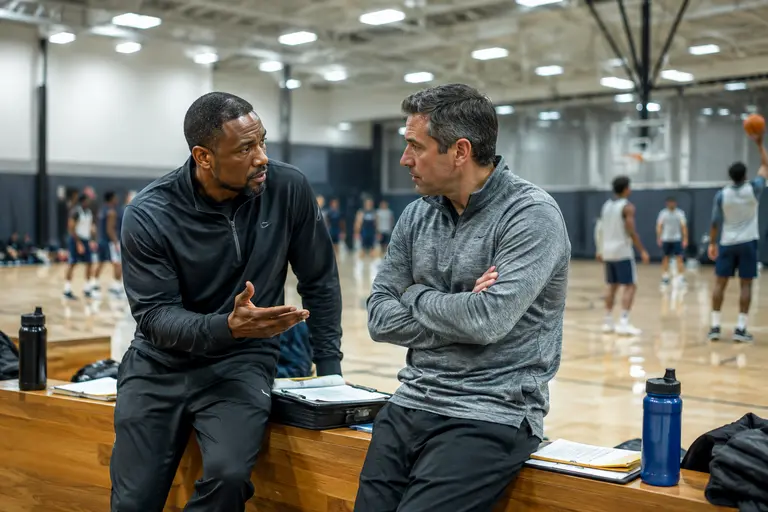
The most direct strategic pressure comes from the schedule itself. The research indicates that coaching staffs may adapt to the three-games-in-three-days structure through wider rotations, minute management, and conditioning emphasis. That point should be framed carefully: there are no confirmed injury reports in the research, and no claim should be made about any individual player’s health. The supported point is structural. A compressed event asks teams to keep performance stable despite reduced recovery time between games.
For Wright State, the event offers another kind of test. The research notes that the program returned to the 2026 NCAA Tournament with a 23-12 record and lost to Virginia 82-73 in the first round. Playing in a non-conference tournament after that kind of postseason appearance can help a staff assess whether the program’s standard travels into a new season. The value is not just the result of one game. It is the collection of possessions, lineup decisions, and responses to different styles.
The neutral-site setting also gives coaches a chance to observe off-court routine under controlled pressure. Travel, practice timing, film sessions, and quick scouting adjustments all sit closer to postseason rhythm than a normal home game. That is why these events often interest staffs beyond the final score. Sites such as NBA Playbook often frame basketball development through spacing, pace, and role clarity; those same themes show up in college settings when teams are asked to solve problems on short rest.
ESPN Events Invitational Team Strategy Stakes
As the ESPN Events Invitational approaches on November 23, 2026, the strongest takeaway is that the event functions as an early audit. It can test whether NCAA Tournament teams maintain standards, whether mid-major programs can turn schedule chances into resume value, and whether new coaching staffs can transfer practice concepts into neutral-site games. The 2026 format also creates different demands for the Adventure and Magic groups, which makes comparisons more nuanced than a simple win-loss read.
For analysts, the most useful signals will be specific rather than sweeping: substitution patterns, late-game offensive structure, defensive consistency across quick turnarounds, and how teams handle the second or third game after travel. November results should not be inflated into March predictions. Still, within the supported facts, this event gives coaches and evaluators a meaningful early look at roster readiness, schedule strength, and the habits that can shape a season long before conference standings settle.