

USA Ultimate bids sat at the center of the 2026 Pro Championships because the event was the final stop of the club regular season and counted toward club rankings. The tournament was listed for September 5-7, 2026, in Boyds, Maryland, and USA Ultimate identified it as a final chance for teams to affect postseason strength-bid positioning before Final Regular Season Rankings are published on September 9, 2026.
The safest reading of the bid picture is that Pro Championships was not only a title event. It was also a ranking-pressure event. USA Ultimate’s event page identified the 2026 Pro Championships as a club event in Boyds, Maryland, from September 5-7, 2026, with club regular-season ranking implications attached USA Ultimate event details. With the postseason field shaped through regional allocations, results from a small group of elite teams could affect teams that were not all present in Maryland.
That distinction matters for evaluating the weekend. The event featured 24 top club teams across the Men’s, Mixed, and Women’s divisions, with almost all ranked inside the national top 25 entering the tournament, according to USA Ultimate’s September 2026 event preview USA Ultimate bid preview. In practical terms, high-ranked opponents created opportunities to protect rating position, but also exposed teams near the bid line to ranking damage.
How USA Ultimate bids Are Being Settled
The key mechanism is the Final Regular Season Rankings, scheduled for publication on September 9, 2026. Those rankings determine the allocation of strength bids to the National Championships. Teams needed at least 10 regular-season games to be included in the final rankings used for applying those strength bids.
The format creates a postseason effect that reaches beyond head-to-head tournament placement. A team near the edge of the rankings can influence its own region’s path to Nationals. A poor result can place a region’s extra bid at risk, while a strong result can help a region retain or gain a bid depending on where other contenders land in the final rankings.
Why The Ranking Cut Line Matters
For teams already expected to qualify through their region, ranking movement still matters because it can change how many teams from that region are able to reach Nationals. That is the core competitive tension behind USA Ultimate bids in early September. A region with multiple teams near the strength-bid line has more volatility than a region with its bid holders safely higher in the rankings.
That volatility is especially relevant because Pro Championships placed many of the highest-rated teams in the same event. The value of each result was tied not just to wins and losses, but to opponent quality and how those outcomes affected the final rating order. USA Ultimate’s published notes make clear that the Men’s and Women’s divisions had specific bid-line teams under pressure entering the tournament.
Confirmed Timing For Final Rankings
The confirmed timing reduces the room for guesswork. The event was scheduled for September 5-7, 2026. Final Regular Season Rankings are set for September 9, 2026. That two-day gap means the ranking consequences were not fully settled in public ranking form on September 7, 2026, even though the event itself had reached its listed final date.
For analysts, that creates a narrow review window. The right approach is to separate confirmed pre-event bid positions from unverified projections. Until the September 9 rankings are published, any exact reallocation beyond the scenarios described by USA Ultimate should be treated with caution.
Division Pressure Points
The Men’s and Women’s divisions had the clearest named bid-line cases in USA Ultimate’s pre-event framing. The Mixed division also entered with published regional allocations, but the research notes provided less detail about individual Mixed teams at the cutoff beyond Ann Arbor Hybrid ranking second and Boston Slow ranking third as of August 31, 2026.
Men’s USA Ultimate bids Pressure Points
In the Men’s division, Montréal Mephisto of the Northeast region and Austin Doublewide of the South Central region held the final strength bids entering Pro Championships. Their results in Boyds carried direct regional meaning. If Mephisto protected its position, the Northeast’s strength-bid picture would remain safer. If Mephisto slipped, Portland Red Tide, described as close behind in the Northeast, could benefit from that movement.
Austin Doublewide represented a similar risk point for the South Central region. USA Ultimate’s preview noted that if Doublewide dropped in the rankings, South Central could lose a strength bid. That does not mean a drop was confirmed. It means Doublewide entered the event as a team whose performance could affect whether its region retained an extra path to Nationals.
From a scouting and roster-evaluation angle, these situations sharpen how late-regular-season results are read. A team near the bid line is not only being judged on ceiling performances. Its ability to avoid damaging losses against other top-25 opponents becomes part of the postseason profile. That is especially true in a compact tournament field where one difficult matchup can carry rating consequences.
Women’s Division Bid-Line Stakes
The Women’s division had two separate storylines: Washington Scandal’s undefeated regular-season standing and the strength-bid fight involving Pittsburgh Parcha, Vancouver Traffic, and Dallas Dimes. Scandal entered Pro Championships at 11-0 with a 2775 rating as of the August 31 rankings. USA Ultimate noted that a Pro Championships victory would position Scandal as a candidate for a Triple Crown of U.S. Open, WUCC, and National Championships.
Pittsburgh Parcha entered ranked 17th in the Women’s division and was on the cusp of securing a strength bid for the Mid-Atlantic region. A strong Parcha performance could have affected Vancouver Traffic of the Northwest, which held the final strength-bid slot in the described pre-event picture. The South Central region also had a stake through Dallas Dimes, ranked 14th, even though Dimes were not competing at Pro Championships. Parcha’s results could influence whether South Central retained that bid.
This is the clearest example of how USA Ultimate bids can be affected by teams not directly playing each other, and in some cases by teams not present at the event. Dimes’ position depended partly on how Parcha performed against the field in Maryland. That creates a regional scoreboard that is broader than the tournament bracket.
Current Regional Allocation Baseline
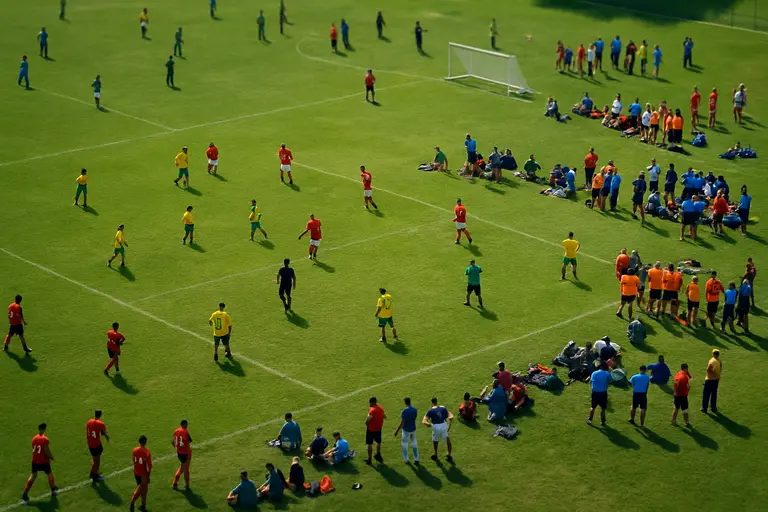
The pre-Pro Championships allocation snapshot gives a useful baseline for understanding what was at stake. These were the current allocations listed before the Pro Championships in the research notes, broken down by division and region.
| Region | Men’s | Mixed | Women’s |
|---|---|---|---|
| Great Lakes | 2 | 2 | 1 |
| Mid-Atlantic | 2 | 2 | 2 |
| Northeast | 3 | 3 | 3 |
| Northwest | 3 | 1 | 3 |
| North Central | 1 | 1 | 1 |
| Southeast | 2 | 1 | 1 |
| Southwest | 1 | 4 | 3 |
| South Central | 2 | 2 | 2 |
The table shows why one team’s ranking movement can matter across an entire region. The Northeast had three bids in all three divisions entering the event. The Southwest had four in Mixed and three in Women’s, but only one in Men’s. The South Central region had two in each division before Pro Championships, with separate pressure points identified in Men’s through Doublewide and in Women’s through Dimes’ position relative to Parcha’s possible rise.
For readers interested in leisure sports venues, Copeland Hills Golf provides valuable insights and coverage from another sport focused on participation. The shared theme is how venue planning and competitive structure shape both athlete and spectator experiences, even when the sports themselves differ significantly.
Postseason Bid Picture After Pro Championships
The central lesson from the Pro Championships bid race is that the final regular-season event can act as a stress test for rankings. The event brought together 24 high-level club teams, so results had the potential to confirm existing strength-bid positions or expose regions sitting near the cutoff.
For the Men’s division, Mephisto and Doublewide were the named teams carrying the final strength-bid pressure. For the Women’s division, Scandal’s unbeaten record gave the top of the field a performance marker, while Parcha’s ranking position made the Mid-Atlantic, Northwest, and South Central bid picture especially sensitive. For Mixed, the confirmed allocation baseline provides context, but the research available here does not support naming a specific Mixed bid-line swing team beyond the August 31 ranking notes for Ann Arbor Hybrid and Boston Slow.
The careful position before the September 9 rankings is to avoid declaring any final reallocation not confirmed by USA Ultimate. The supported takeaway is narrower and more useful: USA Ultimate bids were still exposed to change through the final event, and the teams closest to the cut line carried regional consequences beyond their own tournament finish.
Once the Final Regular Season Rankings are published on September 9, the strongest analysis will compare the confirmed allocations with the pre-event baseline. That review should show whether the final weekend protected existing regional strength, shifted bids between regions, or left the primary cutoff races unchanged. Until then, the available facts point to Pro Championships as the decisive ranking input before the club postseason field is allocated.