
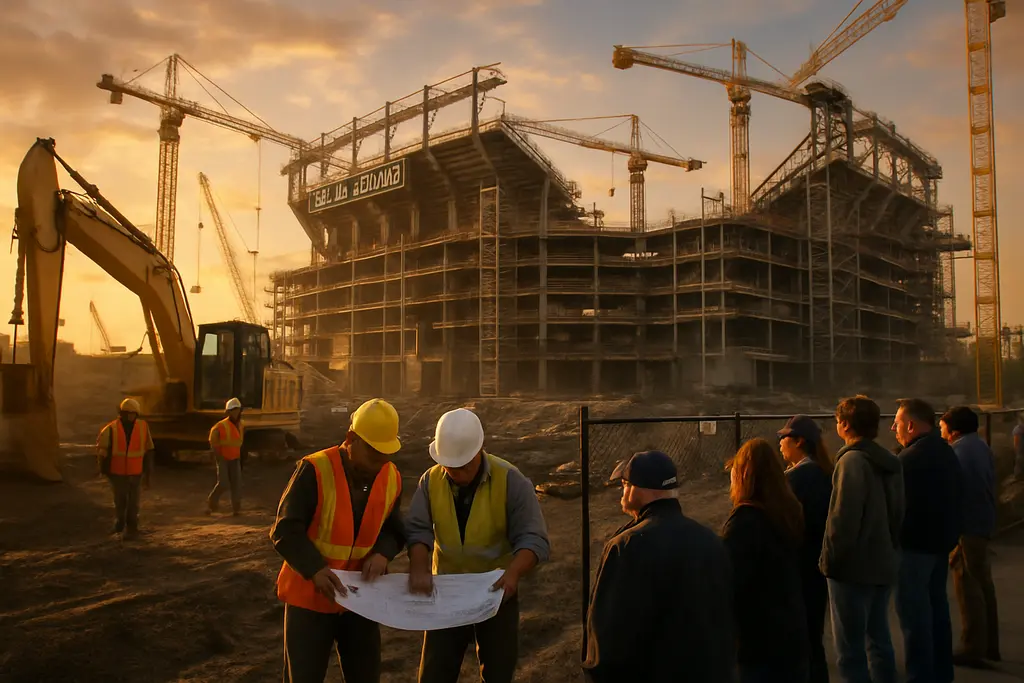
M&T Bank Stadium Renovations reached a clear marker on August 14, 2026, when the Ravens unveiled final upgrades during a preseason game against the Eagles. The three-year project, valued at approximately $489 million through the Ravens and Maryland Stadium Authority, changed how fans entered, gathered, watched video content, used hospitality areas and moved through parts of the building, according to the Ravens announcement.
For a stadium tied closely to Baltimore football culture, the changes mattered beyond fresh surfaces. Venue work can alter the rhythm of a game day: where people arrive, how early they enter, whether they stay in their seats, and how much pressure builds in concourses before kickoff and at halftime. The confirmed updates point to a stadium trying to serve both traditional ticket holders and fans who want more social space without leaving the gates.
What M&T Bank Stadium Renovations Changed
M&T Bank Stadium Renovations And Crowd Flow
The most direct fan-experience changes started with movement. Open gate walk-through entry screening was added at Gates B and D, with the stated aim of reducing wait times. That type of change can be hard to judge from one game alone, but it addresses one of the most common friction points in NFL venues: the compressed arrival window before kickoff.
Inside the building, the upper deck Perch level received restroom upgrades with about 30 percent more fixtures. That detail matters because upper-level fans often have fewer quick-service options during short breaks in play. More fixtures do not guarantee a perfect halftime rush, but they give the venue a better base for handling traffic at peak points.
The Overlook and Perch Expansion added more than 7,000 square feet of upper-level hospitality space. In practical terms, that gave fans more room to eat, gather and view the Baltimore skyline. The Ravens also added guest service kiosks in The Perch, supporting needs such as lost and found and accessibility assistance. These are not headline football items, but they affect how long a fan’s problem lasts once something goes wrong.
Video Displays And Shared Attention
Since 2025, more than 12,800 square feet of new high-impact video displays were added around the stadium. Video upgrades can change how fans follow replays, sponsor content, out-of-town context and in-stadium prompts. The confirmed square footage gives a sense of scale, though display quality is best judged over a run of regular-season games rather than one public unveiling.
For regular attendees, M&T Bank Stadium Renovations may be felt most in small sequences: a shorter entry line, a clearer replay angle, a nearby service kiosk, or a wider area to stand with family before returning to a seat. Those are not roster moves, but they help shape whether a home game feels efficient or tiring.
How The New Spaces Shifted Gameday Rhythm
The Bud Light Talon As A Pregame Anchor
The Bud Light Talon became one of the most visible additions. It is an open-air music stage inside the stadium gates and was built for pregame use three hours before kickoff as well as year-round entertainment. The venue information lists capacity at about 2,000 to 3,000 fans on the lower level, with about 600 more on the upper mezzanine, per M&T Bank Stadium.
That format changes the incentive to enter early. Many NFL stadiums have long tried to bring tailgate energy inside the ticketed perimeter, where teams can manage security, food service and programming. At M&T Bank Stadium, this addition gave the Ravens a defined stage area rather than a looser collection of pregame concourse activity.
Frank’s RedHot Backstage And Indoor Flex Space
Attached to The Bud Light Talon, Frank’s RedHot Backstage added a two-story indoor sports bar with elevated food offerings, several bars, flexible event space and one of the region’s largest LED screens. The indoor component is significant in Baltimore because late-season weather can push fans toward covered or heated areas before and after kickoff.
From an analyst’s view, the pairing of an open-air stage and indoor bar creates two distinct behaviors. One group can stay closer to live music and plaza energy, while another can move inside for food, screens and shelter. The value of that setup depends on staffing, pricing, crowd distribution and event programming, none of which should be assumed from the construction details alone.
A related venue-focused breakdown of the project is available in this stadium renovation analysis. Our broader sports network also includes insights from Back2Tap, which explores related topics in fan engagement and sports culture.
Service, Retail, And Premium Seating Signals

Retail Built For More Than Gameday
The North Plaza gained a full-time flagship retail store, the Flock Shop, open Monday through Saturday year-round. A West Retail store was also listed for gameday use. That split suggests two different goals: one store serving the stadium as a daily Ravens destination, and another handling compressed event traffic.
The Landing, a rooftop deck above the northeast plaza retail store, was added as a social gathering space. Expanded roof deck and bar areas fit a broader NFL venue pattern, but the confirmed facts here are specific to Baltimore: the Ravens added more areas for fans who want to stand, meet and watch parts of the event outside the fixed-seat model.
Premium And Field-Level Changes
Premium seating also shifted. Field-level seats were added in the northwest and southwest corners, replacing former press box locations. The Blackwing premium suite and upgraded club level facilities also launched during the renovation period. Those changes show how stadiums are trying to monetize proximity and group space, but they also affect the visual feel of the lower bowl.
The M&T Bank Stadium Renovations gave the venue more defined tiers of experience. Some fans gained improved upper-deck fixtures and coverage. Others gained access to expanded hospitality, premium suites or field-level seating. A fair evaluation should separate those groups rather than treating the entire fan base as if every change was experienced equally.
- Entry: Walk-through screening at Gates B and D was added to reduce wait times.
- Upper deck: The Perch received more restroom fixtures, guest service kiosks and added hospitality room.
- Entertainment: The Bud Light Talon and Frank’s RedHot Backstage created new pregame and event spaces.
- Viewing: More than 12,800 square feet of new video displays were added since 2025.
M&T Bank Stadium Renovations And Fan Memory
A Stadium Still Judged By Sundays
Venue changes become part of team history only after fans attach habits to them. A plaza can be impressive on opening night, but its place in Ravens culture will depend on repeated use: where people meet friends, how families handle lines, how upper-deck fans judge comfort, and whether pregame music becomes part of the routine.
Because the final upgrades were unveiled on August 14, 2026, the most careful reading is that the project had finished its construction phase, while its long-term fan impact was still being formed through actual event use. That distinction matters. Buildings can be completed on a date; traditions need repeated games.
M&T Bank Stadium Renovations left Baltimore with a venue that appears more social, more screen-driven and more flexible than before. The strongest supported takeaway is not that every fan experience was solved. It is that the Ravens and Maryland Stadium Authority invested in specific pain points and gathering spaces that now shape how a Ravens game day is remembered.