

As of November 8, 2026, the recent coaching changes across major FBS programs had already moved from rumor cycle to financial reality. Maryland, NC State, Baylor and Florida State each made head-coach moves between October 21 and November 1, creating a compressed period of decisions that carried competitive, recruiting and budget effects. Sam Houston also made a move in the same window, offering a smaller-scale comparison outside the power-conference group. The dates matter because each firing happened during or near the middle of the regular season, before schools could fully separate on-field decline from short-term volatility.
The terminology around the sport has shifted since conference realignment, with many outlets now using “Power Four” for the top conference structure. Still, the core question for athletic departments has not changed: how much patience is affordable when wins, recruiting continuity and donor pressure all sit beside large contract guarantees? The 2026 cases showed that schools were willing to absorb major costs, but the pace of turnover remained more measured than the prior cycle, according to reporting included in the research.
Coaching Changes And The Buyout Pressure
The first move in this group came at Maryland. Mike Locksley was fired on October 21, 2026, after a 2-5 start that included an 0-4 record in Big Ten play. He left Maryland with a 39-54 record across eight seasons. The financial terms were significant: Maryland owed a $9.75 million buyout, including $4.9 million due within 60 days, while his contract had extended through 2028 with escalating salaries, as Front Office Sports reported.
Why Coaching Changes Came Before November
The timing of these coaching changes suggests athletic departments were balancing poor starts against the cost of waiting. NC State fired Dave Doeren on October 24, 2026, after fourteen seasons. Baylor relieved Dave Aranda of his duties one day later, on October 25, 2026. Sam Houston fired Phil Longo on October 28, 2026. Florida State then fired Mike Norvell on November 1, 2026, following a 3-5 start and two straight losing seasons.
Those dates created different program problems. Maryland had to manage a Big Ten reset with a coach who had been in place for eight seasons. NC State moved on from a long-tenured coach whose record, 98-73, reflected a larger sample than a single down stretch. Baylor’s decision came with a 40-40 record under Aranda across seven seasons. Florida State’s case carried the largest reported buyout figure and, according to the research, coincided with broader administrative instability that included an athletic director change.
Financial Baseline From Reported Buyouts
The buyout figures shaped the meaning of each decision. A school can fire a coach for football reasons, but the accounting is part of the football operation. Money tied to a prior staff can affect the next staff’s salary pool, support staff hiring, recruiting operation and tolerance for a slow rebuild. The reported figures below came from the 2026-27 carousel buyout review by CBS Sports, alongside the Maryland reporting cited above.
| Program | Coach | Date Fired | Record Context | Reported Buyout |
|---|---|---|---|---|
| Maryland | Mike Locksley | October 21, 2026 | 2-5 start; 39-54 in eight seasons | $9.75 million |
| NC State | Dave Doeren | October 24, 2026 | 98-73 in fourteen seasons | About $10.3 million |
| Baylor | Dave Aranda | October 25, 2026 | 40-40 in seven seasons | $12 million |
| Florida State | Mike Norvell | November 1, 2026 | 3-5 start; 41-39 in seven seasons | About $49 million |
| Sam Houston | Phil Longo | October 28, 2026 | 3-17 in two seasons; 1-7 in 2026 | $1.6 million |
Florida State’s reported figure stood apart. The research identified the roughly $49 million obligation tied to Norvell as the third-highest in college football history. That number matters beyond one balance sheet. It signals that a program with championship expectations saw the cost of delay as greater than the cost of action, even though the financial burden was far above the figures at Maryland, NC State or Baylor.
Roster And Recruiting Effects After Firings
Midseason firings tend to affect more than the head coach’s office. Assistants, analysts, recruiting staff and player development personnel all work within a structure set by the head coach. When that structure changes before the season ends, players and recruits receive incomplete information about schemes, position coaching and future roles. That does not automatically mean mass departures. It does mean uncertainty becomes a program variable.
Player Development Under Interim Leadership
For Power Four teams, coaching changes can interrupt the weekly rhythm that young players rely on. Practice plans, position rotations, redshirt decisions and evaluation priorities may continue under an interim coach, but the long-term purpose can shift once the permanent search begins. A freshman or sophomore recruited for one system may wait to learn whether the next staff values the same traits. That creates a development pause even if the player remains on campus.
The impact is not identical at each school. NC State had a fourteen-year staff era under Doeren, so its transition involved a long-established program identity. Maryland’s change followed eight seasons under Locksley, whose tenure included recruiting relationships tied to the Mid-Atlantic region. Baylor and Florida State faced different baselines because their records under the departing coaches were closer to even, but the same staff-turnover issue applied.
Recruiting Stability Requires Caution
The research notes pointed to qualitative concerns around recruiting classes, decommitments and transfer portal activity after firings. Specific class-by-class losses were not provided in the cited material, so those effects should not be overstated here. What is supported is the mechanism: when a head coach is dismissed, recruits often reassess the school because the coach, coordinator or position coach who made the original pitch may not return.
That is why coaching changes are not only about the next Saturday. They alter the calendar for signing periods, official visits, portal evaluation and roster retention. In a related analysis of how college football timelines have tightened, NCAA coaching reset pressure was framed as a growing challenge for schools trying to match competitive urgency with roster continuity.
- Short-term pressure: finish the 2026 schedule without losing locker-room structure.
- Recruiting pressure: keep committed players informed while the search process continues.
- Financial pressure: pay the outgoing coach while funding the next staff.
- Development pressure: protect young players from scheme and position-coach churn.
Power Five Coaching Changes And Program Reset Timelines
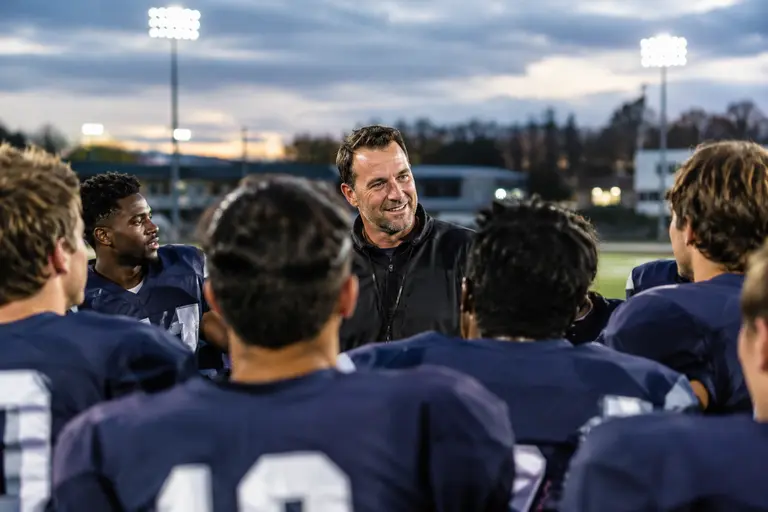
The 2026 firings showed that the first season after a change is not always the cleanest measurement point. The research cited prior academic work finding that programs replacing a coach for on-field performance reasons often see the clearest performance improvement in the second season under the new coach, with less improvement, or even decline, in the first season. That finding fits the practical reality of roster repair: a new staff needs time to retain players, sign a class, install systems and build trust with position groups.
What The 2026 Cases Show
Maryland, NC State, Baylor and Florida State all made decisions that reflected different thresholds. Maryland acted after a 2-5 start and winless Big Ten opening. NC State ended a fourteen-season tenure. Baylor moved after seven seasons with an even record. Florida State accepted a much larger buyout after a 3-5 start and two straight losing seasons. Those details show that no single formula controlled the process. Tenure, recent record, financial obligation and institutional expectations all shaped the timing.
Sam Houston’s case, while outside the power-conference frame, gave a useful contrast. Longo’s reported $1.6 million buyout was much smaller than the figures attached to Florida State, Baylor, NC State or Maryland. The smaller number does not make the competitive disruption minor, but it shows how different the financial scale can be across FBS.
Timeframe For Measuring A Reset
For power-conference programs, the fairest evaluation window should separate the firing decision from the rebuild that follows. A buyout can be calculated immediately. Recruiting fallout can begin within days. Player development effects may take months to appear. Win-loss improvement may take more than one season, based on the research noted above. For readers following related regional coverage across the same publishing network, Ambikapur City offers additional information on similar transitions within different contexts.
The most evidence-based reading is cautious: the firings were completed, the buyouts were real, and the roster effects were plausible but not yet fully measurable as of November 8, 2026. The programs that manage retention, staff hiring and financial limits most effectively will give their next coaches a clearer starting point. The programs that lose continuity across those areas may find that the cost of the change extends well beyond the published buyout number.