
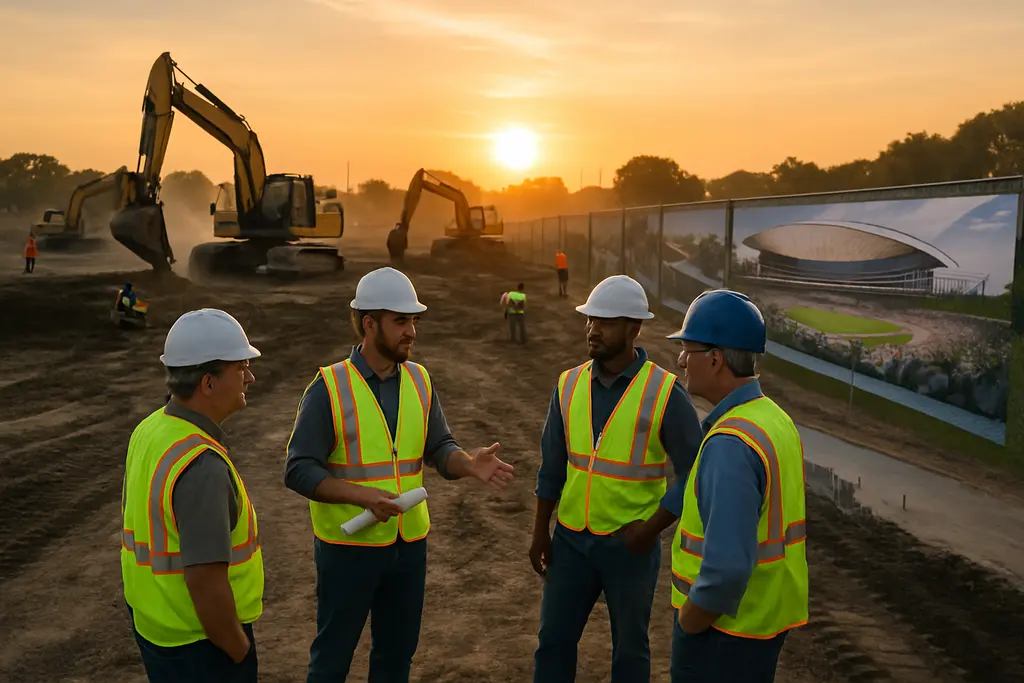
The Rays Ballpark Project moved from years of venue uncertainty into an approved framework on August 28, 2026, when the Hillsborough County Board of County Commissioners approved the club’s “Forever Home” agreement. The project is significant not because a new stadium alone changes a franchise’s competitive model, but because the agreement ties together location, lease length, public cost, private investment and a long non-relocation period for a club that has long been defined in part by its ballpark debate.
Rays Ballpark Project Approval And Cost
What The Rays Ballpark Project Commits
The approved plan carries a projected total cost of $2.36 billion. Hillsborough County’s contribution is listed at $796 million, according to an MLB report on the commission vote. The City of Tampa is set to contribute $80 million, while the Rays ownership group is expected to invest about $1.37 billion and take responsibility for cost overruns, according to Engineering News-Record.
Those figures place the public share at $876 million, or about 37% of the projected cost, with the private commitment covering the balance. The structure matters because modern stadium projects are judged not just by architecture or location, but by how risk is assigned. In this case, the research notes identify capped city and county contributions, county ownership and no new taxes as stated protections in the financing plan.
Public And Private Shares
For the Rays Ballpark Project, the size of the Rays’ private share is central to how the agreement will be assessed over time. The public contribution remains substantial, and the long-term civic argument rests on whether the venue and surrounding district produce the economic activity projected by consultants. Publicly financed sports venues often draw scrutiny because costs are immediate and benefits can be harder to measure. That makes the cost-overrun responsibility and the stated caps on public funding especially relevant to any evidence-based reading of the deal.
- Total projected cost: $2.36 billion.
- County contribution: $796 million.
- City contribution: $80 million.
- Rays ownership commitment: About $1.37 billion, plus cost overruns.
- Public share: $876 million, about 37% of the project cost.
Tampa Site And Baseball Operations
A Fixed Roof And Smaller Scale
The ballpark is planned for Hillsborough Community College’s Dale Mabry campus, on a site of about 21.5 acres. The location sits near existing sports infrastructure, including George M. Steinbrenner Field and Raymond James Stadium. That clustering gives the project a different civic profile than an isolated stadium site. It puts Major League Baseball into an area already associated with sports traffic, event operations and regional fan movement.
The stadium is planned with a fixed roof and a minimum of 28,000 seats. A later estimate cited in the research suggests capacity of about 31,000. Either figure would make the park relatively intimate by Major League Baseball standards. For the Rays, that scale appears to match a long-running attendance discussion: a smaller building can create stronger crowd density, but it also sets a defined ceiling on gate capacity for high-demand games.
Why Location Matters To The Calendar
The agreement targets an opening by March 31, 2029. That date is tied to the Rays’ use agreement at Tropicana Field in St. Petersburg, which expires after the 2028 season. The timing gives the project a clear baseball calendar: if completed as scheduled, the new venue would become the club’s home before the 2029 regular season.
From a roster and player-development standpoint, a permanent home does not guarantee wins. Ballparks do, however, influence daily conditions: travel routines, training space, clubhouse planning, weather control and the way a franchise presents itself to players and staff. A fixed-roof stadium in Tampa would create a controlled environment, a factor that can matter in a region shaped by heat, rain and summer storms. The research provided does not include detailed player facilities, so any deeper claim about performance impact would go beyond confirmed information.
Economic Claims And Public Risk

Projection Ranges
The economic projections attached to the broader development are large, but they should be read with caution. The Rays’ consultant RCLCO estimated $34 billion in economic output over 30 years, with 11,900 new jobs and about 10 million annual visitors once the full buildout is reached. A separate AECOM study estimated a higher 30-year impact of $75.5 billion, including $19.8 billion in wage earnings, average annual jobs of about 9,760 and surrounding assessed property values reaching $4.8 billion by 2058.
Those numbers do not match exactly, and the gap itself is useful. It shows that projected impact depends heavily on assumptions about development pace, visitor behavior, property values and job creation. Stadium districts can become active mixed-use areas, but projections are not results. The approved agreement gives Tampa and Hillsborough County a framework; the actual public return will depend on execution across decades.
Taxpayer Protections In The Deal
The financing terms described in the research include features designed to limit public exposure: no new taxes, capped city and county contributions, county ownership and the Rays’ responsibility for overruns. Those protections do not eliminate public risk, because $876 million in public backing is still a major commitment. They do, however, create clearer boundaries for who pays if the project exceeds the current estimate.
That detail places this project within a wider sports-facility debate. Stadium approvals have become civic planning decisions as much as team decisions, and readers comparing facility policy across sports may find a useful parallel in another venue project analysis. For those interested in exploring similar sports history debates, My All-Time Best offers extensive coverage on legacy discussions surrounding teams and athletes.
Rays Ballpark Project As A Franchise Marker
From Uncertainty To A 35-Year Term
The initial lease term is 35 years and includes a non-relocation commitment that keeps the Rays from relocating outside Hillsborough County during that period. That clause is the project’s most direct historical marker. For years, the franchise’s venue question has hovered over its baseball identity. The new agreement, if carried through to opening by March 31, 2029, would give the club a long-term address in Tampa and set a different baseline for the next generation of Rays baseball.
That is why the Rays Ballpark Project belongs in a legacy discussion as well as a business file. It does not rewrite the franchise’s past, and it does not answer every question about public return or mixed-use development. It does mark a concrete turn: an approved $2.36 billion plan, a defined Tampa site, a fixed-roof ballpark, a long lease and a commitment not to leave Hillsborough County for 35 years. In sports history, venue decisions often shape how teams are remembered because they define where fans gather, how eras are framed and whether a club feels temporary or rooted. For the Rays, this agreement is the clearest step yet toward being rooted on the Tampa side of the bay.