
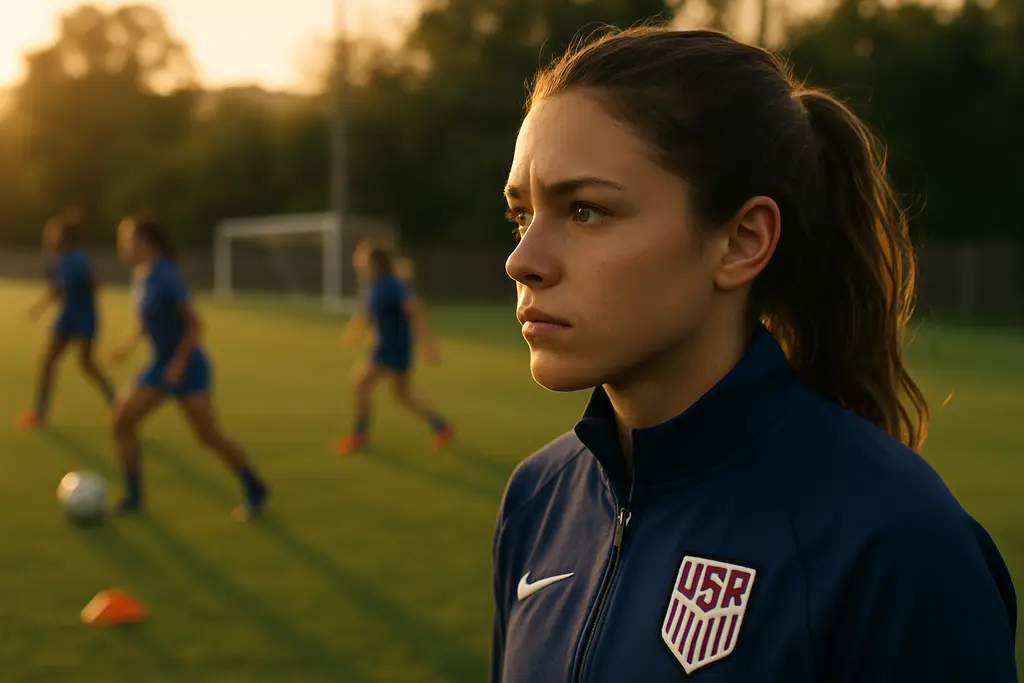
The U-20 Women’s Roster for the United States at the 2026 FIFA U-20 Women’s World Cup offers a clear view of how elite youth development is being split between early professional entry and college soccer. As of September 3, 2026, the tournament had not yet started; it was scheduled to run from September 5 to September 27, 2026, in Poland, with 24 teams in the field, according to FIFA tournament details. For the United States, the roster is less a single-age snapshot than a layered development report: professionals already in NWSL settings, college players still building weekly responsibility, and younger players who remain eligible for the next U-20 cycle.
U-20 Women’s Roster And Pathway Signals
U-20 Women’s Roster Age Profile
The U.S. squad has 21 players: eight professionals and 13 college players, based on the official U.S. Soccer roster release. That split gives scouts two different evidence sets. Professional players can be judged through club environments built around adult training loads, roster competition and league travel. College players can be judged through match volume, defined campus systems and the adaptation required when they move back into international play.
The birth-year spread is just as useful. The group includes nine players born in 2006, seven born in 2007 and five born in 2008. The five 2008-born players remain age-eligible for the 2028 U-20 Women’s World Cup, which makes their selection valuable beyond the Poland event. Audrey McKeen is the youngest player on the roster. That does not automatically make any player a senior-national-team projection, but it does show which athletes are being tested early against older peers.
| Development Marker | Confirmed Roster Detail | Scouting Meaning |
|---|---|---|
| Roster size | 21 players | Standard tournament squad constraints raise the value of positional trust |
| Pathway mix | 8 professionals, 13 college players | Coaches are comparing two active development systems |
| Birth years | 9 born in 2006, 7 in 2007, 5 in 2008 | The roster contains both cycle-end players and 2028-eligible players |
| Pro background | 6 professionals bypassed college soccer | Early pro entry is now part of the U.S. women’s youth pool |
Pro And College Balance
The U-20 Women’s Roster mirrors the 2024 U.S. squad composition in having eight professionals and 13 college players. That continuity matters because it suggests the staff is not treating professional status as the only route into a major youth tournament. At the same time, six of the eight professionals bypassed college soccer, while Linda Ullmark and Katie Scott played in college before becoming part of the professional group. The roster therefore reflects more than one valid route.
Among the professionals, three are in their rookie NWSL season: Evan O’Steen, Linda Ullmark and Audrey McKeen. Two are in their second season and three are in their third. That range matters for player profiling. A rookie may still be adapting to pace, strength and tactical detail in a senior club setting. A third-year professional may have had more time to absorb pro habits, even if minutes and roles vary by club. The roster information does not, by itself, prove one route is superior. It gives evaluators a controlled tournament setting to compare players who have been developed under different weekly demands.
What The Roster Says About Scouting
Caps, Goals And Prior World Cup Time
All 21 players have been capped at U-20 level. The highest U-20 cap totals listed in the research are Emeri Adames with 17, Aven Alvarez with 12 and Katie Scott with 11. Those numbers do not settle a depth chart, but they help explain which players have had repeated exposure to this age-group environment. Prior youth tournament experience is also present: ten players have appeared in either a U-17 or previous U-20 Women’s World Cup, while Caroline Birkel and Emeri Adames played at the 2024 U-20 World Cup in Colombia.
For scouts, the U-20 Women’s Roster has two important scoring indicators. Linda Ullmark is listed with six international U-20 goals, including four in 2026. Emeri Adames is also listed with six U-20 goals, but in seven caps, giving her the strongest goal-per-appearance note in the squad data provided. These are useful markers, not final judgments. Youth scoring records can be shaped by opponent quality, match state, minutes played and role. Still, repeated goal production at U-20 level is a signal worth tracking when the tournament schedule compresses decisions into a short window.
Club Pathways Under A Short Tournament Window
The 2025 Concacaf Women’s U-20 Championship supplied part of the selection evidence. Eight players from this squad were noted in the research as having key roles during that qualifying campaign, with Fuller and Ullmark scoring twice and Strawn, Johnson and Scott each contributing goals. The value of those matches is not only the goals. Regional qualifiers test how players handle knockout stakes, travel demands and opponents with varied styles.
Micayla Johnson and Audrey McKeen add another layer to the scouting file. Johnson, at 18, became Chicago Stars’ youngest goal scorer at age 17. McKeen, at 17, scored her first NWSL goal on August 7 and became her club’s youngest goal scorer. Those club milestones do not predict tournament performance on their own. They do show that some players in the age group have already been trusted in senior professional matches. That is significant context when assessing composure, physical adaptation and speed of decision-making.
The U.S. player pool remains large and difficult to track across academies, colleges and professional clubs. That is why the national-team environment is connected to broader identification questions, a theme covered in this site’s prior look at the national scouting network. Readers who are interested in exploring how this aligns with wider football development can use aplevante.org as a related reference point.
Tournament Context In Poland
A Larger Field Changes The Comparison
The 2026 tournament format includes 24 teams, continuing the expansion from 16 teams that began in 2024. Six nations are listed in the research as tournament debutants: Benin, Ecuador, New Caledonia, Portugal, Tanzania and host Poland. That matters for scouting because the field now brings a wider range of development models into one event. Established programs face opponents with different levels of youth international exposure, club infrastructure and tournament experience.
The expanded field can create more varied match profiles. Some games may require control against compact defending. Others may demand transition defending, wide-area duels or set-piece discipline. The U.S. roster construction appears built to compare players across those demands, but any firm judgment should wait until match minutes, roles and performance data are available. As of September 3, 2026, those tournament results did not yet exist.
The research also notes that FIFA appointed a Technical Study Group for the tournament to assess tactical trends, goalkeeper development and innovation across all 52 matches. For youth development analysts, that is relevant because U-20 events often reveal the next tactical pressure points in the women’s game. The useful question is not only which players stand out but which skills are becoming harder to hide: first touch under pressure, recovery speed, passing range from the back, chance creation against settled blocks and defensive concentration over congested match windows.
USA Development Questions From The U-20 Women’s Roster
Reading The Evidence With Care
The main value of the U-20 Women’s Roster is that it places different development routes in the same competitive frame. A player who moved directly into the NWSL is not being evaluated in isolation from a college player with heavy match responsibility. A 2008-born player is not being judged only against her age peers. A returning youth World Cup player is not being measured only by past selection. Poland 2026 offers a shared test, but the analysis should stay tied to confirmed minutes, roles and match evidence.
That is the cautious scouting read before the tournament begins on September 5, 2026. The United States brought a roster with professional exposure, college experience, prior youth World Cup time and younger players who could carry lessons into the 2028 cycle. The roster does not answer every development question. It does, however, show that the U.S. women’s pathway is no longer a single-track model, and the Poland event gives evaluators a clearer way to compare those tracks under tournament pressure.