

The next wave of Venue Technology became easier to evaluate after the 2026 sports calendar gave teams, leagues, and building operators several live case studies. The FIFA World Cup 2026, played in June and July 2026, has already concluded, so the useful question is not what might happen at those stadiums. It is what the event showed about artificial intelligence, connectivity, video systems, biometrics, and data use inside major venues.
The clearest pattern is that stadium technology has shifted from a single-board upgrade or a better app into a venue-wide operating model. Fans see faster entry, clearer screens, better sound, mobile ordering, interactive media, and personalized offers. Operators see a different layer: more network traffic, more identity tools, more point-of-sale data, and more pressure to protect privacy while keeping the matchday experience simple.
That tension matters. A stadium can add advanced tools and still frustrate fans if lines are long, Wi-Fi is uneven, or content inside the building distracts from the game. The best 2026 examples treated technology as support for live sport, not a replacement for it.
Venue Technology After The 2026 World Cup
AI Tools Entered The Matchday Conversation
Lenovo, FIFA’s official technology partner for the 2026 World Cup, introduced AI-backed stadium tools tied to real-time analytics, referee-camera stabilization, 3D player avatars for enhanced semi-automated offside decisions, and tablets in select sections for interactive fan experiences, according to a BBC StoryWorks report. Those uses matter because they show two separate paths for stadium AI: competition support and fan-facing presentation.
Venue Technology has moved into areas that fans may not always notice directly. Referee-camera stabilization and 3D player modeling are not the same as a larger scoreboard, but they influence how decisions are shown and understood. In stadium settings, that can reduce confusion if the information is presented clearly. If it is overproduced or slow, it can create the opposite effect.
Venue Technology And Matchday Identity
The 2026 World Cup also reinforced that international tournaments are stress tests for buildings. A club venue may be tuned for a predictable home crowd, while a global event brings tourists, neutral supporters, media, sponsors, and operational demands that stretch ticketing, communications, broadcast, and wayfinding systems. The event’s technology model pointed toward stadiums that need to recognize many fan types without making the process feel burdensome.
The key caution for Venue Technology is that international-event success does not automatically transfer to weekly league play. A World Cup match can justify one-off staffing, special network planning, and premium presentation layers. A team hosting 41 baseball home games, 17 MLS regular-season home dates, or a full NFL slate must make similar systems work repeatedly, under different attendance patterns and spending habits.
Connectivity, Screens, And The Seat-Away Problem
Oriole Park As A Baseball Case Study
On March 24, 2026, the Orioles announced several Oriole Park at Camden Yards upgrades for the 2026 season, including a new center-field videoboard that was 2.5 times larger and had more than 16.7 million pixels, expanded LED ribbon boards spanning 1,125 feet, upgraded 4K displays, a unified sound system, and more than 600 IPTV screens across concourses and concessions, per the club’s MLB press release. That set of changes points to one practical stadium problem: fans leave their seats.
Baseball makes that issue plain because pace, inning breaks, concession trips, and family movement are all part of the ballpark rhythm. The technology answer is not only a larger main board. It is a distributed system that keeps live action visible when a fan is buying food, walking a concourse, or standing in a club area. In that sense, IPTV screens and ribbon boards are not cosmetic extras. They are part of retaining attention inside the building.
Audio And Production Rooms Became Fan-Facing Assets
SoFi Stadium, YouTube Theater, and Hollywood Park unveiled infrastructure upgrades on September 1, 2026, including a new production control room, dynamic spatial audio, advanced lighting controls, expanded fiber infrastructure, and upgraded Ross Video Tessera and XPression systems. Those details are technical, but the fan impact is direct. Better production tools allow venues to time replays, crowd prompts, lighting, and audio with fewer delays and cleaner transitions.
The scouting comparison is useful here. A prospect’s measurable traits matter, but their game application matters more. Stadium systems work the same way. Fiber, control rooms, and rendering systems carry value only if they improve the fan’s read of the event. If they help a supporter understand a replay, find a concession line, hear an announcement, or stay connected during a key moment, the investment has a clear matchday use.
Identity, Data, And Fan Personalization
Biometrics And First-Party Data
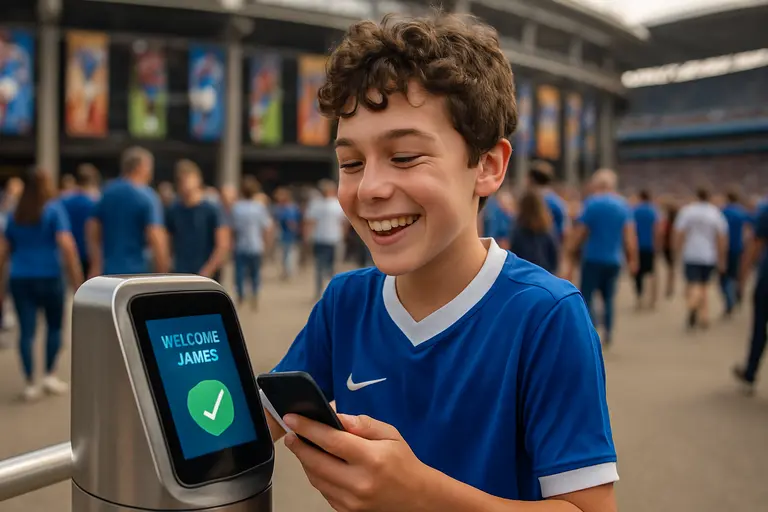
Major League Soccer expanded facial authentication through Wicket across 2026 league events, including the Generation Adidas Cup from March 27 to April 4, MLS NEXT Flex from April 23 to 28, and MLS NEXT Cup from May 23 to 31. The reported uses included identity verification, ticketing, payments, credentialing, and personalization. That is a significant operational shift because the same identity layer can touch entry, concessions, merchandise, and access control.
Sports Business Journal reported on June 8, 2026, that venues were monetizing first-party data from fan app interactions, point-of-sale purchases, gate entries, and related touchpoints. The commercial change is meaningful: sponsorship can move from broad logo placement toward measurable conversions, loyalty offers, and targeted campaigns. For a team, that data can help value sponsors more precisely. For fans, it can make offers more relevant, though privacy expectations and consent remain central issues.
Capital One Arena’s redevelopment was also described on May 22, 2026, at SBJ Tech Week as a data-first project using AI, biometrics, and personalized analytics, with concepts such as using a face as a ticket or wallet. That model fits a wider movement in sports infrastructure projects, where venues are planned as full entertainment and commerce districts rather than isolated buildings used only on game days.
Where Personalization Can Help Or Hurt
Personalized technology can improve routine parts of a game visit. A fan might receive a shorter line suggestion, a relevant merchandise offer, or a faster credentialing step. The risk is that the venue can become too aggressive with prompts, offers, and app requirements. Sports attendance still depends on shared atmosphere, sightlines, sound, and the tension of the game. Technology that interrupts those elements will be judged harshly, even if the back-end system is advanced.
- Connectivity: Fans expect video, payments, and live information to work under heavy demand.
- Display systems: Boards and IPTV networks keep the event visible beyond the seat bowl.
- Identity tools: Ticketing, payments, and access can be faster, but consent and clarity matter.
- Data use: Teams can personalize offers, yet trust depends on how information is collected and explained.
What Venue Technology Changed In Major Stadiums
The 2026 examples showed that Venue Technology is now part of competitive event operations, not a side project for marketing departments. World Cup AI tools, MLB board and IPTV upgrades, MLS authentication trials, and arena redevelopment plans all pointed in the same direction: stadiums are becoming connected systems that blend media production, commerce, identity, and live sport.
The trend still deserves a careful read. The strongest fan engagement tools are usually the least intrusive. Faster entry is noticed when it fails. Good sound is noticed when it clarifies the building. Screens matter when they keep fans tied to the field. AI matters when it explains a decision or assists staff without slowing the event. For readers tracking related sports and venue coverage across the same network, Efficient Directory can serve as a reference point outside the game-specific analysis here.
Stadium operators now face a clear test. They need to prove that each system improves the live event rather than adding another layer between the fan and the competition. The venues that get the balance right will use technology to reduce friction, sharpen presentation, and protect the central reason people enter the building: the chance to see a game unfold in person.