

MetLife Stadium partnerships moved from World Cup delivery to NFL fan service after the FIFA World Cup concluded on July 19, 2026. The key point is not simply that the stadium added sponsors, but that several agreements were tied to payments, technology, food and beverage choice, connectivity, and in-venue engagement. For a building shared by the New York Giants and New York Jets, the post-tournament period became an early test of whether global-event infrastructure could be folded back into weekly American football operations.
MetLife Stadium announced on September 10, 2026, that it had expanded several partnerships ahead of the 2026 NFL season, including American Express as Official Payments Partner and HCLTech in a renewed agreement that added the venue’s first AI collaboration component. The same announcement stated that the stadium had hosted 645,186 attendees across its World Cup matches, the highest cumulative attendance for any venue in FIFA World Cup history, and cited an estimated $3.5 billion economic impact for the New York-New Jersey region MetLife Stadium announcement.
How MetLife Stadium Partnerships Changed After July 19
The World Cup final on July 19, 2026, gave MetLife Stadium a rare handoff point: one month the venue was part of the biggest football tournament on the planet, and by September it had returned to the weekly rhythm of the NFL. That shift matters because World Cup operations require crowd movement, multilingual service demands, high mobile usage, and sponsor delivery at a scale that differs from a normal league schedule. The post-World Cup partnership slate should be read against that operational background.
MetLife Stadium Partnerships And The NFL Return
The September 10 announcement framed the new and expanded deals around the Giants and Jets platform, not only the building itself. That distinction is useful. MetLife Stadium is a neutral home to two NFL teams, but fan experience is shaped by team-specific gameday habits, tailgating culture, rivalry weeks, and repeat attendance. A payment partner or technology partner must function across both brands without asking supporters to relearn the stadium every week.
American Express gave the venue a defined payments category partner. The research record states that the March 4, 2026, arrangement placed MetLife Stadium in the Venue Collection, giving eligible Card Members access to Amex Presale Tickets and statement credit opportunities on qualifying concessions. From a fan-experience view, the important part is not exclusivity language; it is the way payments, ticket access, and concessions can be connected inside one stadium visit.
HCLTech’s renewed deal added the venue’s first AI collaboration component. The public material cited in the research does not provide measurable results, use cases, or performance data, so any assessment should stay careful. The confirmed fact is that AI entered the partnership structure. Whether that later affected wayfinding, operations, service response, or internal planning would require further venue reporting.
From Tournament Crowds To Weekly Fans
For MetLife Stadium partnerships, the strongest near-term evidence is the breadth of categories. The venue aligned with payment services, enterprise technology, non-alcoholic beer, ready-to-drink spirits, and mobile connectivity. That mix reflects a stadium trying to serve different fan profiles: families, international visitors, season-ticket holders, corporate guests, and supporters who treat the parking-lot tailgate as part of the event.
Athletic Brewing Company became the Proud Non-Alcoholic Beer Partner of MetLife Stadium and its home teams through a multi-year agreement unveiled on August 11, 2026. The research notes that this was the first formal alignment among the stadium, both NFL teams, and a non-alcoholic brewer. On September 22, 2026, Sun Cruiser became a Proud Partner, with branding across signage, video boards, highway marquees, and on-site sampling and engagement at Giants and Jets home games. Those two beverage deals point in different directions, but together they widened the stadium’s concession identity after the World Cup.
Technology, Displays, And Connectivity
The technology side of the post-World Cup story did not begin in September. Several upgrades were completed before the FIFA World Cup matches and then carried into the NFL calendar. That timing is significant because infrastructure installed for a global tournament can keep producing value after the tournament ends, provided it fits weekly venue operations.
Video Boards And Shared Attention
ANC technology enhancements listed in the research included upgraded LED displays, with the four large corner and tunnel entrance boards improved to 8 mm resolution, sideline game-in-progress screens upgraded to 10 mm LED, and a 360-degree 10 mm fascia ribbon board installed around the stadium. These changes were completed before the World Cup, not after it. Their post-World Cup importance lies in how they support NFL presentation: replays, sponsor inventory, crowd prompts, game information, and emergency communication.
Display upgrades often sound cosmetic, but in large stadiums they help organize attention. A 360-degree fascia ribbon board can keep information visible across seating sections, while corner and tunnel boards can support entrances, halftime programming, and sponsor activations. The available research does not give usage rates or fan satisfaction scores, so the cautious reading is that the venue improved its visual platform rather than that it proved a specific fan-outcome gain.
Mobile Service And Event Memory
Connectivity was also part of the World Cup environment. Verizon served as a technology partner in connection with the 2026 World Cup, with agreements to provide fast data service in World Cup stadiums, tailgate areas, and fan zones AP report. That mattered at MetLife because modern fan behavior includes mobile ticketing, messaging, ride coordination, social posting, and payments.
The available material does not confirm a MetLife-specific post-World Cup performance report for mobile speeds or capacity. Still, the stadium’s World Cup role placed it within a broader technology partnership aimed at high-density fan areas. That is a meaningful baseline for future comparisons if the venue or carriers publish matchday and NFL gameday data.
Readers interested in comparing stadium technology across the wider sports business might find additional related insights at CADCAMNET. This site is within the same network and explores themes around venue infrastructure.
Commercial Categories And Fan Behavior
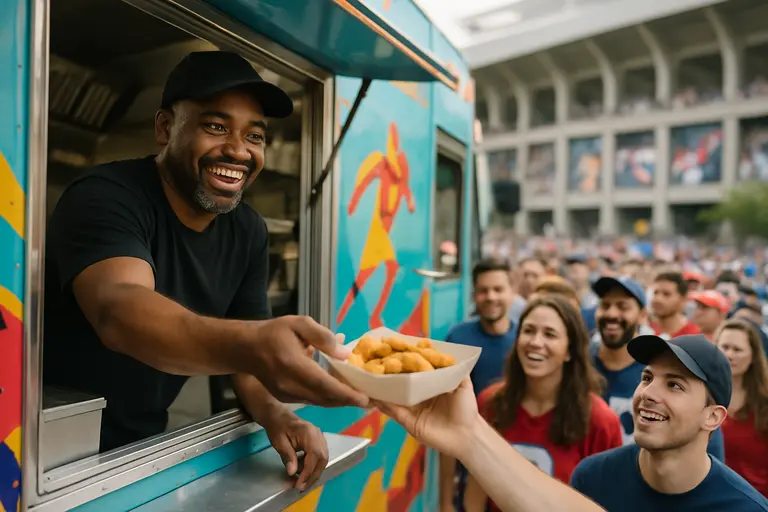
Not every sponsorship affects fans in the same way. Some are visible on signage. Others shape payment flow, product choice, hospitality access, or digital service. The strongest post-World Cup feature at MetLife Stadium was the spread across multiple touchpoints rather than one headline upgrade.
Payments, Food, And Choice
American Express had the clearest link to transaction behavior. Presale access and statement credit opportunities may matter most to fans who already use the card, but payments partnerships can also influence queue strategy, concession messaging, and promotional timing. The research does not provide redemption figures, so the impact should be framed as structural rather than proven in consumer data.
The Athletic Brewing agreement is notable because it formalized a non-alcoholic beer category across the stadium and both NFL teams. Sports venues have increasingly treated non-alcoholic options as part of mainstream hospitality rather than a small concession aside. In this case, the confirmed point is narrower: MetLife Stadium and its home teams aligned with a non-alcoholic brewer for the first time.
Sun Cruiser’s partnership added another beverage activation channel. With signage, video boards, highway marquees, sampling, and engagement at Giants and Jets home games, the brand had multiple fan-contact points. That kind of deal is not only about pouring rights; it places beverage marketing inside the visual and social rhythm of gameday.
World Cup Scale As A Reference Point
The attendance figure attached to MetLife’s World Cup run gives the post-tournament period a measurable reference point. Hosting 645,186 attendees across the venue’s matches was not a normal stress test. It combined soccer tourists, local fans, global media, security planning, and sponsor delivery across several matchdays.
A prior site analysis of the MetLife Stadium Final placed the July 19, 2026, event in a broader venue-history frame. The post-World Cup question is more practical: which parts of that experience remained useful once the Giants and Jets returned to their home schedule?
- Confirmed post-World Cup partnership date: September 10, 2026, for several expanded partnerships tied to the NFL return.
- Confirmed World Cup endpoint: July 19, 2026, when the tournament concluded with the final at MetLife Stadium.
- Confirmed technology context: LED upgrades were completed before the World Cup and then carried into later stadium use.
- Confirmed caution: public research does not yet provide fan satisfaction scores tied to these changes.
MetLife Stadium Partnerships Post-World Cup
The fairest reading of MetLife Stadium partnerships after the World Cup is that the venue used the tournament as a platform, then re-centered the building around NFL use. The moves were not limited to one sponsor or one technology system. Payments, AI collaboration, displays, connectivity, beverage choice, and engagement inventory all formed part of the post-July 19 picture.
Historical comparisons are useful here. Major stadiums often gain their identity from single landmark events, but their reputations are maintained through repeat operations: entry, concessions, visibility, phone service, comfort, and the feeling that a fan can understand the building under pressure. MetLife Stadium’s World Cup attendance total gave it a record-setting tournament marker. Its next measure was less theatrical: whether those partnerships could make Giants and Jets gamedays easier to manage and more coherent for supporters.
As of October 16, 2026, the verified record supports a cautious conclusion. MetLife Stadium partnerships had expanded in meaningful fan-facing categories after the World Cup, but the public evidence did not yet show long-term satisfaction metrics, queue-time data, or mobile performance reports for the NFL season. The stadium’s post-World Cup fan experience should therefore be judged as a documented operational buildout, not as a fully measured success story.