

American soccer spent much of 2026 focused on the FIFA World Cup, but another competition has been demonstrating something fundamentally different about how the sport operates in the United States.
The 2026 Lamar Hunt U.S. Open Cup started with 80 clubs. Thirty-two came from the Open Division and amateur game, while 48 represented the professional divisions. After months of single-elimination football, only four remain: Columbus Crew, Orlando City SC, Colorado Rapids and St. Louis CITY SC.
The semifinals will be played on September 16, 2026. Columbus hosts Orlando at ScottsMiracle-Gro Field in Ohio before Colorado faces St. Louis at DICK’S Sporting Goods Park in Commerce City. The final follows on October 21, with the Columbus-Orlando winner holding hosting priority.
For Bolivia, however, the most interesting part of the tournament is not the identity of the semifinalists.
It is how they got there.
The Open Cup connects amateur clubs, lower-division professionals and Major League Soccer teams inside one national competition. The eventual champion receives more than a domestic trophy: the 2026 field is competing for a $1 million prize pool and a place in the 2027 Concacaf Champions Cup.
Bolivia operates in a completely different football environment, but the American tournament raises a useful question: what happens when the different levels of a country’s soccer pyramid are given a meaningful competitive connection?
An 80-Team Field Makes The Structure Visible
The composition of the 2026 Open Cup tells much of the story.
The tournament proper began with 32 Open Division teams and 48 professional clubs. Sixteen MLS clubs entered later in the Round of 32, while teams from the USL Championship, USL League One and MLS NEXT Pro entered earlier.
That creates an unusual competitive bridge.
A small club does not have the resources, stadium or roster of an MLS organization. It nevertheless participates in the same national championship.
The structure also begins before the tournament proper.
A record 145 Open Division clubs originally registered for the 2026 qualifying process. Four rounds of qualifying during the fall of 2025 determined 16 of the amateur places in the main tournament, while another 16 Open Division clubs received direct entry based on results in selected competitions.
That distinction is important.
The Open Cup does not simply invite a handful of amateur clubs for symbolic participation. There is a competitive route into the tournament.
For developing football countries, that idea may be more important than the size of the final field. (Lamar Hunt U.S. Open Cup)
The Tournament Creates A Ladder Between Levels
The first round of the 2026 tournament was deliberately structured around 32 amateur-versus-professional matches.
Those professional opponents came from the second and third divisions. The winners then moved into another elimination round before the surviving 16 teams encountered MLS opposition in the Round of 32.
In other words, the difficulty increased with progression.
That creates a recognizable ladder.
An amateur team first proves it belongs against a lower-division professional opponent. Survive that stage and the possibility of facing an MLS club becomes real.
For players, this matters.
A footballer competing outside the highest professional division suddenly has an opportunity to demonstrate his level against stronger opposition in a meaningful match.
For coaches, the tournament creates tactical tests that normal league competition may not provide.
For scouts, it brings players from different levels into directly comparable environments.
And for smaller clubs, progress can create national visibility that would otherwise be difficult to obtain.
The American pyramid remains complicated and has significant differences from the traditional promotion-and-relegation structures used in much of world football. The Open Cup does not erase those differences. MetLife Stadium Final Marks World Cup History.
What it does provide is a competitive intersection.
Amateur Qualification Gives The Bottom Of The Pyramid Something To Chase
The Open Division is particularly relevant to countries trying to expand the base of their football systems.
For the 2026 edition, 16 teams earned tournament places through qualifying rounds, the largest number ever made available through that particular route at the time.
Another 16 Open Division teams received byes based on performances in recognized competitions.
That meant 32 amateur clubs reached the tournament proper.
U.S. Soccer has already confirmed the same basic allocation for 2027: 32 Open Division places, with 16 coming through qualifying and another 16 through direct entry tied to competitive performance.
The system therefore provides continuity.
A local or regional club can plan around the competition because the pathway exists again the following year.
That is a crucial distinction in football development.
One exceptional tournament can create excitement. A recurring competition changes club behavior.
Teams can recruit with it in mind. Coaches can prepare for qualification. Players understand what advancement means. Local supporters know that success can lead somewhere beyond the regional level.
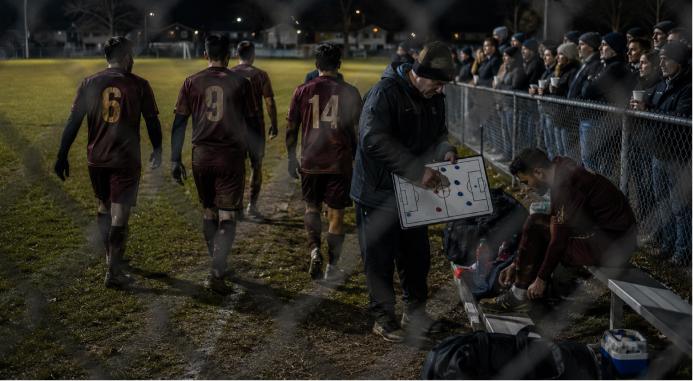
That is how a tournament becomes part of a pyramid rather than simply an event.
Bolivia’s Challenge Is Connecting Its Existing Football Structures
Bolivia does not need an American copy of the U.S. Open Cup.
Its football history, geography, professional structure and economic realities are different.
But Bolivia already possesses many of the pieces that could benefit from stronger competitive connections.
There are División Profesional clubs, regional associations, youth systems, development competitions and teams operating far from the country’s biggest football centers.
The strategic question is whether those levels consistently connect.
A player developing outside Bolívar, The Strongest, Blooming, Oriente Petrolero or another highly visible professional environment should still have routes into stronger competition.
The same applies to smaller clubs.
National development becomes narrower when visibility depends heavily on geography or existing institutional power.
Open competitions can help reduce that problem because they create encounters that normal league structures do not.
A club does not need to convince a scout that its players deserve attention.
It can earn the opportunity on the field. (More about Bolivia)
The Open Cup Is Also A Scouting Competition
This is where the Open Cup connects naturally with Bolivia’s broader talent-development challenge.
The United States has an enormous player population distributed across professional leagues, academies, college programs and amateur football.
No scouting department can watch everything equally.
Cup competition helps concentrate attention.
A lower-division player performing against an MLS opponent provides information that is difficult to obtain from his regular league matches alone.
Can he handle the increased speed?
Can a defender deal with a more sophisticated attacking line?
Can a midfielder retain possession when opponents close space faster?
Can a goalkeeper manage the pressure of an elimination match?
Those are meaningful scouting questions.
Bolivia faces the same problem on a smaller scale.
The country needs mechanisms that bring players from less visible environments into matches where their level can be tested against established opposition.
That should complement federation scouting rather than replace it.
The 2026 Format Shows That Pyramid Design Requires Compromise
The American system is not a perfect model.
The 2026 tournament actually became smaller.
The field was reduced to 80 teams and seven rounds, partly to accommodate the disruption created by the FIFA World Cup calendar. Professional participation was reduced from 64 teams to 48.
Only 16 MLS teams entered.
That means the tournament remains shaped by scheduling pressures and negotiations between different parts of American professional soccer.
This is important when drawing lessons for Bolivia.
A national cup cannot simply maximize the number of participants without considering travel, costs, player workloads, stadium availability and league schedules.
Bolivia’s geography creates its own complications.
Travel between departments can become expensive for smaller clubs. Altitude produces another competitive variable. Lower-level organizations may lack venues that meet professional requirements.
A successful pyramid has to recognize those realities rather than pretending they do not exist.
The American lesson is therefore not “make the tournament as large as possible.”
It is design a pathway that remains open enough to matter and structured enough to survive.
Geographic Competition Can Strengthen Regional Football
One of the strongest potential benefits for Bolivia would be giving regional football greater national relevance.
The U.S. Open Cup qualifying process stretches across the country.
The 2026 Open Division included clubs from 19 states, while the earlier qualifying rounds involved teams from an even wider geographic footprint. California alone sent five Open Division clubs into the tournament proper.
The significance is not that every region produces teams of equal strength.
It is that the national structure gives regional clubs a destination.
Bolivia could apply that principle through stronger departmental and regional qualification.
Instead of forcing smaller clubs immediately into expensive national travel, early rounds can remain geographically concentrated.
As teams advance, the competition can become progressively more national.
That preserves accessibility at the bottom while increasing prestige toward the top.
The Cup Gives Smaller Clubs A Different Definition Of Success
Only one team can win the U.S. Open Cup.
For most amateur and lower-division clubs, winning the trophy is unrealistic.
That does not make participation meaningless.
Qualifying for the tournament proper can represent success.
Winning a first-round match can represent another milestone.
Reaching MLS opposition can transform the season for a smaller organization.
That layered definition of success is useful for football development.
A Bolivian regional club should not need to defeat Bolívar or The Strongest for a national competition to have value.
Reaching the stage where such a match becomes possible can itself create sporting and institutional growth.
The club gains experience.
Players receive exposure.
Coaches face unfamiliar tactical problems.
Supporters have a national occasion around which to organize.
Sponsors may see greater value.
The important element is that each stage leads visibly to the next.
The Final Four Shows How Quickly The Pyramid Narrows
After beginning with 80 clubs, the 2026 tournament has reached four MLS semifinalists.
Columbus Crew won the competition in 2002 and also reached the finals in 1998 and 2010.
Orlando City SC won it in 2022.
Colorado Rapids reached the 1999 final but have never lifted the trophy.
St. Louis CITY SC are also pursuing their first Open Cup championship, although the city itself has one of the richest historical relationships with the competition. Clubs from St. Louis have combined for 10 titles dating back to the 1920s.
The semifinals therefore combine established cup history with clubs still trying to create their own.
Columbus hosts Orlando at 7 p.m. ET on September 16. Colorado then hosts St. Louis at 9:30 p.m. ET. Both matches will be broadcast on CBS Sports Network and streamed on Paramount+.
By October 21, one will be national champion.

But focusing only on those four clubs misses what makes the competition structurally interesting.
The tournament started far below them.
A Soccer Pyramid Needs More Than Promotion And Relegation
Discussions about football pyramids often immediately become debates about promotion and relegation.
The U.S. Open Cup illustrates that a pyramid has other dimensions.
Competitive connection matters.
Player movement matters.
Scouting matters.
Youth development matters.
Regional access matters.
National tournaments matter.
A country can strengthen those relationships even when its league structure remains unchanged.
That is particularly relevant to Bolivia.
Major structural reforms can become politically and financially difficult. Creating clearer competitive pathways between existing levels may be more achievable.
Cup competitions can become one part of that solution. The refugee football team ‘uplifting’ its players.
Bolivia Could Use Cups As Development Infrastructure
The most useful way to think about a national cup is not as another trophy.
It can be infrastructure.
Not physical infrastructure such as stadiums or training centers, but competitive infrastructure.
It gives clubs dates to prepare for.
It creates pathways.
It exposes players to stronger opponents.
It produces scouting information.
It creates incentives for regional competitions.
It connects supporters with clubs outside the professional elite.
That is what makes the 80-team U.S. Open Cup relevant beyond the United States.
The competition does not solve every weakness in American soccer.
It does something more specific: it gives very different parts of the game a place to meet.
The 2027 Structure Is Already Taking Shape
Perhaps the clearest evidence of continuity is that while Columbus, Orlando, Colorado and St. Louis prepare for the 2026 semifinals, qualification planning for the next edition is already underway.
U.S. Soccer confirmed in July that the 2027 Open Division will again produce 32 teams for the tournament proper.
Sixteen will emerge from qualifying rounds scheduled between September and November 2026. Another 16 will receive direct places through results in designated competitions.
The next pyramid cycle therefore begins before the current champion has even been decided.
That continuity may be the most valuable lesson for Bolivia.
Football structures become meaningful when clubs trust that they will still exist next season.
Competitions need predictable calendars.
Qualification routes need understandable rules.
Players need to know what advancement provides.
Regional clubs need reasons to invest in improvement.
And national organizers need to ensure that success at one level genuinely creates access to another.
The Real Lesson Is Connection
The 2026 U.S. Open Cup began with 80 clubs and will end with one champion.
That sounds like a tournament story.
It is also a structural one.
Thirty-two amateur teams entered the main competition. Lower-division professionals joined them. Sixteen MLS teams entered later. The competition progressively narrowed until Columbus Crew, Orlando City, Colorado Rapids and St. Louis CITY SC became the final four.
The champion will receive a place in continental competition.
The amateur qualifying system will then start the process again.
Bolivia does not need the same number of teams, the same league structure or the same financial incentives.
It can still apply the central principle.
A healthy football system gives ambitious clubs somewhere to go.
It gives overlooked players somewhere to be seen.
And it ensures that regional, amateur, developmental and professional football do not exist as disconnected islands.
The U.S. Open Cup’s greatest lesson is therefore not that America has built a perfect soccer pyramid.
It is that a national competition can create meaningful bridges between levels even when the wider pyramid remains complicated.
For Bolivia, building more of those bridges could be just as important as building another tournament.