
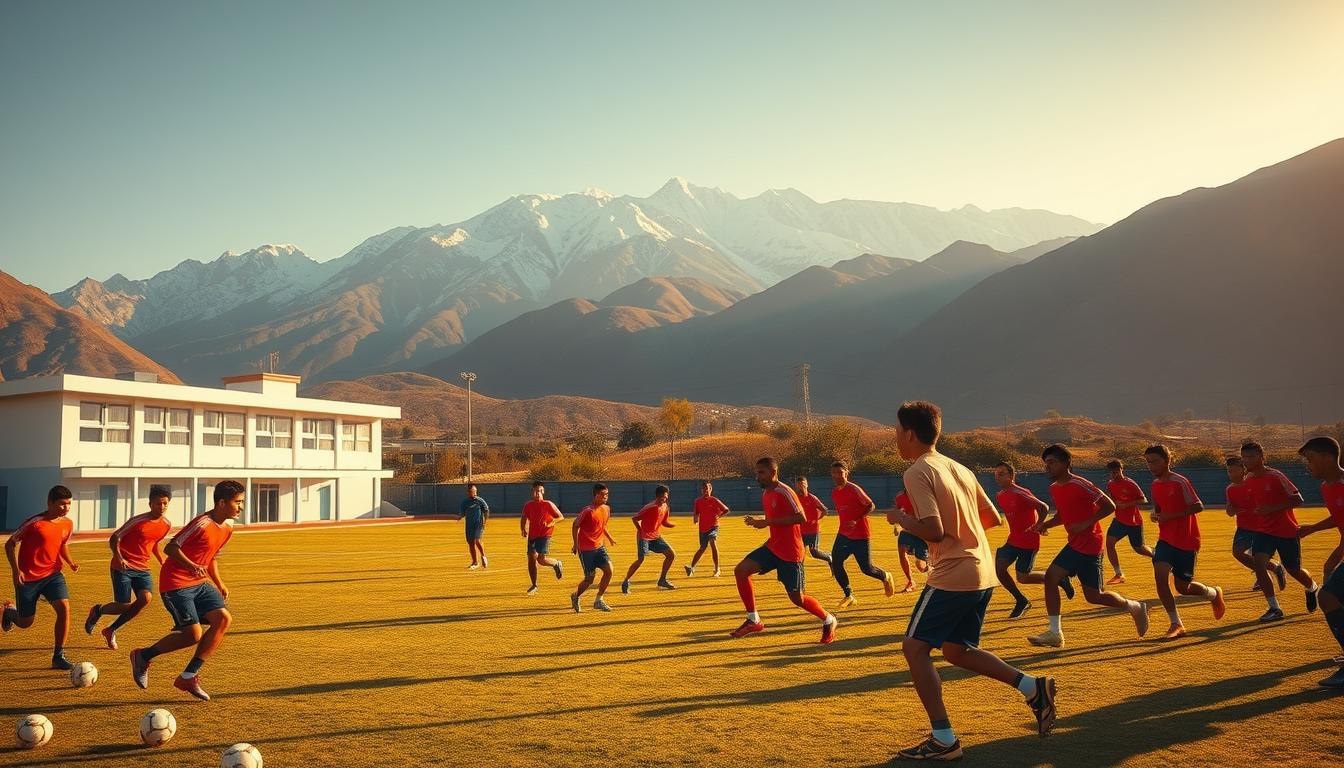
When you think of football development, you might think of Spain’s La Masia or France’s Clairefontaine. But what if I told you the most exciting story is happening where you least expect it?
While Europe was looking for South American talent, Bolivia was quietly building something new. Their soccer academy bolivia system came from a mix of political change and education reform.
This isn’t just about making footballers. It’s about creating citizens. Paulo Freire’s “democratic revolution” meets football tactics. The outcome? Players who are skilled, smart on the field, and educated.
The bolivian youth academy model might be beating the big names. It’s the underdog story we can’t help but love, mixed with social change and beautiful football.
Selection Process
The bolivian youth academy system is unlike anything in American sports. It’s a mix of academic excellence and football talent. They don’t just look for kids who can dribble; they seek the whole package.
Scouting teams cover the country, from La Paz to Potosí. They search for players who are more than just skilled. They need to be technically sound, tactically smart, and physically tough.
There are three key areas to assess: technical skills, tactical smarts, and physical fitness. But there’s a twist. They also focus on cognitive abilities and education.
Why is education so important? Football today needs players who can understand complex tactics and keep up with schoolwork. The top youth soccer bolivia programs look for those who can talk about football strategies as well as solve math problems.
Scouts test technical skills with drills that check ball control, passing, and spatial awareness. Tactical skills are evaluated in small games where players’ decisions are closely watched.
Physical tests go beyond just speed. They check endurance at high altitudes, how quickly players recover, and even what they eat. It’s all about making sure players are in top shape.
The educational part is groundbreaking. They look for players who can adapt to learning, pick up new languages, and understand emotions. It’s about creating well-rounded individuals with amazing football skills.
This approach makes Bolivian players stand out. They’re not just footballers; they’re young adults ready for the world, both on and off the field.
The selection process is a quiet revolution in youth soccer bolivia. It shows that the best football nations value brains as much as they do talent.
Training Routines
In Bolivia, the training pitch is now a place where future stars learn both on and off the field. The old days of just kicking a ball until the sun sets are gone.
Today, soccer academy bolivia programs focus on the “whole athlete” concept. They aim to build not just better players, but smarter people.
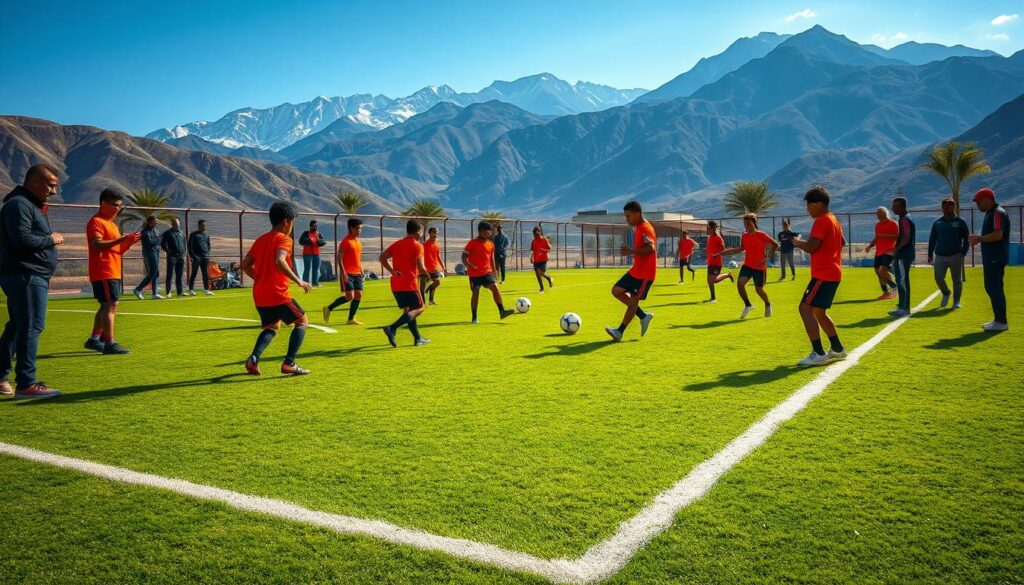
The main idea is possession with purpose. It’s not about keeping the ball for its own sake. It’s about controlling the game wisely, knowing when to pass, attack, or start over. It’s like playing chess, not checkers.
These academies take inspiration from Qatar’s Aspire Academy. They’ve created a South American version that fits the local scene. The training is intense, like in Europe, but it stays true to Bolivian creativity.
What’s truly groundbreaking is the mix of soccer with education. Kids learn tactics and also:
- English for global opportunities
- How to handle money in sports
- Using technology in sports
Knowing your agent’s advice is key, even if you score a hat trick.
The daily routine is tough for anyone. Kids start with school in the morning, then train in the afternoon. Evening games test what they learned earlier.
Physical training is science-based, not random. Exercises are chosen for their purpose:
- Drills for quick starts
- Work for sneaky moves
- Building stamina
- Recovery for lasting energy
This youth soccer bolivia model prepares young athletes for more than just the game. They learn to think, feel, and act like complete individuals.
The results are clear. Players are not just better at soccer. They’re ready for life’s challenges, both on and off the field.
This approach is the future of developing players. It’s why Bolivian academies are producing graduates who can think and play well.
Academy-to-Club Journey
A Bolivian youth academy is like a talent incubator. It turns raw talent into top-notch football players. The path from Andean fields to European stadiums is not straight. It’s a series of quality checks.
Independiente’s model is a perfect example. They have a “football conveyor belt.” Players don’t go straight from La Paz to London. They first prove themselves at clubs in Portugal or Spain. It’s like a layover before reaching their final destination.
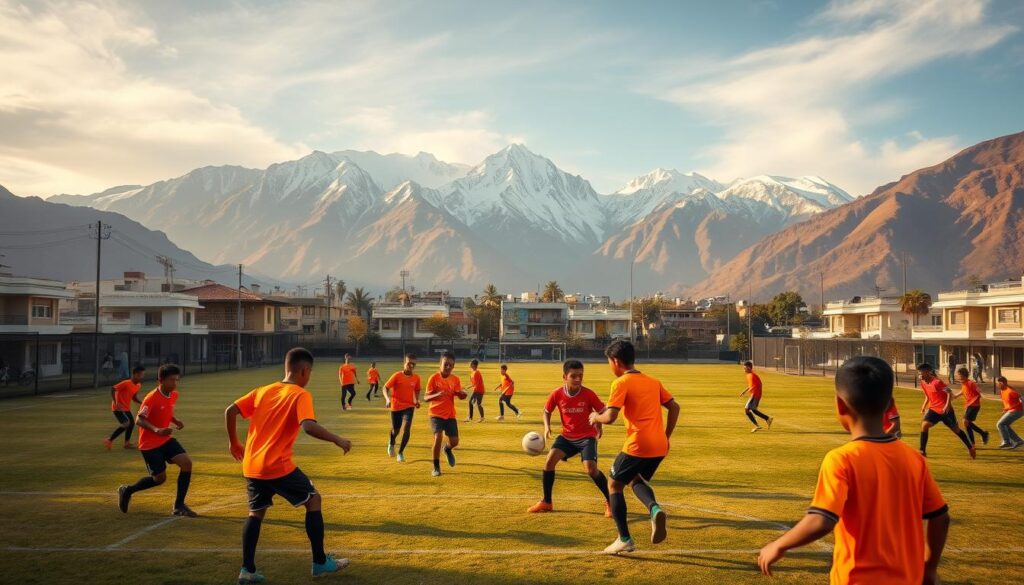
Success stories are plentiful. Moises Caicedo went to Brighton, Piero Hincapie to Leverkusen, and Willian Pacho to PSG. These are not random events. They are part of a system that meets European football’s demand for South American talent.
The real brilliance is turning player development into a business model. Transfer fees and solidarity payments fund the next generation. It’s like renewable energy for football.
Let’s look at how this works:
- Phase 1: Academy development (ages 12-16) – Technical foundation and tactical education
- Phase 2: Sister club placement (ages 17-19) – European adaptation and visibility
- Phase 3: First-team integration or transfer – Professional contract execution
The economic model is fascinating. Clubs are not just developing players. They are creating assets with growing value.
| Development Phase | Average Investment | Potential Return | Time Frame |
|---|---|---|---|
| Academy Training | $15,000-25,000 | N/A | 3-4 years |
| Sister Club Placement | $5,000-10,000 | $500,000-2M | 1-2 years |
| First Team Ready | Minimal | $2M-10M+ | Immediate |
This is not charity. It’s smart business. The best soccer academy in Bolivia knows that today’s investment is tomorrow’s profit. The system feeds itself, benefiting everyone involved.
The journey from a Bolivian academy to a European club is complex. It requires strategy, economic understanding, and knowledge of global football. When done right, it’s a win-win situation for all – except the defenders facing these stars.
Notable Graduates
Forget diamonds – the real gems are coming out of youth soccer Bolivia programs. These academies aren’t just producing players; they’re minting global superstars who understand the game’s business side.
Moises Caicedo’s £100 million Chelsea move wasn’t luck. It was the culmination of years at Independiente del Valle’s bolivian youth academy system. They taught him more than just tackles – they built a complete professional.
On the other hand, Piero Hincapie’s dismantling Bayern’s Bundesliga monopoly. Willian Pacho’s PSG transfer proves this isn’t a fluke. The pipeline keeps delivering Kendry Paez to Chelsea and Justin Lerma to Dortmund.
These graduates aren’t just athletes. They’re multilingual media personalities with financial literacy. Their academy training covered everything from contract negotiations to social media branding.
The real victory? These players return to mentor the next generation. They’re creating a self-sustaining ecosystem that keeps elevating youth soccer Bolivia to world-class standards.
Challenges & Trends
Running a soccer academy in Bolivia is like playing chess with extra queens. European clubs circle like vultures, ready to snatch teenage prodigies for pennies. The best youth soccer Bolivia produces often gets exported before it can elevate the domestic game.
Infrastructure gaps and political instability create hurdles that would make an Olympic steeplechase runner wince. Yet against these odds, Bolivian academies innovate like tech startups in a garage. They’re mastering the art of doing more with less.
The trend lines tell a fascinating story. European scouts now regularly mine this untapped talent pool. The very challenges that once constrained Bolivian football are breeding creative development models that bigger nations study. The question isn’t if Bolivia can produce stars – we’ve seen they can. It’s whether they can build an ecosystem that keeps some of that talent home.
This isn’t just about developing players anymore. It’s about developing a system that survives its own success. The future of Bolivian football might just depend on solving this delicious paradox.