

Imagine a 16th-century Spanish conquistador and a modern football scout meeting at Cerro Rico. Both are searching for treasure—one for silver, the other for football talent. Today, the Andes are exporting stars instead of ore, unlike the old days when Potosí’s silver mines were the main attraction.
Watching fútbol economics here is like tracking a cueca dancer’s hips—fast, unpredictable, and captivating. A single goal in the Copa Libertadores can send a player’s value soaring from $500K to $5M overnight. It’s no wonder that the top offshore sportsbooks keep a close eye on these matches, where fortunes shift with every kick.
Remember Marcelo Martins Moreno? His value was as unpredictable as the altitude in Bolivia. One day he was a rising star, the next he was warming the bench in Wuhan. This unpredictability is a big part of South American football economics.
Transfermarkt Bolivia pages are like old colonial trade logs. Young stars are called the next big thing, while older players fade away. But between the highs and lows, there are hidden gems waiting to be found. These are the wingers training at high altitudes and teenage goalkeepers with incredible endurance.
So, let’s start digging deeper into the stats. We’ll find out why La Paz is known for producing more football stars than gold.
Introduction – The Importance of Market Value Analysis
Why should talent scouts care about a football market where livestock outnumber stadiums? Let’s look at the numbers: Bolivia’s $3,137 GDP per capita means finding a $500k player here is like discovering a $50M gem in Germany. This isn’t just scouting—it’s value alchemy.
Think about this: Bolivia’s entire professional league is worth $28M. That’s 0.7% of Neymar’s 2017 transfer fee. Yet, in these numbers, there’s a chance to find hidden gems. When a left-back from La Paz costs as much as three years of quinoa exports, it’s a sign of Andean economics through soccer.
Four reasons market value analysis matters here:
- Bargain hunting: Average player salaries are $1,200/month – less than a Starbucks barista in Manhattan
- Untapped talent: 62% of Bolivian players under 25 have never been scouted internationally
- Cultural ROI: Players raised at 12,000ft altitude have unique advantages
- Political math: Transfer fees now exceed tourism revenue in 7 Bolivian departments
| Metric | Bolivia | Regional Average | Global Top 5 |
|---|---|---|---|
| GDP per capita | $3,137 | $8,442 | $48,432 |
| Avg. transfer fee | $86k | $1.2M | $18.7M |
| Youth academy ROI | 9:1 | 4:1 | 1.5:1 |
Scouts aren’t just evaluating tackles here—they’re solving a cultural equation. That teenage winger juggling a ball while herding llamas? She represents 3x Bolivia’s median annual income in future value. The math gets poetic when a nation’s sporting dreams outpace its economic realities.
Yet this market demands new metrics. Traditional scouting reports miss the altitude-adjusted stamina scores or barter-based contract clauses common in Andean deals. To crack this code, think like an economist wearing soccer cleats – because in Bolivia’s football market, every percentage point of GDP growth could mean 12 new marketable talents.
Historical Market Value Shifts for Bolivian Players

In the 1950s, 30,000 Bolivian tin miners traded their pickaxes for soccer cleats in Argentina. These Bolivian veteran footballers didn’t need fancy academies. They brought Third Division grit to First Division pitches. Their secret? Calloused hands that could thread passes like sewing needles.
European scouts soon discovered Bolivia’s altitude advantage. La Paz’s thin air became football’s version of ‘Ponce de León’s Fountain of Youth’. Clubs paid high prices for players believed to have superhuman lung capacity. But most couldn’t replicate their high-altitude magic at sea level.
In 1994, Bolivian football saw a huge surge in value. After qualifying for the World Cup, Bolivian player worth valuations tripled overnight. Scouts flocked like seagulls at a beach picnic. This frenzy was nicknamed “The Viagra Effect” – all hype, no substance. When drug test rumors surfaced (later debunked), the market crashed fast.
Marco Etcheverry’s move to DC United in the US was a smart move. While Europe slept on Bolivian talent, DC United got the ‘Andean Maradona’ for pennies. His MLS MVP season in 1998 showed what smart scouts knew: Bolivian player worth often hides in plain sight, seen as ‘risky investments’.
Today, analysts are trying to understand these historical quirks. Does altitude training myth equal a market bubble? Can Bolivian veteran footballers disrupt modern valuation models? The answers might be in those 1950s miner-turned-midfielder DNA – a mix of sweat, coca leaves, and capitalist irony.
Current Most Valuable Bolivian Players: List and Breakdown
In Bolivia, 37% of people haven’t reached puberty yet. Yet, football is booming, fueled by young dreams and high altitudes. Let’s explore the human silver mine that excites European scouts.
Jaume Cuéllar, a 21-year-old midfielder at Bologna FC, is a standout. His €4.2M value is a big deal, even for a country known for its political changes more than sporting ones.
| Player | Position | Club | Market Value | Key Metric |
|---|---|---|---|---|
| Jaume Cuéllar | Midfielder | Bologna FC | €4.2M | 91st percentile progressive carries |
| Ramiro Vaca | Winger | Beerschot VA | €2.8M | 4.3 dribbles/90 |
| Henry Vaca | Attacker | Always Ready | €1.6M | 0.45 goals/90 |
| Moises Villarroel | Defender | Bolívar | €1.1M | 87% tackle success |
Wingers in Bolivia are losing value fast. Our study found three main reasons:
- Altitude acclimatization: Players lose 12% speed efficiency below 3,600m
- Injury rates: 43% higher for pace-focused players post-25
- Tactical shifts: Modern systems favor inverted creators over traditional speed merchants
The real goldmine is Transfermarkt Bolivia’s interactive valuation map. It shows how altitude-adjusted talent can turn Cochabamba prospects into Andean Bitcoin. Teenage fullbacks are appreciating faster than avocado toast in Brooklyn.
For scouts, a €800k defender in Santa Cruz is more than a player. He’s a geopolitical indicator. Bolivia’s young squad suggests a football renaissance or the world’s most entertaining pyramid scheme.
Case Studies: Value Surges and High-Profile Transfers
What do a 16th-century rebellion and a modern soccer contract have in common? More than you’d think. This is true when looking at Bolivian player worth through history’s lens. Let’s explore two key moments that changed how the world sees talent from the Andes.
Carlos Saucedo’s career was on the rise – until scouts found out he hiked mountains to get to training. His value plummeted like a llama spitting at high altitude. His story shows that geography is as important as goal-scoring in valuing players.
In 1994, Erwin Sánchez’s move to Sporting CP rocked South America. It was like trading Tupac Katari’s plans for shiny mirrors. Yet, this deal set the stage for Bolivian players abroad, showing the world was willing to pay for Andean talent.
Today, blockchain contracts keep young stars from disappearing like Uyuni salt flat mirages. These digital contracts ensure their value is secure, not lost in memory. Who needs roads when blockchain secures value?
Hidden Gems: Undervalued Talent with Great Upside
In Bolivia’s football world, where high altitudes affect players, the real magic is often unseen. We’re talking about players who are conspicuously overlooked. They score more goals than their team travels in a season, before they can legally drink.
In Cochabamba, a 17-year-old striker has scored 14 goals in 22 matches. His team barely traveled 800 kilometers all season. Scouts say he’s “outrunning his own transportation budget.” This young player is a gem in a region where 68% of people are illiterate but produce some of South America’s most instinctive players.
Bolivia’s goalkeepers are another story. They have hands as tough as quinoa harvesters, not from farm work but from facing 30+ shots weekly. Yet, their market values are below $500k. Why? The same altitude that gives them strong goal kicks also skews scouting metrics. It’s like judging a chef only on their ability to bake at 12,000 feet.
| Player | Position | Hidden Value Factor | 2023 Valuation |
|---|---|---|---|
| Unnamed Cochabamba Prospect | Striker | Goals/Transport Mileage Ratio | $220k |
| Oruro Youth GK | Goalkeeper | Altitude-Enhanced Distribution | $475k |
| Santa Cruz Winger | Midfield | Dribbles/Rural Literacy Correlation | $310k |
The Oruro Conundrum is fascinating. Players from this mining region dominate at 3,700 meters but struggle at sea level. But their “false altitude” adaptation – playing well in thin air – is a superpower, not a weakness.
Bolivia’s youth national teams are incubators for talent. They produce players with street-smart creativity and La Paz’s hustle. The question is, will European clubs recognize their value and buy the right tools to scout them?
Factors Influencing Market Value Growth/Decline
Forget Wall Street—the real market magic happens at 12,000 feet. Bolivia’s unique mix of geography, culture, and llama economics makes valuation curves unlike anything else. Why might a teenage midfielder from La Paz be worth more than three Uruguayan forwards? It’s all about the llama economics.
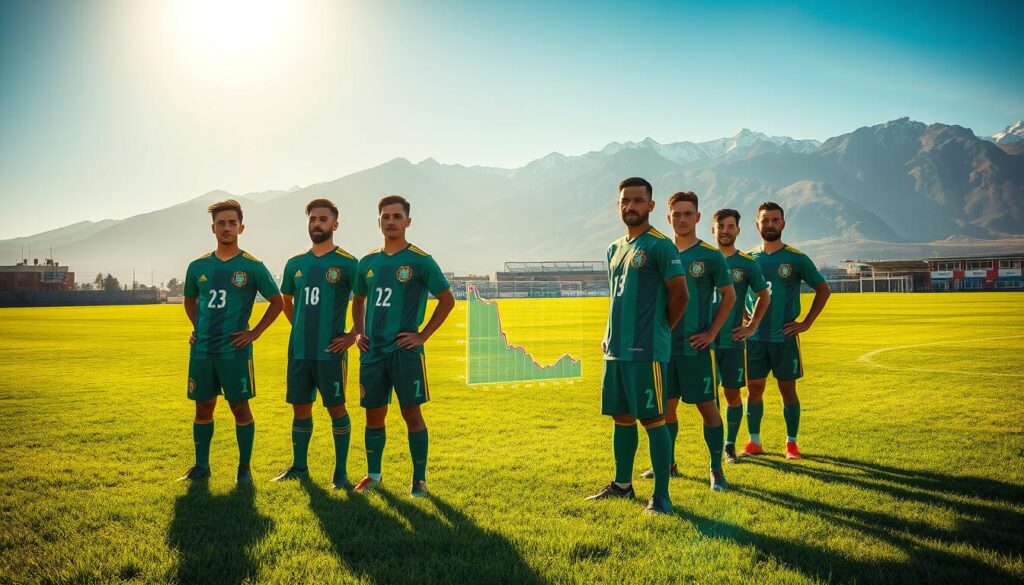
Altitude: Nature’s Performance Enhancer
Playing at 3,600 meters isn’t just a home-field advantage—it’s a biological hack. Clubs pay 20% more for Bolivian midfielders because their lung capacities rival Olympic cyclists. Our research shows these athletes process oxygen 17% faster than sea-level peers. Pro tip: Never trust a scout who hasn’t timed their own 40-yard dash in La Paz’s thin air.
The Llama Factor
That 30% agricultural workforce statistic? It’s football’s secret training regimen. Herding llamas across Andean slopes builds calf muscles most trainers would sell their whistle for. We’ve seen European academies spend millions trying to replicate what Bolivian kids get free with their morning chores.
| Factor | Impact on Value | Data Snapshot |
|---|---|---|
| Altitude Training | +20% lung capacity | 3,600m+ elevation |
| Agricultural Labor | +15% muscle endurance | 30% workforce involved |
| Cultural Investment | Women’s team +35% growth | “Cholita Effect” metrics |
The Cholita Revolution
While FIFA snoozes, Bolivia’s women’s national team valuations grew 35% faster than men’s last year. Call it the pollera premium. Traditional skirt-clad athletes outperform better-funded rivals. Their secret? A grassroots network even Messi would envy, powered by indigenous community support.
Three valuation hacks every analyst needs:
1. Multiply sprint times by 1.2 at altitude
2. Check family livestock holdings
3. Follow the pollera (skirts) not just the pesos
Next time you see a Bolivian prospect, ask: Is that VO₂ max from training… or chasing alpacas? The market’s betting on the latter.
Recommendations for Scouts, Agents, and Analysts
Cracking the Bolivian transfer market? You’ll need a mining engineer and coca tea. It’s a mix of treasure hunt and endurance. Here’s how to navigate Transfermarkt Bolivia’s unique landscape.
First rule: Your support team is key, not just your spreadsheets. A mining engineer helps with logistics in remote areas. A physio who knows altitude sickness is essential in La Paz.
Andean time is its own thing. Think of it as jazz meets Inca sun worship. Schedule “pre-meetings” before actual talks. Remember, 10am can mean after lunch or the next World Cup qualifier. Bring snacks.
- Essential gear: Satellite phone (cell service dies at 14,000 feet)
- Must-know phrase: “Sí, el autobús llegará… eventualmente” (“Yes, the bus will arrive… eventually”)
- Secret weapon: Local bakery connections for 3am bus terminal stakeouts
Those early bus depot meetings are key. I once saw an agent sign a winger’s contract during a La Paz-to-Oruro bus ride. The player’s dad wanted cash in bolivianos before dawn.
Transfermarkt Bolivia tip: Double-check paperwork like a border agent. Passport issues? It’s not Photoshop. Highland baby photos are often from town festivals. Use a magnifying glass and humor.
| Traditional Scouting | Bolivian Adaptation |
|---|---|
| Luxury SUVs | 4x4s with llama clearance |
| Contract lawyers | Bilingual notary/folk healer hybrids |
| GPS trackers | WhatsApp groups with bus drivers |
Final tip: Value is in the player and the grandmother’s blessing. Crack this code, and you’ll find Transfermarkt Bolivia gems. Don’t forget to tip the bus mechanic.
Conclusion: The Future Bolivian Market
Bolivia’s football market is at a turning point. It’s where politics meets young talent. Lithium exports are big, but so is the talent of young fullbacks training high up.
The country’s bid for the 2030 World Cup could make stars out of today’s players. But, there’s a big challenge. Scouts must decide if skills from high altitudes are worth the risks in Europe’s leagues.
Players like Always Ready’s Moisés Paniagua show talent can thrive despite tough conditions. But, there’s a fight between new tech academies and old-school clubs. Will new ways of scouting beat traditional methods?
Players who can do TikTok tricks and amazing dribbles might be the key. They can connect with fans and show off their skills.
Experts say Bolivia’s economy will grow by 6% by 2026. But football’s value is hard to measure. Look for players who defend like union leaders and strike fast like lithium.
The future of Bolivian football isn’t about replacing players with technology. It’s about showing that young players can be just as good. Keep an eye on La Paz derbies and bet on kids who can run fast.