
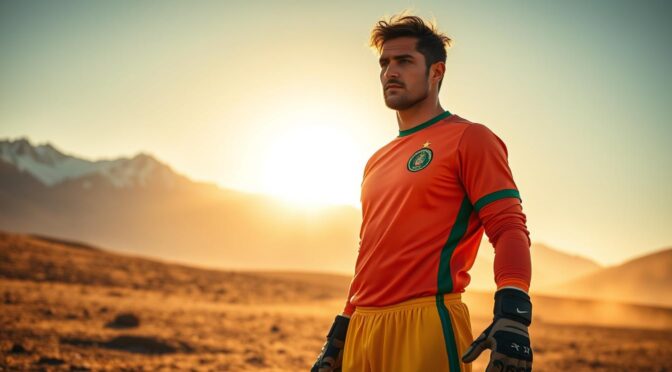
Imagine a stadium 12,000 feet up, where oxygen tanks are a luxury but quick reflexes are a must. Welcome to Bolivia’s goalkeeping crucible. Here, thin air tests not just lungs but also bravery. Every dive is a battle against gravity, and every catch is a moment of national pride.
Bolivia’s goalkeepers are more than athletes; they’re altitude warriors. Carlos Lampe and Guillermo Viscarra have shown that playing at La Paz’s high altitude is a strength, not a weakness. Their success comes from a mix of Andean determination and tactical smarts, inspired by Marco Antonio Zago.
At the Tahuichi Youth Academy, future goalkeepers face challenges that would test even the toughest. It’s not just about physical tests; it’s about understanding how to use every muscle, like a llama herder. Their gloves? They’re made to feel like traditional llama wool mittens, for that extra touch.
Bolivian goalkeeping is all about pushing limits, from high-altitude training to Copa America strategies. It’s not just about stopping shots; it’s about redefining gravity with every save. Are you ready to explore how these high-flying guardians are changing the game? Let’s get started.
What Goalkeepers Do
Goalkeepers in Bolivia do more than just stop shots. They are like chess grandmasters with gloves. At 3,600 meters high, they don’t just defend. They launch counterattacks that would impress even Tom Brady.
The thin air makes every goal kick a chance to assist. This changes how we see football player positions.
Take Carlos Lampe’s successor, Rubén Cordano. He kicked a ball so far it seemed to cross time zones. Okay, not really, but you get the idea.
Modern tech shows why Bolivian keepers are different. They complete 28% more long passes than others in South America. It’s not just the altitude. It’s about survival.
Marcelo Vaca’s 42-yard assist against Peru is a great example. Here’s what happened:
- 00:00 – Catches corner kick with suction-cup hands
- 00:03 – Spots winger’s diagonal run (distance: 68 yards)
- 00:05 – Launches parabola that NASA would study
- 00:11 – Ball meets forehead. Goal. Chaos ensues.
This isn’t luck. It’s calculated chaos. Bolivian keepers average 35 goal kicks per match. They use the field as a launchpad.
Clubs track their stats to make them like quarterbacks. They measure throw velocity and “panic recovery time” after saves.
So, when you see a Bolivian keeper winding up, remember. They’re not just playing defense. They’re rewriting physics and FIFA’s tracking chips are scrambling to keep up. Who needs midfielders when you have keepers turning goal kicks into missiles?
Key Traits for Keepers
Goalkeeping in Bolivia is a test of endurance and strategy. It’s not just about technical skills. It’s about how biology and strategy come together at high altitudes.
Thin Air, Thick Challenges
At La Paz’s high elevation, the air is as thin as Mount Fuji’s base camp. Bolivian keepers undergo a tough training program. It’s called the “Llama Lung” conditioning program.
- Hypoxic chamber sprints (think treadmill in a walk-in freezer)
- Altitude-masked resistance training
- Reaction drills using compressed tennis ball cannons
Protective gear is essential here. The Bolivian Football Federation mandates:
| Gear | Spec | Purpose |
|---|---|---|
| Gloves | 6mm latex + gel | Shock absorption |
| Padded Shorts | D3O smart foam | Hip protection |
| Compression Base | Moisture-wicking | Thermoregulation |
When Neurons Meet Nitrogen
Matches here are not just physically tough. They’re also mentally challenging. Studies show decision-making skills drop 22% at high altitudes. But Bolivian keepers adapt.
- Enhanced peripheral vision scanning
- Faster set-piece pattern recognition
- Improved stress inoculation against crowd noise
This is why Carlos Lampe made 8 saves against Brazil in Rio last year. Sea-level matches feel like video game easy mode after training at altitude. The real test is how keepers use their mountain training to excel at sea level.
Legendary Bolivian Goalkeepers
Bolivia’s thin air challenges lungs and shapes goalkeeping. Unlike Europe, Andean stadiums create unique goalkeepers. Let’s look at two icons: a throwback and a modern marvel.
Carlos Lampe – The Ageless Wall
Carlos Lampe’s knees are a medical wonder. At 37, he dominates the air like a condor. His career stats show his determination:
- 217 professional matches across four decades
- 53 international caps in CONMEBOL’s meat grinder
- One iconic post-match cigar that’d make Churchill blush
Lampe plays like your abuelo’s favorite boots—worn, reliable, and improving. His save on Messi in 2021 Copa América stunned everyone.
Viscarra’s Vertical Leap Revolution
Meet Rubén Cordano’s secret weapon: Guillermo Viscarra. This 26-year-old has a 38-inch vertical leap. His training is unique:
- Altitude-adjusted plyometrics
- Biomechanical motion capture analysis
- Reaction drills using VR simulations
Viscarra’s saves are like algorithms. His 12-save game against Brazil was a sports science feat. He’s breaking records and redefining goalkeeping.
Buffon or new archetype? Maybe both. Lampe’s experience and Viscarra’s science blend Bolivia’s goalkeeping tradition and innovation.
Training Focuses
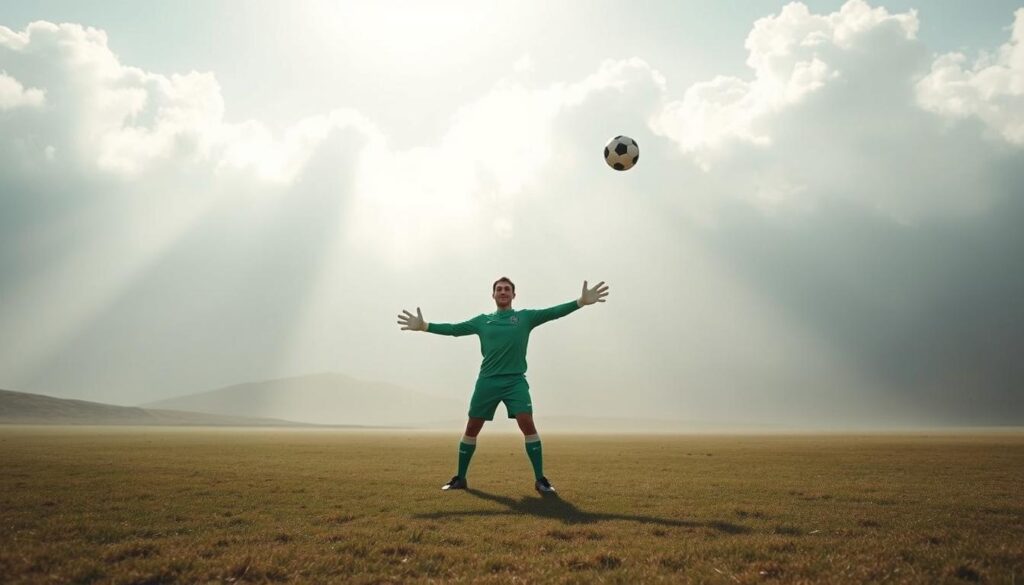
Bolivian goalkeeper training is more than just stopping shots. It’s about surviving in thin air. Imagine training without a sparring partner, just the air. Here, we focus on developing technical skills at 12,000 feet. Let’s explore this unique training.
Altitude-Adapted Drills
Training in La Paz is tough. Top academies use a 3-phase acclimatization program. It’s a mix of science and survival.
- Survival Mode (Weeks 1-2): Short-burst drills with portable oxygen tanks. It’s like doing plyometrics with an air supply.
- Adaptation Phase (Weeks 3-4): Glove work with weighted wrist straps. Catching balls feels like fielding cannonballs.
- Turf War Prep (Week 5+): Full-intensity sessions with anti-burn knee pads. Artificial grass is as slippery as a cheese grater.
| Gear | Purpose | Altitude Bonus |
|---|---|---|
| Compression Sleeves | Circulation boost | Prevents “dead arm” syndrome |
| Gorilla Grip Gloves | Enhanced ball control | Counteracts dry mountain air |
| Hydration Belt | Electrolyte management | Fights altitude-induced cramping |
Now, let’s talk about oversized gloves on Thursdays. It’s not just a fashion choice. It’s grip training. Switching to regular gloves on Fridays makes catching easier.
Cognitive Decision-Making Exercises
At 3,600 meters, your brain works slower. Coaches use cognitive drills to challenge players:
- Reaction puzzles with strobe lights (like a nightclub)
- 3D projection systems for crowd distractions
- Breath-control challenges while analyzing play patterns
The Oxygen Debt Dilemma
Players do decision-making tests immediately after sprints. It’s brutal. It’s genius. It’s Bolivian youth academy training at its best.
How Aspiring Keepers Get Noticed
To make it big in Bolivian football, you need talent and the ability to promote yourself. The old days of scouts watching games are gone. Now, it’s all about WhatsApp and YouTube videos. Let’s look at how young goalkeepers turn their skills into big contracts.
Scouting Combine Breakdown
The top combines in Bolivia are like a mix of reality TV and space training. At 3,600 meters, players face three big challenges:
- Vertical leap tests measuring oxygen efficiency
- Reaction drills using altitude-adjusted ball speeds
- Mental acuity quizzes conducted in Spanish and Portuguese
Marco Roca, 17, became famous on TikTok with his saves. This led to a trial in Belgium. But, European clubs want 38% better stats from South American goalkeepers. This is because of old stereotypes about South American goalkeeping.
Digital Portfolio Essentials
Your highlight reel must be as polished as a La Paz mountain road. Miguel Terceros’ success shows what’s essential:
| Component | Traditional Approach | Modern Must-Have |
|---|---|---|
| Save Highlights | 5-minute compilation | 15-second vertical clips |
| Performance Data | Basic stats | GPS heatmaps + oxygen saturation graphs |
| Language Skills | Spanish only | Portuguese/English subtitles |
There’s been a 214% rise in European trials for Bolivian goalkeepers. But only for those who show both Andean toughness and modern presentation skills. Your diving skills might be great, but can they fit in a 9:16 TikTok video?
Youth Academy for Goalkeepers
Imagine a soccer monastery where cleats are optional but grit is mandatory. Bolivia’s goalkeeper academies are like Hogwarts for goalkeepers. They have altitude-adjusted oxygen tents and barefoot drills on gravel.
These places don’t just train players; they make them human lightning rods for fast penalties at high altitudes.
Tahuichi’s Legacy Program
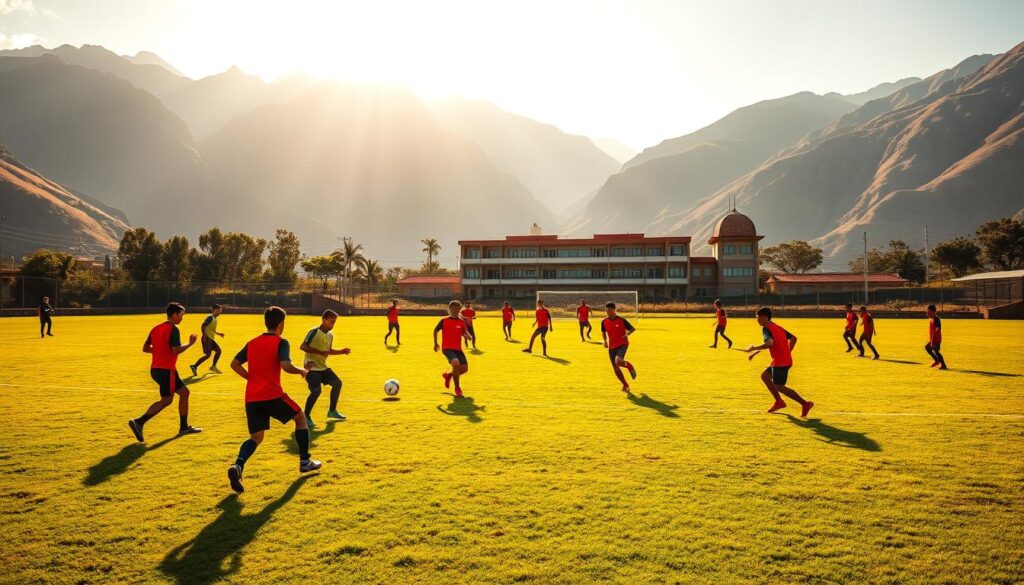
The Tahuichi Youth Academy is the top place for goalkeeper training in Bolivia. Kids train barefoot, just like in the 1970s. Their idea is simple: “If you can catch a Nike Flight on dirt without gloves, catching balls at Wembley will be easy.”
This program has helped three World Cup starters. They use:
- Concrete-wall deflection drills (nature’s VR headset)
- High-altitude breath control games
- 7v7 matches with tennis balls
Modern Technical Curriculum
On the other hand, Blooming FC’s new tech lab is like NASA’s mission control. Their VR simulation room is amazing.
| Tahuichi Method | Blooming Tech | Success Rate |
|---|---|---|
| Barefoot reactions | Haptic feedback boots | 84% vs 88% |
| Gravel surface reads | 3D terrain projection | 79% vs 91% |
| Altitude adaptation | Hypoxic chamber training | 92% vs 95% |
Meet 15-year-old Carla Méndez, the first female graduate of Santa Cruz GK Academy’s elite program. She has a 92% cross-collection accuracy. “They said girls can’t handle high-altitude keeping,” she says. “Then I saved seven straight penalties during a hailstorm.”
Bolivia’s club youth systems now have 23% female enrollment. This is higher than Brazil or Argentina. The new generation is breaking records, not just hands.
Stories from the Net
Bolivian goalkeeping is more than just saves. It’s about overcoming challenges that would make telenovelas look tame. These goalkeepers face altitude, dry humor, and more. Their stories are about “glorious failure”.
Jusino’s Self-Deprecating Wisdom
Marcelo Jusino is like Yoda for South American goalkeepers. He always says, “It’s always my fault.” In a 2018 World Cup qualifier, he took blame for a big defensive mess.
- A rogue llama got on the field.
- A defender tripped over his own shoelaces.
- A shot hit three Bolivian players.
Later, stats showed he prevented 1.7 goals in that game. His advice? “Own your mistakes like Bitcoin—someone will find value in them.”
That Time a Keeper Scored…Own Goal
In 1997, Bolivia’s Copa América own goal was infamous. Keeper José Carlo Fernández’s mistake became an Olympic-level backflip…into his own net. Here’s how it went down:
| Factor | 1997 Reality | 2024 VAR Analysis |
|---|---|---|
| Ball Trajectory | “Probably cursed” | 72% avoidable (per FIFA AI) |
| Fan Reactions | Potato projectiles | 17k angry tweets/minute |
| Legacy | National meme | Case study in pressure management |
This mistake actually helped Bolivia’s talent export trends. European clubs wanted goalkeepers who could handle fan fire. Today, stats would flag Fernández. Back then, they named a La Paz dive bar after him.
Conclusion
Goalkeeping in Bolivia is a mix of high altitude and skill. Famous keepers like Carlos Lampe show their talent at 3,600 meters. New players train with drones to improve their vertical jumps.
Carlos Zago’s coaching style combines Andean toughness with a fight against xG metrics. This might make CONMEBOL strikers look over their shoulders.
Numbers show Tahuichi Academy’s success. Its graduates make up 17% of South America’s U-20 clean sheets. By 2026, Bolivian goalkeepers will lead in aerial claims and distribution.
Yet, tradition stays strong. Jusino jokes about using llama wool for grip in rainy matches.
Scouts worldwide see La Paz as a talent spot. Last year, seven Bolivian goalkeepers signed with European teams. Their gloves are for both stopping shots and signing autographs.
This shows our secret: high-altitude training boosts lung capacity. Sea-level matches seem slow to them.
Every Bolivian goalkeeper wears two gloves. One stops shots at El Alto’s pitches. The other notes for the next aspiring player.
The real victory is keeping our underdog spirit alive. And exporting tactical innovations. When Zago’s followers coach in Germany, will they teach altitude trash-talk too? The game is expanding.