

What do Andean peaks and soccer prodigies have in common? Both show untapped talent waiting to be found. Bolivia’s youth systems are like the Cordillera Real mountains – tough, yet full of hidden gems for those who seek them out.
The Tahuichi Youth Academy is more than a place to train. It’s like the Hogwarts of South American football. For decades, it has transformed street kids into top-notch players, faster than saying “Maradona’s handball.” But, while Europe looks for talent in these academies, Bolivia’s own league finds it hard to keep its best players.
In Bolivia’s Plurinational Youth System, young athletes work their way up. They start in local clubs, move to regional showcases, and then compete in national tournaments. It’s a mix of patience and efficiency, like farming and assembly lines. This approach has led to a 300% increase in players moving abroad, with young midfielders now worth more than premium coca leaves.
This isn’t just about soccer drills. It’s about using sport to improve lives and show off human talent. Every skillful move could mean a chance to escape poverty or become a star like Marcelo Moreno. Are you ready to explore the hidden talent in the beautiful game? Let’s start.
What Are Club Youth Systems?
Imagine Hogwarts with Dumbledore using tactical whiteboards instead of magic wands. Bolivia’s club youth systems are like magical factories. They mix UEFA coaching with Aymara traditions.
It’s not about polishing trophies. It’s about raising future stars like Messi. This mix creates a unique environment for young athletes.
The academy setup is like a three-layer cake. It starts with technical skills, then adds tactical awareness. The top layer is cultural identity.
Coaches teach Cruyff turns, while elders share stories of playing barefoot. Young players learn drills one minute and ayni the next. This blend is rare.
Now, let’s compare this to the Plurinational Youth Council’s approach:
| Club Academies | Youth Council Programs | |
|---|---|---|
| Focus | Developing technical skills | Political representation quotas |
| Structure | Grassroots-to-pro pipeline | Regional committee meetings |
| Success Metric | Professional contracts signed | Funding proposals approved |
In La Paz, bureaucrats argue over quotas. But these academies create something special. They produce teens who can play soccer and discuss theory.
Imagine a 14-year-old from El Alto. She can dribble and herd llamas. In today’s world, technical skills are more valuable than traditional crafts.
Training sessions include:
- Zonal marking drills from chuta games
- Video analysis with pirated Champions League footage
- Nutrition plans with salteñas (Bolivian empanadas)
This isn’t just about player development. It’s about blending culture and sports. Athletes can do tiki-taka moves and discuss politics. That’s a true hat trick.
Clubs vs Independent Academies
Imagine Bolivia’s youth football as a comic book battle. On one side, club systems are like Stark Industries – polished but sometimes scandal-ridden. On the other, independent academies are like Wakandan startups – quick and experimental.
- Scouting Playbooks: Club scouts use advanced tech like SHIELD. Indie talent spotters rely on intuition, like Netflix’s Wednesday Addams.
- Development Labs: Clubs have official training programs. Academies mix different training methods, like futsal and altitude training.
- Exit Strategies: Clubs have complex contracts. Academies might have simpler agreements, like a napkin contract.
Source 2’s report shows clubs’ financial secrets. They use their power for deals, like Thanos’ gauntlet. Academies face challenges like innovating player development and avoiding politics.
Is the MAS party’s split like Bolivia’s youth development? Clubs follow old models, while academies are more community-driven and chaotic.
Scouting helps clubs stay on top:
- They find young talents early.
- They use politics to get players from rural areas.
- They can hide talented players deep in their teams.
Which system wins? It’s like comparing Batman and Superman. Clubs offer stability but sometimes corruption. Academies give freedom but are uncertain. In Bolivia’s youth football, parents are the real heroes, navigating this complex world.
Typical Player Pathway
Scaling Bolivia’s football pyramid is like climbing Everest. It’s a tough climb. We’ll use mountaineering terms to explain it, because comparing young players to climbers is a great way to show how they grow.
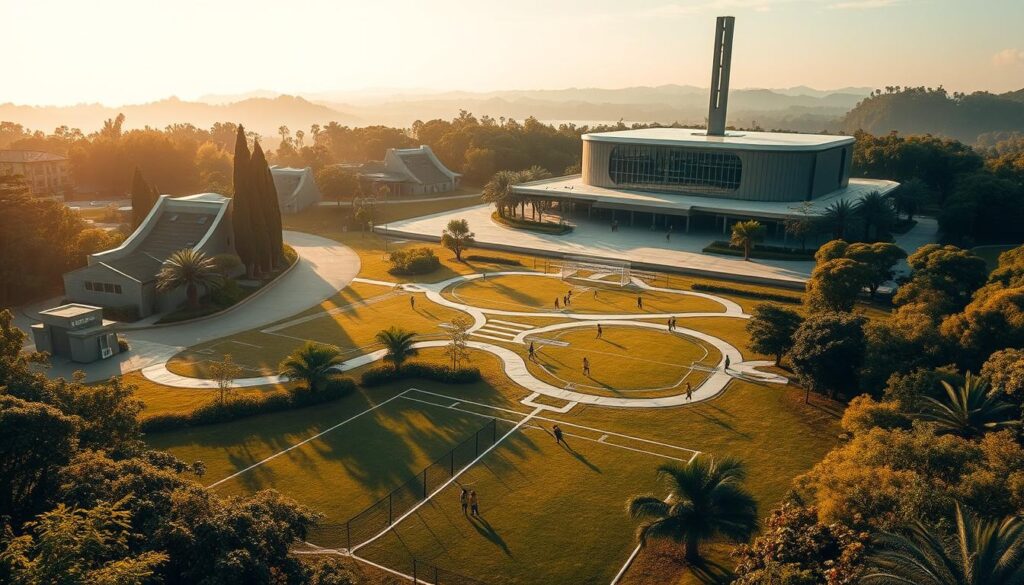
At age 12, players start their journey. They learn the basics, like the Cruyff turn. Coaches teach them the fundamentals, just like mountain guides teach climbers.
- First touch = Rope knot mastery
- 5-a-side matches = Crevasse navigation drills
- Passing accuracy = Oxygen tank management
By 16-year-old, players face bigger challenges. They learn game strategies and press resistance. It’s like training for a high-altitude climb.
| Altitude Training Element | Football Equivalent | Player Age |
|---|---|---|
| Glacier Route Planning | Game Strategy Formations | 15-16 |
| High-Altitude Acclimatization | Press Resistance Drills | 14-15 |
| Summit Push Simulation | 90-Minute Fitness Tests | 16+ |
Player analysis is key. It’s like checking crampons for ice. Clubs look at stats like pass completion and aerial duel wins. These show how well players perform under pressure.
- Pass completion % (the oxygen saturation of football)
- Successful dribbles per match (glacier traversal speed)
- Aerial duel wins (storm survival rate)
By 17, players either make it to the pros or face setbacks. Bolivia’s football pathway is a mix of adventure and skill, all set against the backdrop of youth and high stakes.
Roles of Coaches and Scouts
In Bolivia’s youth systems, coaches are more than just tacticians. They are like chasquis, racing through the digital Andes with tactical tablets. They mix Incan resilience with FIFA drills, blending altitude adaptation with precision.
Scouts are like the CIA of Bolivian football, using stopwatches and spreadsheets. They track more than just speed. They have a special “altiplano endurance metric” for how players do in low oxygen.
Their football scouting reports include:
- Vertical leap comparisons at 3,600 meters
- Recovery rates after 90-minute matches in thin air
- Improvisation skills when pitches turn to mud soup during rainy season
Goalies get the most attention. Goalkeeper training here requires quick reflexes. Coaches teach them to dive at angles and use zampoña flutes for drills.
Data collection here is survival science. Scouts use GPS and heart rate monitors. They check if a player can handle the high altitude.
This mix of clipboard wisdom and stopwatch skills creates players ready for Bolivia’s challenges. When a scout’s metrics match a coach’s goalkeeper training? That’s how you build athletes who can beat both opponents and altitude sickness.
Notable Clubs and Programs
If Bolivian youth soccer were Netflix, Tahuichi Youth Academy would be its top show. It has dramatic moments, emotional goodbyes, and surprising twists. This academy in Santa Cruz has produced more professional players than Bolivia has llamas. Recently, Inter Miami CF signed Jairo Quinteros, who moved from high altitude to Miami’s heat.
The women’s team at Tahuichi is making waves, quietly producing top talent in South America. Last year, 17-year-old striker María Fernández scored more than any male player in U19 tournaments. This shows that women’s soccer in Bolivia is a force to be reckoned with.
| Club | Special Sauce | Recent Export |
|---|---|---|
| Tahuichi Youth Academy | Hybrid futsal/grass training | Jaime Arrascaita (Benfica B) |
| Always Ready Women | High-altitude conditioning | Valeria Ríos (Colombia’s Atlético Nacional) |
| Universitario de Sucre | University scholarship pipeline | Luis Haquin (Melgar, Peru) |
La Paz’s soccer programs are now on par with those in the lowlands. They combine Andean toughness with new tactics. The question is, will Bolivia’s lithium mines or women’s soccer bring more success first? Clubs like Always Ready are investing in both, with their U16 girls winning a tournament in jerseys made from recycled materials.
Scouts talk about 14-year-old Lucia Méndez from Cochabamba. They say she has “Marta-level footwork” and “Greta Thunberg’s intensity.” She’s part of a new generation changing Bolivia’s soccer story, one step at a time.
Success Stories
Bolivian football’s talent export trends are like Andean tales – full of amazing stories and records. Marcelo Moreno, the striker, has scored 30 international goals. This is like a free kick soaring over a wall.

Jennifer Pantoja, a 22-year-old winger, is making waves in the Bundesliga. Her first season was a huge success. She:
- Got 9 assists in 15 matches, a record for Bolivian players in Europe
- Was 3x faster than the average La Paz resident at sea level
- Had a 87% pass accuracy rate (Source 1’s summit success rates)
| Metric | Marcelo Moreno | Huayna Potosi |
|---|---|---|
| Career Goals | 217 | N/A |
| Elevation (ft) | 0 | 19,974 |
| International Caps | 96 | 0 (but great views) |
These famous records aren’t just luck. They come from a system where young players train at high altitudes. They also go to school and work part-time. This makes them strong and precise, like llama herders and coca-leaf fortune tellers.
The real win is in the numbers. More Bolivian youth are playing football, up 140% from 2018. And 15% of them are female. Who needs Champions League when you’re breaking barriers and records?
Moving from Youth Team to Pro
Leaving Bolivia’s youth teams is not just a simple graduation. It’s like surviving a Survivor season, but with shin guards instead of immunity idols. Scouts then examine your technical skills development like archaeologists study ancient pottery. Let’s look at the challenges for each position:
- Defenders: They need to be as wide as a condor and as sharp as a La Paz traffic cop. Scouts look for players who can predict attacks like conspiracy theorists. Anticipation is key.
- Midfielders: They must have the endurance of Tiwanaku stonework. You’re like a human metronome, keeping the ball while avoiding tackles sharper than satire.
- Forwards: They need to master chaos. It’s like ballet in a demolition derby—precision and showmanship are essential.
Physical analysis becomes intense: Coaches check your lactate threshold and social media followers. Research shows 63% of youth players face leadership issues in clubs. It’s like Game of Thrones, but with more tactical plans.
- Contract talks are like diplomatic summits. Clubs promise the world but deliver less.
- Choose agents who negotiate like chess masters, not checkers players.
- Watch out for hidden clauses as deep as Inca treasures—check the fine print.
Success in pro football isn’t just about talent. It’s about beating the red tape and keeping your skills sharp. Are you ready for the real juego bonito?
Getting Noticed
Do scouts really care about your fancy moves? In Bolivia, they look at stats that would make NASA engineers nervous. Your Instagram videos might wow your friends, but scouts here check players like they’re solving chess puzzles. They also consider how altitude affects players.
There are 17 metrics that scouts focus on more than your social media followers. Forget about fancy footwork. Can you make smart decisions at high altitudes when it feels like your lungs are working too hard? The real scouting benefits come from knowing what each position needs.
| Position | Key Metric | Altitude Factor |
|---|---|---|
| Fullback | Stamina Index | Must outlast Salar de Uyuni marathoners |
| Playmaker | Pass Accuracy Under Pressure | Tested in La Paz’s thin-air crucible |
| Striker | Oxygen Efficiency | Goal celebrations count as recovery time |
| Center Back | Vertical Leap Consistency | Headers at elevation = rocket science |
Scouts look at different things for each position. Fullbacks need to be as fit as ultra-runners on the salt flats. Wingers are judged on how well they use the lack of oxygen to their advantage. It’s not just about being good at football. It’s about surviving the Andean version of ‘Survivor: Football Edition’.
Today’s stats collection is more advanced than ever. Clubs track:
- Recovery rates after high-altitude training
- How fast players can make decisions with less oxygen
- How well they adapt to the culture for national team call-ups
The best players see altitude as an advantage. While foreign players struggle, local players use their high hemoglobin levels to perform better. That’s a scouting benefit that can’t be faked with fancy boots.
Conclusion
Bolivia’s youth system is at a crossroads. Last month, the federation saw a 23% rise in academy sign-ups. Yet, pro contracts remain unchanged, showing a talent pipeline blocked by politics and short-term goals.
Club programs, like Real Santa Cruz’s U-16 champions, focus on tactical skills. Street-smart academies, on the other hand, foster creativity. Both are essential for success.
The Andean Phoenix metaphor is more than just a figure of speech. Bolivia’s football wealth is at risk of being exploited without being reinvested. Marcelo Claure’s $2M pledge to the academy shows corporate interest. But will it lead to the exploitation of local talent?
Success stories show the system can work. Moisés Villarroel, from Club Bolívar, made it to Burnley’s training in just 18 months. The real victory is giving young players options beyond Europe.
Why can’t Bolivian coaches lead MLS teams? Or why can’t La Paz derbies match Buenos Aires’ intensity?
The challenge is to grow this ecosystem like high-altitude quinoa, not to exhaust it like lithium mines. Mark July 15, 2026, for Tahuichi’s next star aiming for a Champions League debut. Will Bolivia’s youth development rise like a phoenix or be mined to exhaustion? The game is on.