

Imagine waking up to find that the very geography of your homeland has been declared illegal for international competition. In 2007, this wasn’t a dystopian novel; it was the harsh reality facing Bolivian football when the controversial FIFA altitude ban was introduced. The governing body of the world’s most popular sport decided that the clouds were simply too high for fair play.
This was not just a ruling about player safety or tactical fairness. It was a geopolitical strike against the Andean nations, spearheaded by federations accustomed to the comforts of sea-level privilege. The battle for Estadio Hernando Siles became a defining moment in South American sports history.
Engineering the 2007 FIFA altitude ban
In May 2007, the announcement sent shockwaves through the Altiplano. The executive committee introduced a strict FIFA altitude ban, prohibiting international matches at elevations above 2,500 meters without adequate acclimatization time. For La Paz, sitting at a breathtaking 3,600 meters, it was effectively an eviction notice from the global stage.
The argument from lowland giants like Brazil and Argentina was framed around medical concerns and sporting equity. They claimed that arriving in the thin air of the Andes without weeks of preparation was biologically reckless. However, to the Bolivian people, this felt like an administrative erasure of their natural environment.
The ruling ignored the logistical and economic realities of South American football. Expecting a national team to fund a three-week high-altitude training camp mid-season was an impossible demand. It was a policy written in Swiss boardrooms that fundamentally misunderstood the grit required to compete in the CONMEBOL gauntlet.
Altitude Physiology vs. Coastal Bias
The defense of Hernando Siles quickly turned into a battle of sports science. Bolivian medical experts, long accustomed to treating high-altitude athletes, countered the European and lowland narratives with hard data. They argued that while the air is undoubtedly thinner, the human body’s capacity for rapid adaptation is often underestimated by those who never leave the coast.
This clash of medical philosophies highlighted a deeper bias in sports medicine. Much of the widely accepted altitude physiology research used to justify the ban was based on acute exposure models, rather than the chronic realities of Andean populations. The debate wasn’t just about oxygen; it was about whose science was considered legitimate.
Bolivian officials pointed out the hypocrisy of targeting altitude while ignoring the extreme heat and humidity of coastal venues. Playing a midday match in the suffocating tropical heat of Barranquilla or Rio de Janeiro poses severe metabolic risks, yet these conditions were never subjected to the same draconian legislation. It exposed a double standard in how environmental home advantages were policed.
The Political Defense of Estadio Hernando Siles
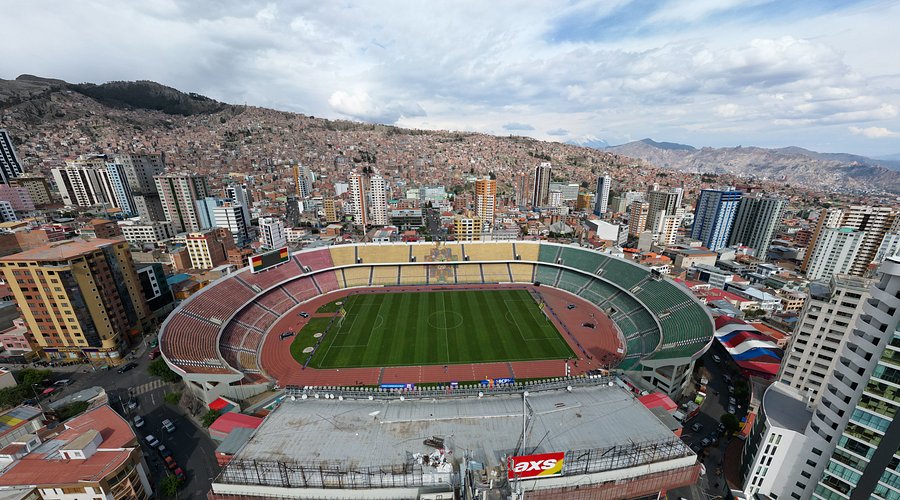
The response from Bolivia was nothing short of a national mobilization. Football transcended the pitch and became a matter of sovereignty. The campaign to reverse the veto saw unprecedented unity, bridging deep political and social divides within the country.
The most iconic image of this resistance was then-President Evo Morales organizing a football match near the snow-capped summit of Mount Sajama, at an elevation of roughly 6,000 meters. It was a spectacular piece of political theater designed to prove a point to the world. If Bolivians could play on a glacier, professional athletes could manage 90 minutes in La Paz.
The pressure campaign, backed by other Andean nations, eventually forced a reconsideration. By May 2008, the ruling was suspended, allowing World Cup qualifiers to return to the roof of the world. The table below illustrates the stark contrasts that fueled this historical debate.
| Venue Profile | Average Elevation | Oxygen Saturation Drop | Primary Physiological Risk |
| Sea-Level Standard | 0 to 500 meters | Negligible | Heat exhaustion, dehydration |
| Moderate Veto Limit | 2,500 meters | 10% to 15% | Mild acute mountain sickness |
| Estadio Hernando Siles | 3,600 meters | 25% to 30% | Severe oxygen debt, musculoskeletal shock |
| Mount Sajama Protest | 6,000 meters | Over 40% | Extreme hypoxia, systemic fatigue |
The Modern Legacy of Bolivian high-altitude football
Today, the Estadio Hernando Siles remains a fortress, standing as a monument to that geopolitical victory. The ordeal permanently altered how the nation views its footballing identity. The altitude is no longer just a geographical fact; it is a fiercely defended badge of honor.
Yet, the echoes of the 2007 conflict still influence modern strategies. Visiting teams now employ highly sophisticated, short-burst arrival tactics to minimize exposure, a direct evolution from the medical debates of the past. As we monitor current league-wide developments across South America, the “Andean Tax” remains a critical factor in every tactical blueprint.
The attempted veto ultimately proved that Bolivian football cannot be separated from its environment. The thin air is the crucible where their raw talent is forged, and Hernando Siles is its grandest stage. To take away the altitude would be to strip the game of its very soul.