
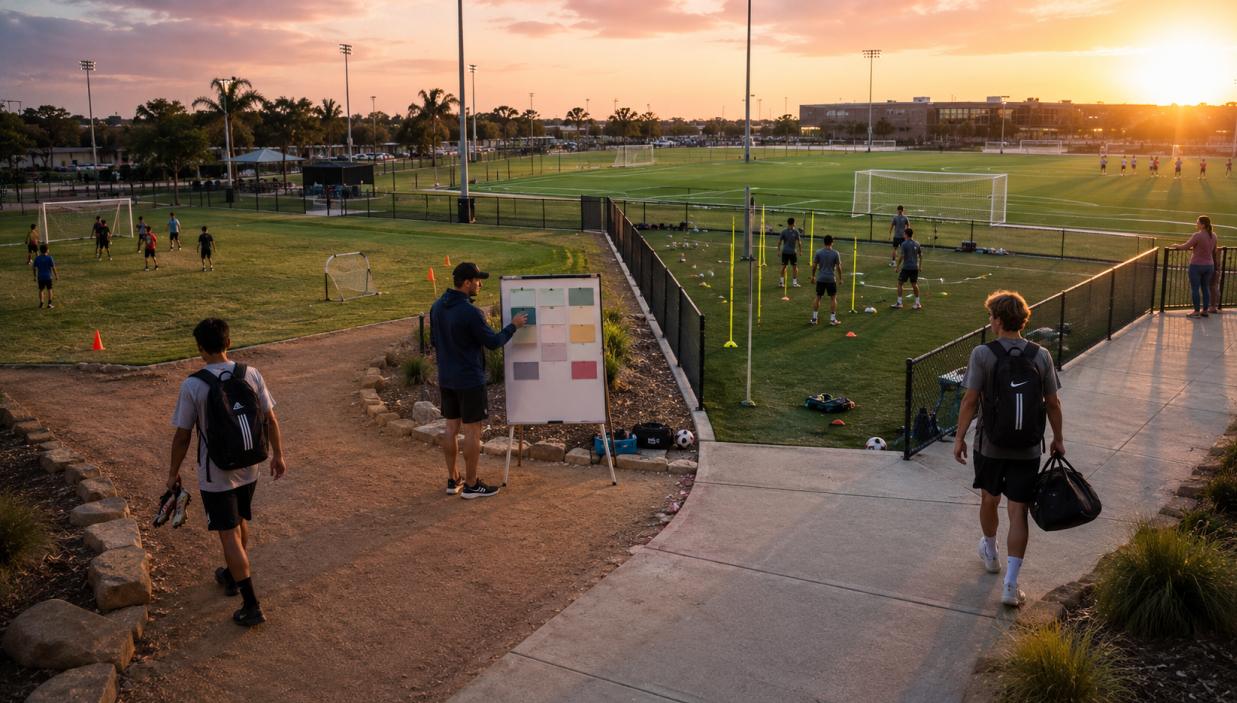
American youth soccer has never lacked players.
It has lacked simplicity.
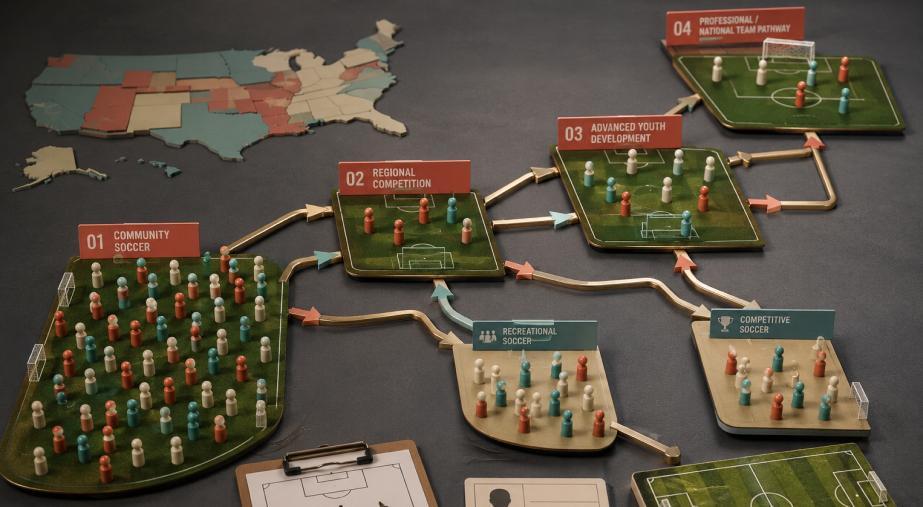
Millions of children play the sport across the United States, but the pathway connecting a neighborhood field to competitive clubs, State Associations, elite leagues, talent identification programs and eventually the national-team system has historically been difficult for families to understand.
On August 29, 2026, U.S. Soccer and US Youth Soccer announced a structural change designed to address part of that fragmentation.
US Youth Soccer’s State Associations voted during their Annual General Meeting to approve an integration that will make USYS part of the U.S. Soccer Federation. Beginning September 1, the organizations will enter a two-year integration process, bringing one of the country’s largest grassroots soccer networks considerably closer to the federation responsible for the national game.
This is not simply another youth competition changing its name.
US Youth Soccer registers approximately 2.68 million players annually, works through 54 Member State Associations and connects more than 10,000 clubs and leagues. Its wider network also involves around one million administrators, coaches and volunteers.
The integration therefore reaches much deeper into American soccer than the USMNT or USWNT.
It reaches the local fields where the next generation first encounters the game.
The central question is whether bringing these enormous structures closer together can solve one of American soccer’s oldest problems: creating a system that is easier to enter, easier to understand and better connected from grassroots participation to elite development. Inter Miami Turns to Kily González: Can a New Coach Fix a Team Built to Win Immediately?
The Integration Begins With a Two-Year Transition
The change will not happen overnight.
According to the official U.S. Soccer integration announcement, the two-year process starts September 1, 2026.
As part of the agreement, U.S. Soccer becomes the sole voting member of US Youth Soccer while the organizations work toward full operational integration.
That is an important governance change.
USYS is not disappearing immediately, nor are local State Associations suddenly being replaced by a national office.
Instead, U.S. Soccer, USYS and the State Associations will spend the transition determining how national resources can be connected more effectively to the organizations administering soccer locally.
The federation says the objectives include increasing access, making the sport easier for families to navigate, bringing more resources to local soccer, improving support for coaches and referees and creating clearer development opportunities for players.
Those ambitions are substantial.
Whether they become meaningful will depend on implementation.
The Scale of US Youth Soccer Makes This Different
US Youth Soccer is not a small development program being absorbed into a larger organization.
It is one of the foundations of the American grassroots game.
Its 54 State Associations cover the country, with multiple associations operating in California, New York, Pennsylvania and Texas.
Those associations connect players to thousands of clubs and leagues.
US Youth Soccer also operates programs that have existed for decades, including State Cup competitions, National Championships, Presidents Cup events and the Olympic Development Program.
That history matters because any structural reform has to work across dramatically different soccer environments.
A player in Los Angeles does not experience the game exactly like a player in rural Missouri.
A club in suburban New Jersey faces different competitive and economic conditions from one in Montana.
Texas alone contains enormous distances between soccer communities.
A successful national structure therefore cannot simply impose one model everywhere.
The integration will need to create alignment without eliminating local flexibility.
American Youth Soccer Has Been Fragmented for Years
The underlying problem is larger than USYS.
American youth soccer contains multiple major organizations and competitive ecosystems.
US Youth Soccer is one.
US Club Soccer is another.
The American Youth Soccer Organization operates another large network.
Elite Clubs National League has become influential at higher competitive levels.
MLS and NWSL clubs operate academy and development structures.
USL organizations increasingly participate in youth development.
Girls Academy provides another elite pathway.
State and regional competitions overlap with national leagues.
None of those organizations is automatically unnecessary.
Competition between development models can produce innovation.
But fragmentation becomes a problem when families cannot understand where their children should play, when teams travel enormous distances to find supposedly appropriate competition or when organizations duplicate resources rather than connecting them.
The new integration is therefore important partly because U.S. Soccer is trying to position itself closer to the center of that complicated landscape.
Another Major Consolidation Is Already Happening
The USYS integration is not occurring in isolation.
The 2026-27 season also marks the launch of National 1 League, a new competition combining US Club Soccer’s National Premier Leagues with US Youth Soccer’s National League.
That merger brings previously separate structures into a unified team-based competition.
National 1 League is expected to serve approximately 10,000 teams and more than 150,000 players.
Its eight conferences were designed with U.S. Soccer’s planned talent-identification models in mind, while its district structure is intended to reduce unnecessary travel and provide clearer progression.
The new competition also connects with ECNL Regional League pathways.
The significance is easy to miss when viewed as individual announcements.
Taken together, however, the changes suggest American youth soccer is entering a period of consolidation.
USYS and U.S. Soccer are integrating.
The NPL and National League have combined.
Competition structures are becoming more connected.
Talent identification is expanding nationally.
That begins to look less like isolated reform and more like an attempt to redesign the system.
The Biggest Opportunity Is Making Soccer Easier for Families
American youth soccer frequently becomes complicated long before a player reaches an elite level.
Parents encounter acronyms.
Different leagues claim different competitive levels.
Travel requirements increase.

Club fees vary enormously.
Teams can move between competitions.
Development pathways may be difficult to compare.
The federation’s stated objective of making soccer easier to navigate therefore matters.
A better system should allow a family to understand several basic questions.
Where should my child begin?
What competition level is appropriate?
What is the next step if the player improves?
Does reaching a higher level require changing clubs?
Where do State Associations fit?
How does talent identification work?
And does an elite player actually have a visible route toward professional or national-team opportunities?
If structural integration cannot make those answers clearer, the administrative change will have limited value to the people playing the sport.
More National Control Must Still Preserve Local Knowledge
Centralization creates opportunities.
It also creates risks.
U.S. Soccer has national resources, commercial relationships, technical expertise and a broad strategic view.
State Associations possess something equally important: local knowledge.
They understand which communities need fields.
They know where referee shortages exist.
They understand local travel patterns.
They know which clubs have served communities for decades and which regions are growing quickly.
U.S. Soccer President Cindy Parlow Cone emphasized the importance of that relationship when the integration was announced, identifying State Associations as organizations that bring the game to life locally.
That principle will be essential.
The best version of integration is not U.S. Soccer dictating every detail from Atlanta.
It is national infrastructure making local soccer stronger.
The Player Pathway Could Become Much Easier to See
The most interesting long-term effect may concern player development.
The United States has become significantly better at identifying talented teenagers.
The next challenge is connecting identification to development opportunities.
A player should not need to understand the politics of American youth organizations to find the appropriate competitive level.
Ideally, strong performances at the local level should create access to stronger regional competition.
Regional performance should create visibility nationally.
Exceptional players should enter talent-identification environments.
Professional academies and national-team scouts should be able to observe those players without depending excessively on geography, reputation or a family’s ability to pay for constant national travel.
U.S. Soccer has already expanded its scouting infrastructure significantly.
Integrating more closely with USYS potentially gives that scouting network another enormous source of local information.
Talent Identification Cannot Become the Only Objective
There is an important distinction, however.
Youth soccer does not exist solely to produce USMNT and USWNT players.
Only a tiny fraction of the 2.68 million players registered annually through US Youth Soccer will ever reach an elite national-team pathway.
A successful integration therefore cannot be judged simply by whether U.S. Soccer discovers more professional prospects.
Recreational players matter.
Local leagues matter.
Children who play until age 12 and then choose another sport matter.
Teenagers who want competitive soccer without professional ambitions matter.
Coaches, referees and volunteers matter.
The federation’s challenge is to create a pathway with an elite ceiling without turning the entire grassroots system into an audition.
That balance is fundamental.
Reducing Travel Could Be One of the Most Valuable Changes
One of the persistent criticisms of elite American youth soccer involves travel.
The country’s geography makes some travel unavoidable.
But organizational fragmentation can make the problem worse.
Teams sometimes travel considerable distances because the competition deemed appropriate for their level sits outside the strongest local structure.
That costs money.
It consumes family time.
It increases pressure on young players.
And it can make elite soccer less accessible to households unable to absorb repeated flights, hotels and tournament expenses.
National 1 League explicitly identifies reducing travel and improving clarity as benefits for families.
If broader U.S. Soccer reform follows the same principle, the impact could be significant.
Better regional competition can sometimes accomplish more developmentally than another expensive national tournament.
Access Remains the Test American Soccer Has Not Solved
The United States has extraordinary soccer resources.
It also has significant barriers.
The sport has often struggled with the perception and reality of pay-to-play development, particularly at competitive club levels.
Integration alone does not remove registration fees.
It does not build a field.
It does not pay a coach.
It does not provide transportation.
But a better-aligned national structure could make it easier to direct resources toward those problems.
U.S. Soccer says the integration should bring more investment and support closer to communities.
That promise will eventually need measurable evidence.
How many additional players participate?
Which communities receive investment?
Do coaching resources improve?
Does referee recruitment increase?
Are travel demands reduced?
Can talented players from lower-income households reach higher competitive levels more easily?
Those outcomes will determine whether the reform changes soccer or merely changes governance.
The Post-World Cup Timing Is Deliberate
The announcement also arrives at a symbolic moment.
The United States had just co-hosted the 2026 FIFA World Cup with Canada and Mexico.
American soccer spent years preparing for the tournament as a commercial and cultural opportunity.
The challenge now is converting that attention into participation and infrastructure.
US Youth Soccer’s 2026 Grassroots Symposium & Leadership Weekend, held August 27-29 in Dallas, was explicitly organized around that question.
More than 400 leaders from youth soccer, State Associations, community organizations, coaching, philanthropy, education and sport innovation were expected to participate.
The theme was essentially about what comes after the World Cup.
That is the correct question.
A successful World Cup can produce memorable stadium moments.
A successful soccer country turns those moments into players, coaches, referees, fields and clubs.
Soccer Forward Adds Another Piece to the Strategy
U.S. Soccer has also been expanding grassroots initiatives outside the USYS integration.
Through its Soccer Forward Foundation, the federation launched Soccer at Schools in March 2026 with the stated ambition of making soccer accessible to every school in the United States by 2030.
The initiative began in Altadena, California, with an event involving 500 students.
Soccer Forward Communities is designed around a related local model, bringing public institutions, community organizations and soccer stakeholders together.
Those initiatives and the USYS integration address different parts of the same problem.
Participation needs entry points.
Entry points need local organizations.
Local organizations need coaches and referees.
Competitive players need appropriate leagues.
Elite players need identification.
The national system becomes stronger when those pieces connect.
Coaching Could Be One of the Quietest Benefits
Youth development discussions tend to focus on players.
Coach development may have a larger aggregate effect.
One excellent youth coach can influence hundreds of players over a career.
A weak coaching environment can lose talented children before talent identification ever becomes relevant.
Closer integration could potentially make federation education, technical resources and development principles easier for local coaches to access.
That does not mean every youth coach should teach identical tactics.
Grassroots soccer should not become a national tactical factory.
But minimum standards around age-appropriate development, safety, communication and learning environments can improve experiences regardless of whether a child eventually becomes elite.
For millions of families, that may matter more than the national-team pipeline.
Referees Need to Be Part of the Reform Too
American soccer’s growth also creates demand for officials.
More games require more referees.
Youth environments can be particularly difficult places to retain them because of abuse from adults, inconsistent support and demanding schedules.
U.S. Soccer specifically included referees among the groups it intends to support through greater alignment.
That deserves attention.
A development system cannot expand indefinitely without the officials necessary to operate competitions.
If integration creates better education, recruitment and retention structures for referees, the benefit would extend from recreational soccer to elite youth leagues.
The National 1 League Offers an Early Test
National 1 League may provide an early indication of whether the broader alignment strategy works in practice.
The competition begins in 2026-27 after combining US Club Soccer’s NPL and the USYS National League.
Its structure is intended to make the pathway more coherent while keeping competition geographically manageable.
According to the National 1 League structure, the competition operates through eight conferences and connects with planned U.S. Soccer talent-identification models.
That is precisely the type of connection American soccer has historically struggled to make obvious.
Local competition should not exist separately from development pathways.
It should feed them.
If National 1 can reduce fragmentation while maintaining competitive quality, it could become a useful model for additional reforms.
Consolidation Does Not Mean Every Organization Must Disappear
American soccer is too large for one organization to administer every meaningful experience directly.
US Club Soccer will continue to matter.
AYSO will continue to matter.
ECNL will continue to matter.
Professional academies will continue to develop players.
Independent community organizations will remain essential.
The objective should not be eliminating every alternative structure.
It should be making those structures more compatible.
A player should be able to move through American soccer without repeatedly encountering administrative walls created by organizations competing for territory rather than improving development.
The federation’s broader Pathways Strategy has already involved organizations including MLS, NWSL, USL, US Youth Soccer, US Club Soccer, ECNL, Girls Academy and State Associations.
That collaboration is potentially more significant than any single league merger.

The United States Can Learn From Soccer Cultures Abroad Without Copying Them
Comparisons with Europe and South America are inevitable.
In many established soccer countries, the route from local club to professional academy is easier to conceptualize because the game has developed within interconnected systems over generations.
The United States is different.
Its geography is enormous.
School and college sports have unusual importance.
Professional leagues developed later.
Youth soccer organizations grew independently.
There is no reason the United States should simply copy Argentina, Spain, Germany or Brazil.
But it can learn from a principle common to strong soccer cultures:
the pathway should be understandable.
A talented child should not need extraordinary family knowledge simply to discover the next competitive step.
The Change Could Matter Beyond the United States
The development is also relevant to Latin American soccer.
The United States increasingly recruits players from multicultural communities with strong connections to Mexico, Central America, South America and the Caribbean.
Many young dual nationals grow up inside American youth clubs while maintaining eligibility or cultural connections elsewhere.
A broader and more connected development system could therefore influence talent competition across Concacaf and beyond.
Mexico and the United States already compete intensely for dual-national players.
Central American federations also monitor U.S.-developed prospects.
Better grassroots identification could make those decisions arrive earlier and more frequently.
For an international sports readership, American youth reform is therefore not purely a domestic administrative story.
It can eventually affect national teams across the region.
The Reform Should Be Judged From the Bottom Up
Major organizations naturally describe integration in national terms.
Families will experience it locally.
That is where success should ultimately be measured.
Does a seven-year-old have somewhere affordable to begin?
Does a 12-year-old receive good coaching?
Can a talented 14-year-old find stronger competition without requiring enormous family spending?
Does a 16-year-old understand the pathway toward professional soccer?
Can a recreational player remain in the sport without being pushed toward elite competition?
Can clubs find enough qualified referees?
Can coaches access useful education?
Those questions matter more than organizational charts.
Two Years From Now, the Structure Should Look Simpler
The two-year transition gives U.S. Soccer and USYS time to avoid unnecessary disruption.
It also creates a clear period in which expectations will grow.
By the end of the integration, families should be able to see practical differences.
Local organizations should have stronger support.
Competition pathways should become easier to understand.
Talent identification should connect more naturally with existing clubs and leagues.
Coaching and referee resources should reach communities more efficiently.
And the cost and travel burdens surrounding competitive soccer should at least begin moving in the right direction.
If those outcomes emerge, August 29, 2026 could eventually be remembered as far more than an administrative vote.
It could represent the point when American youth soccer began moving away from decades of fragmentation toward a more connected national system.
That would make the integration one of the most consequential structural changes in the modern history of the sport in the United States.
The organizations have now created the framework.
The next two years will determine whether families and players actually feel the difference.