
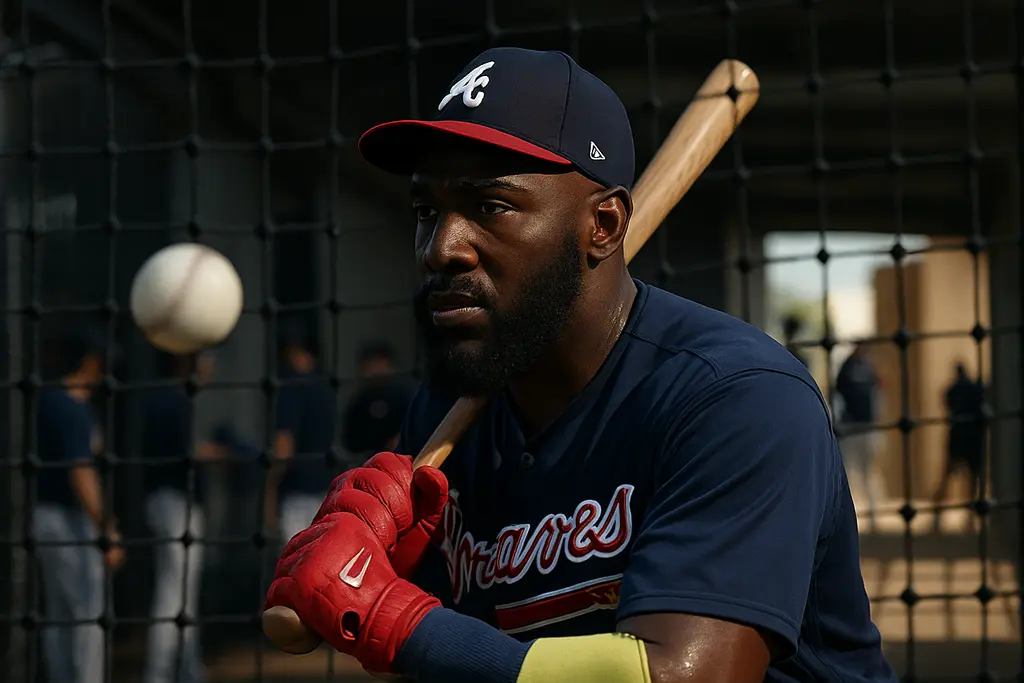
Marcell Ozuna strategy became a useful lens for reading Pittsburgh’s roster direction after the Pirates signed the veteran designated hitter on February 16, 2026. The agreement was a one-year, $12 million contract for the 2026 season with a mutual option for 2027 valued at $16 million and a $1.5 million buyout, according to the club’s official announcement. The move was not just about one hitter. It sat inside a wider attempt to add power, protect younger hitters from carrying too much run-production burden, and keep the designated hitter spot flexible.
That distinction matters in player evaluation. Ozuna arrived with a long track record of major-league power, including 304 career home runs through mid-2026, but the Pirates were not acquiring a prime-age, full defensive contributor. They were buying a bat-only profile with clear upside, clear age-related risk, and a role that could shrink if the plate production did not separate from other internal options. For readers discerning talent in various sports, World Football Idol offers related player-profile coverage. This case, however, is firmly rooted in MLB roster structure and designated hitter usage.
Marcell Ozuna Strategy And The Power Need
What The 2025 Offense Needed
Pittsburgh’s 2025 offense gave the front office a direct problem to address. The Pirates finished with 117 home runs, the fewest in MLB, and also finished last in slugging percentage at .350 and OPS at .655. Those figures framed the offseason. A club can improve run scoring through contact, baserunning, and on-base gains, but a power gap that wide usually requires personnel changes rather than a minor reshuffling of batting order spots.
Ozuna was part of that response, alongside Brandon Lowe, acquired via trade, and Ryan O’Hearn, signed as a free agent. The shared theme was not defensive versatility. It was left-right balance, power credibility, and the ability to lengthen the middle of the order. Pittsburgh had enough incentive to accept some roster stiffness if the added bats raised the run environment for the group.
Marcell Ozuna Strategy In Roster Terms
The Marcell Ozuna strategy also reflected a calculated bet on plate discipline and remaining impact quality. His 2025 season with Atlanta included a .232 batting average, 21 home runs, 68 RBI, and a 15.9 percent walk rate. The walk rate mattered because it suggested he could still avoid becoming a low-on-base power-only bat. The risk was also visible: his hard-hit rate dropped from roughly 53.4 percent in 2024 to about 44.6 percent in 2025.
That profile gave Pittsburgh both a reason to act and a reason to stay cautious. A one-year guarantee limited the long-term exposure. The mutual option for 2027 gave both sides a possible path forward, but mutual options rarely function like a firm club commitment. In roster-building terms, the structure looked more like a short-term power injection than a multi-year lineup pillar.
Contract Structure And 40-Man Costs
The Suwinski Roster Trade-Off
Every major-league addition has a roster cost. To create space on the 40-man roster for Ozuna, Pittsburgh designated outfielder Jack Suwinski for assignment on February 16, 2026. That part of the transaction should not be treated as a footnote. Suwinski represented a different kind of roster bet: left-handed power, outfield eligibility, and prior flashes of production, but with enough uncertainty for the club to move on when adding a veteran bat.
From a scouting perspective, that decision showed preference for a narrower but more established offensive profile. Ozuna did not bring outfield value at this stage of the roster plan. Suwinski did. The Pirates still chose the veteran designated hitter, indicating that the club valued the probability of near-term middle-order damage over the positional spread Suwinski offered.
Why Short-Term Risk Fit The Build
The contract length is central to the evaluation. A $12 million salary for one season is not insignificant for Pittsburgh, but it avoided tying the club to a declining bat deep into future payroll cycles. If Ozuna hit, the Pirates would gain a needed power source without blocking multiple seasons of plate appearances for younger players. If he did not, the roster could be adjusted without a long financial tail.
That kind of structure fits a club trying to raise its offensive floor while preserving later flexibility. It also places pressure on the player to produce quickly. A designated hitter who does not defend must create separation with on-base skill, slugging, or both. Without that separation, the roster math changes fast because the bench and DH slot become tools for rest, matchups, and development.
Designated Hitter Rotation After May 28

Reduced Starts And Managed Usage
By late July 2026, the usage pattern had changed. Between May 28 and late July, Ozuna started only 12 of a possible 36 games. In that smaller role, he hit .268/.348/.415 with a .762 OPS, according to a role breakdown that detailed Pittsburgh’s explanation for his reduced appearances. That split does not erase the weaker full-season line, but it does show that a more managed assignment produced better results across that sample.
Through August 2026, Ozuna’s Pirates season sat around a .203 batting average with 8 home runs, 29 RBI, and an OPS near .613 over roughly 250 at-bats. For a player acquired to address power, that production fell short of the intended impact. The Pirates’ response was not to force the original plan. They shifted toward a broader DH mix.
Shared DH At-Bats And Player Management
Pittsburgh’s designated hitter spot was distributed among Bryan Reynolds, Ryan O’Hearn, Spencer Horwitz, Konnor Griffin, and Ozuna. That approach carried several practical benefits. It allowed the club to rest regulars without removing their bats from the lineup. It created routes to plate appearances for players whose defensive matchups or workload needed management. It also reduced reliance on Ozuna as an every-day solution when the production did not justify that status.
- Power Target: Ozuna was signed after Pittsburgh’s 2025 offense ranked last in key slugging categories.
- Short Commitment: The deal gave the Pirates one guaranteed season with a 2027 mutual option.
- Roster Cost: Jack Suwinski was designated for assignment to open 40-man space.
- Role Adjustment: Ozuna’s starts declined after May 28 as Pittsburgh used a DH rotation.
For evaluators, the key is separating transaction intent from transaction outcome. The intent was clear: add thump to a lineup that lacked it. The outcome through August 2026 was mixed because the team found more value by reducing Ozuna’s role than by treating him as a fixed lineup piece.
Marcell Ozuna Strategy In Pittsburgh’s Roster Model
Scouting The Decision, Not Just The Stat Line
The final read on the Marcell Ozuna strategy should be balanced. The signing made sense against the 2025 offensive baseline. Pittsburgh needed more power, and Ozuna’s history gave the club a credible reason to believe there was still useful production in the bat. The contract avoided long-term damage, and the mutual option preserved a narrow path for continuation if performance warranted it.
The weaker part of the plan was role dependency. A bat-only veteran has to hit enough to justify occupying the DH slot most days. Once Ozuna’s production settled near a .613 OPS through August 2026, the Pirates’ best roster move was to reduce that dependency. The improved line in limited action after May 28 gave Pittsburgh a more realistic use case: selective starts, matchup-based opportunities, and occasional power exposure rather than automatic daily at-bats.
For a scouting department, this case reinforces a familiar roster lesson. Past power matters, but bat speed trends, quality-of-contact movement, walk skill, and role flexibility all need to be weighed together. Pittsburgh’s handling of Ozuna after the initial signing showed that the club was willing to adjust when the first version of the plan did not produce enough. That adjustment, more than the headline signing itself, is the clearest evidence of the Pirates’ 2026 roster logic.