
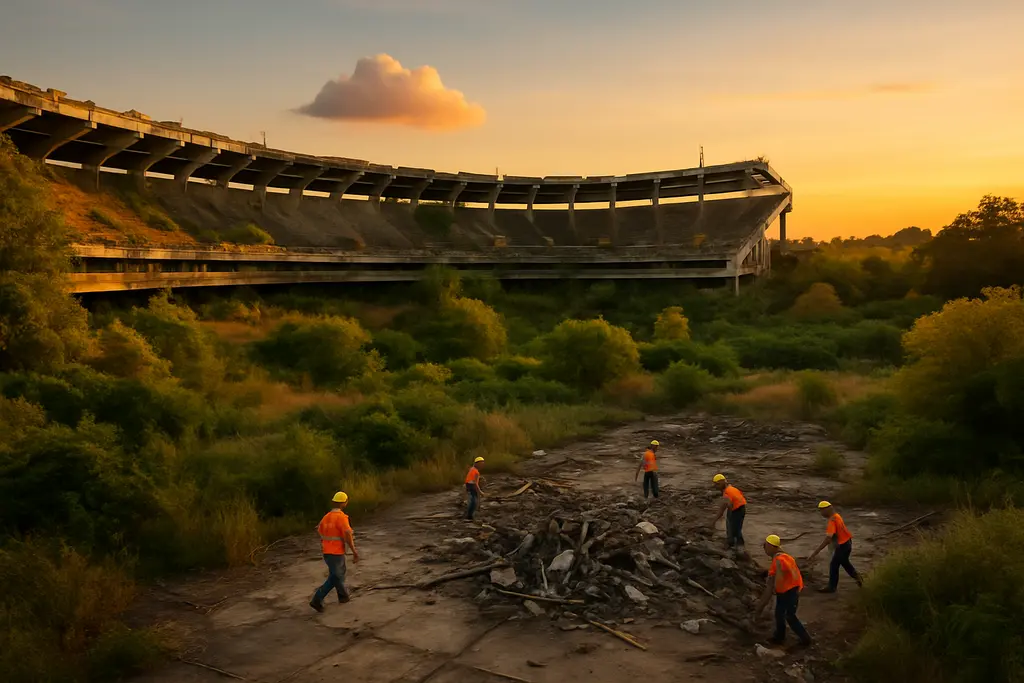
The Commanders Stadium project at the RFK site has moved from political approval into a longer project-delivery phase, with demolition closeout, planning review, enabling work, and mixed-use district coordination now setting the pace. As of August 28, 2026, the available record supports a cautious reading: the agreement has advanced, key planning steps have occurred, and the target opening remains spring 2030, but several construction and campus milestones still sit ahead.
For Washington’s NFL operation, the stadium plan is more than a venue change. It affects game-day capacity, event programming, transport pressure, training-adjacent community facilities, and the club’s commercial base. Those factors do not decide wins and losses on their own, but they shape the operating environment around a franchise that has spent years away from the District’s central sports geography.
Commanders Stadium Timeline And Approvals
Council Approval And Funding Split
The District of Columbia Council gave final approval on September 17, 2025, by an 11–2 vote, to a deal valued at about $3.8 billion. The plan includes a 65,000-seat enclosed stadium on the former RFK Stadium site and a broader mixed-use development. Under the deal described in the research record, the Commanders are expected to commit about $2.7 billion in private investment, while the District is expected to invest about $1.1 billion over eight years toward infrastructure, housing, parks, public amenities, and a SportsPlex.
That split matters from a sports-business standpoint because the stadium is not being treated as a stand-alone building. The surrounding infrastructure and public-space commitments are tied to whether the RFK Campus can function on NFL game days and on non-game days. A 65,000-seat enclosed venue creates different demands than an open-air stadium used mainly for football. The stated plan for year-round use places more weight on utilities, circulation, parking structures, pedestrian movement, and coordination with neighboring areas.
Commanders Stadium Construction Window
The stated construction target is spring 2027, with a targeted opening in spring 2030. Those dates should be read as project targets rather than completed outcomes. Enabling work, including site preparation and utilities, has already been referenced in the project materials, but the major build phase still depends on the sequence of demolition closeout, design review, permitting, procurement, and infrastructure timing.
For the Commanders Stadium, the next practical checkpoint is not a ceremonial moment. It is whether site readiness, final approvals, and construction mobilization stay aligned before spring 2027. Large stadium projects can lose time through utility conflicts, design changes, procurement delays, or funding disputes. The confirmed record does not establish that those issues have occurred here; it simply shows why the period between August 2026 and spring 2027 is central to the schedule.
RFK Campus Scope And Stadium Design
Campus Footprint And Stadium Placement
The RFK Campus covers about 180 acres between the Anacostia River and the Kingman Park and Hill East neighborhoods, while the stadium portion is described as about 30 acres in the National Capital Planning Commission project synopsis NCPC synopsis. That scale is significant because the stadium is one piece of a larger land-use plan, not the full site plan by itself.
The venue is planned as an enclosed, roofed facility with 65,000 seated spectators and standing capacity in certain areas. The research record also describes expected year-round use, including roughly 200 annual events, with about 28 to 29 ticketed events and many more private or community events. From an NFL operations perspective, that profile puts the building closer to a multi-event district anchor than a football-only stadium.
Demolition And Site Readiness
Demolition of the old RFK Stadium began in late January 2025. By mid-2026, structural demolition had been completed, while foundation and wall removal remained in progress. Full closeout was expected by October 2026, and roughly 95% of demolition waste was reported as being reused or recycled on site. That reuse figure is relevant because on-site recycling can reduce hauling volume and may support project logistics, though it does not by itself confirm that the future build schedule will hold.
Initial site and building plans were submitted through the National Capital Planning Commission process in early 2026. In February 2026, preliminary site and building plans were unanimously approved. The research notes also identify design revisions tied to the height of two 11-story parking garages and orientation feedback. That suggests the review process was not only procedural; it included specific design issues that can affect how the stadium connects with parking, streets, and surrounding neighborhoods.
Mixed-Use District And SportsPlex Impact
Housing, Retail, And Event-Day Use
The broader district is expected to include about 8.1 million square feet of development, including housing, retail, hotels, office space, restaurants, structured parking, green space, and recreation. The housing range in the research record is 5,000 to 6,000 units, with 30% designated as affordable. The RFK SportsPlex is listed at 225,000 square feet as part of the same development concept, according to the District’s economic impact analysis RFK economic analysis.
For supporters, the mixed-use plan could change how a Washington home game functions. A district with housing, restaurants, hotels, and public space creates more pregame and postgame flow than a stadium surrounded mainly by surface parking. The effect would depend on final buildout, access planning, price points, tenant mix, and transportation capacity. None of those outcomes should be assumed from the concept alone.
SportsPlex And Community Programming
The RFK SportsPlex is budgeted at $77 million, is in the design-build procurement phase, and is scheduled for substantial completion in fall 2030. Its timing is notable because it follows the target stadium opening of spring 2030. If that sequencing remains in place, the football venue could open before every planned recreational component is substantially complete.
From a player-development and community-sports angle, the SportsPlex is the part of the project with the clearest youth and amateur athletics connection. The research record describes indoor athletic and youth facilities, but it does not provide confirmed programming details, operator information, or sport-by-sport allocation. Until those details are published, the safest reading is that the facility is planned as a major public athletic asset rather than a defined feeder system for any team.
Readers looking to compare stadium and development projects across various sports markets might find broader reference material useful at Wikiapp, a related site in the same network.
Planning Review And Neighborhood Connectivity
Draft Master Plan Status
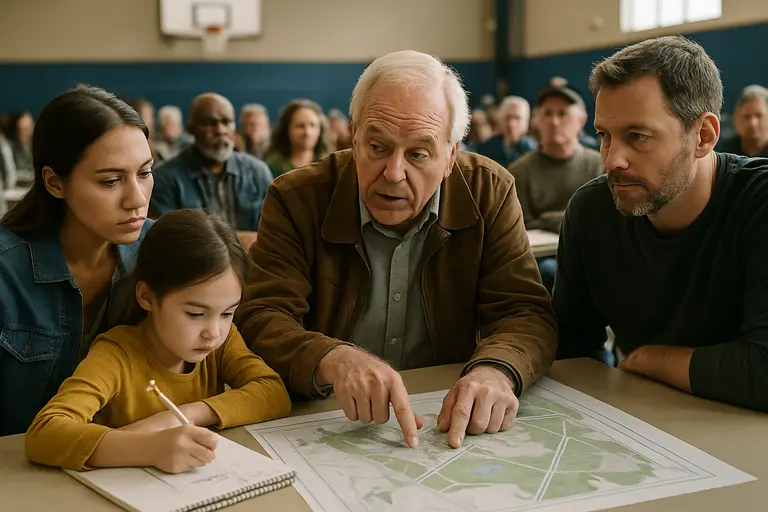
A draft Master Plan for the broader RFK Campus was publicly released on June 30, 2026. The public comment period ran for 45 days and ended on August 14, 2026. The plan addressed land-use guidelines, zoning, open space, street and connectivity improvements, neighborhood integration, and mixed-use programming across the campus.
Because that comment period had already closed by August 28, 2026, the relevant question is how public feedback and agency review are reflected in later project documents. The available research does not identify final changes after the comment window, so any claim about specific revisions would be premature. What can be said is that the master planning process has treated the stadium as one component within a wider campus strategy.
Transportation And Access Questions
The research notes do not provide granular funding details for transportation, parking operations, Metro service, or traffic management beyond references to structured parking, street connectivity, and infrastructure investment. That limits any firm assessment of game-day access. A 65,000-seat stadium and a year-round event schedule require clear arrival and departure planning, but the confirmed record supplied here does not establish the final transportation program.
That uncertainty is worth separating from opposition or support for the project. Analysts can identify access as a major delivery issue without claiming that the plan will fail or succeed. The same standard applies to parking garages, pedestrian links, and neighborhood impacts: the direction of the plan is documented, while the final operating details remain dependent on later approvals and execution.
Commanders Stadium At The RFK Site
The Commanders Stadium plan has reached a stage where the major public agreement and preliminary planning record are no longer theoretical. The Council vote occurred on September 17, 2025, preliminary NCPC review advanced in February 2026, demolition was far along by mid-2026, and the draft Master Plan comment period closed on August 14, 2026.
The next phase is about delivery discipline. The old RFK demolition closeout was expected by October 2026, construction was anticipated to begin in spring 2027, and the stadium target opening remained spring 2030. For a franchise evaluating long-term commercial growth, fan experience, and event flexibility, those dates are the spine of the project. For the District, the test is whether the stadium, housing, public space, SportsPlex, and infrastructure commitments advance together rather than as disconnected pieces.
The supported evidence points to a project with momentum, defined scale, and unresolved execution questions. That is the right frame for the RFK site as of August 28, 2026: approved in key respects, active in planning and site work, but still dependent on the next set of construction, design, and campus-integration milestones.