

NFL Training Camp has moved from opening-week optimism into the more useful stage of evaluation: who is practicing, who is taking first-team reps, which coaches are changing routines, and where roster pressure is building before the August cutdown. As of August 20, 2026, the most reliable picture is not a full prediction of the season. It is a set of verified camp markers that show how teams are trying to prepare for a more competitive schedule cycle.
The clearest themes are quarterback availability, staff turnover, contract decisions, and the difference between early camp rhythm and late-August roster math. Some developments are already settled, such as confirmed injury news and reported extensions. Others remain camp competitions, where rep distribution matters but does not close the case. That distinction is central to any fair scouting read.
NFL Training Camp Signals Across The League
NFL Training Camp Timeline
The reporting window began in mid-to-late July, with rookies and veterans arriving on staggered dates. Seattle rookies were listed among the earliest arrivals on July 17, while many teams had later report dates around July 28. The leaguewide roster reduction deadline is scheduled for 6 p.m. EDT on August 30, 2026, when clubs must cut down to 53 players.
That date gives every camp practice a sharper edge. Coaches can use joint work, preseason snaps, and closed practices to test players, but the final decision point is fixed. For teams with new head coaches, new quarterbacks, or recovering starters, the timeline is especially compressed. A player who misses early installation can still make ground, but each missed padded practice removes another verified data point from the evaluation file.
Coaching Change As A Baseline
Ten teams reported to new head coaches for the 2026 season, which made camp structure part of the story before any preseason score mattered. A new coach is not simply changing slogans or meeting schedules. He is often changing practice tempo, installation order, staff communication, and how veterans are balanced against developmental players.
Kansas City offered one of the more visible examples. On July 26, 2026, Chiefs head coach Andy Reid reinstated an early camp arrival for rookies and backup quarterbacks after the club’s 6-11 season. The move did not guarantee a rebound, but it created more teaching time for young players and reserve passers before the full roster rhythm took over. In camp terms, that is a practical adjustment: more reps before veterans dominate the field plan.
For a unique perspective on player development, Books on Baseball shares insights from a different sport’s viewpoint. Football’s approach involves shorter, more intense sessions, while the underlying challenge remains: converting restricted training schedules into valuable intelligence.
Quarterback Rooms And Player Development
First-Team Reps Matter, But Need Context
Quarterback rooms are the easiest camp storyline to overstate, so the safest approach is to separate confirmed participation from conclusions that have not been reached. Indianapolis is a useful example. The Colts’ offseason focus on getting healthier showed early returns when Daniel Jones, recovering from a torn Achilles, resumed full first-team reps in early camp, according to NFL.com’s camp takeaways.
Full first-team work is meaningful because it places a quarterback inside the timing structure that will actually define an offense: cadence, protection calls, route spacing, and pressure answers. Still, it is not the same as regular-season proof. Training camp can show whether a player is available for the plan and trusted with the installation. It cannot, by itself, confirm how that player will respond once weekly game plans and live defensive adjustments begin.
Atlanta And Cleveland Show Different Competition Types
Atlanta’s quarterback situation has been described as a competition between Tua Tagovailoa and Michael Penix Jr. Tagovailoa has taken most reps in the available camp notes, while Penix has been working back from a knee injury. A later July 29 note said Penix remained sidelined early in camp with a minor injury and that the team added Cooper Rush to help support practice reps while Penix recovered.
That combination leaves Atlanta with a camp competition that is partly about performance and partly about availability. Tagovailoa’s rep volume matters, but Penix’s limited work means the evaluation may be incomplete. The cautious read is that Atlanta’s staff gained more day-to-day information on Tagovailoa during the early phase, while Penix’s status limited his chance to answer the same practice questions at the same pace.
Cleveland presents a different shape. Browns camp includes a quarterback battle between veteran Deshaun Watson and Shedeur Sanders, with early reports suggesting Watson had the edge entering camp despite missed time and lingering concerns. That is not the same as naming a final starter. It does suggest the staff began camp with Watson positioned ahead in the evaluation order, while Sanders’ case would need to be built through practice command, preseason work, and consistency in the meeting-to-field transfer.
The quarterback reshuffling across the league adds to that pressure. Kyler Murray moved to Minnesota, Tagovailoa to Atlanta, Kirk Cousins to Las Vegas, and Malik Willis signed with Miami. Those changes affect more than depth charts. Receivers must adjust to different timing, offensive lines must adapt to different pocket habits, and play-callers must decide how much of the offense is built around the quarterback rather than simply taught to him.
Health, Contracts And Roster Pressure
Confirmed Availability Changes The Practice Plan
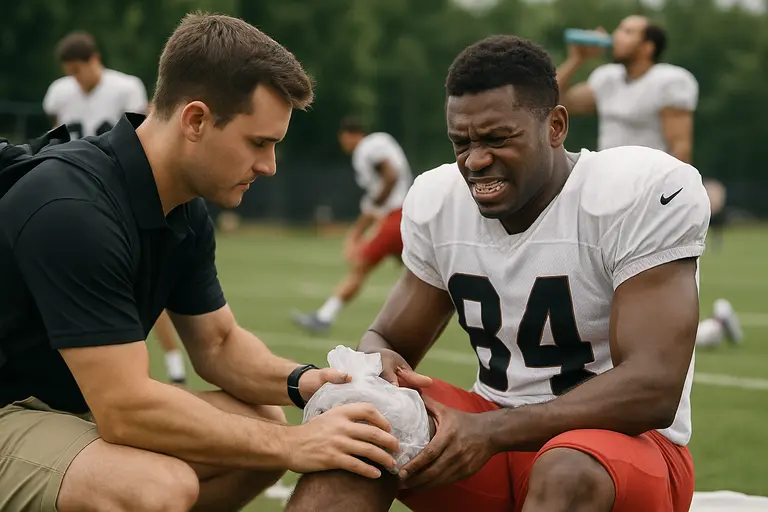
Kansas City’s camp also produced a key health marker. Patrick Mahomes was cleared for full participation around late July 2026, about seven months after knee surgery, while the Chiefs also signed cornerback Denzel Ward to a two-year, $62.2 million extension that made him the highest-paid defensive back in NFL history as of late July 2026, according to National Football Post’s July 29 review.
Mahomes’ full participation mattered because the starting quarterback is the reference point for nearly every offensive evaluation. Backup linemen, receivers fighting for roster spots, tight ends, and running backs in pass protection all get cleaner assessment when the primary quarterback is running the operation. It also lets coaches judge whether timing-based ideas are functioning with the player expected to lead them.
Ward’s contract stands in a different category. It does not tell us how the defense will perform in September, but it does tell us the club committed major resources to the secondary before roster cutdown. That type of move can affect how a team weighs veteran depth, young corner development, and special-teams value in the defensive back room.
Injury News Narrows Some Evaluations
New Orleans received one of the harder camp developments when defensive tackle Bryan Bresee suffered a torn ACL on July 29, 2026, ruling him out for the season. Because that injury outcome was reported as season-ending, the Saints’ evaluation changes from competition at one interior spot to replacement planning across the defensive front.
The personnel impact is practical. Coaches must redistribute first-team and rotational reps, test whether another tackle can handle early-down work, and decide whether depth candidates can cover both run defense and pass-rush packages. For a defensive line coach, the question is not only who replaces snaps. It is which combinations still let the front play its intended technique.
- Quarterback reps: Indianapolis, Atlanta, Cleveland, and several teams with new passers are using camp to clarify timing and command.
- Coaching turnover: Ten new head coaches changed how early installation and evaluation were framed.
- Health markers: Confirmed participation and confirmed season-ending injuries changed practice allocation.
- Roster deadline: The August 30 cutdown to 53 players remains the hard decision point.
Roster management is where camp reporting connects most directly with preseason development. The same question appears across positions: does a player show enough in practice and preseason snaps to justify a 53-man spot, or is he being evaluated for a practice-squad path? That connection is central to NFL preseason development, where reps become evidence for roster choices rather than simple activity.
NFL Training Camp Roster Picture
The broader read from NFL Training Camp is that teams are not all solving the same problem. Kansas City is using health clearance, early arrivals, and a major defensive contract as part of a reset after a 6-11 season. Indianapolis is measuring what full first-team work means for a quarterback returning from injury. Atlanta and Cleveland are sorting quarterback competitions under different conditions. New Orleans is adjusting after a confirmed season-ending injury on the defensive line.
The most useful caution is that camp signals are strongest when they describe process, not when they are stretched into forecasts. A first-team rep count, an early arrival date, a new coach’s routine, or a confirmed roster deadline can be reported with confidence. A projected standings jump cannot be built from those facts alone.
For NFL Training Camp evaluation, the evidence points to a league where preparation is being shaped by availability and compressed decision windows. The August 30 deadline will force clarity, but the work before it has already shown which teams are building around stability, which are managing uncertainty, and which are still trying to learn what their depth charts can handle.