

The steep urban grids of La Paz and the densely packed neighborhoods of El Alto offer almost zero space for a regulation-sized grass pitch. The rugged topography and harsh economic realities of the Altiplano force young athletes onto concrete courts and indoor hardwood floors. This geographical limit accidentally built a massive technical advantage. Daily exposure to Bolivian futsal acts as the primary mechanical engine for the senior national team.
Grassroots academies struggle to fund constant irrigation and soil management in thin, arid air. Concrete futsal courts offer a highly durable, cost-effective alternative for local municipalities. Children spend their formative years mastering a heavier size-four ball that barely bounces. This specific environment acts as an unforgiving tactical instructor. A poor first touch on concrete results in an instant loss of possession.
Hyper-Confined Technical Growth
The traditional 11-a-side format grants players the luxury of time and open space to scan the field. Futsal completely eliminates that comfort. Operating within a 40×20 meter court against relentless man-to-man coverage forces an athlete to process spatial information in milliseconds. This hyper-confined space builds elite neural pathways.
When these athletes eventually transition to a full grass pitch, the game feels incredibly slow. The spatial awareness they developed indoors allows them to operate comfortably in tight midfield pockets. Global sports science metrics detailing futsal technical development confirm that court players touch the ball up to six times more frequently per minute than their field counterparts. This extreme repetition creates a distinct mechanical advantage in close-quarters dribbling.
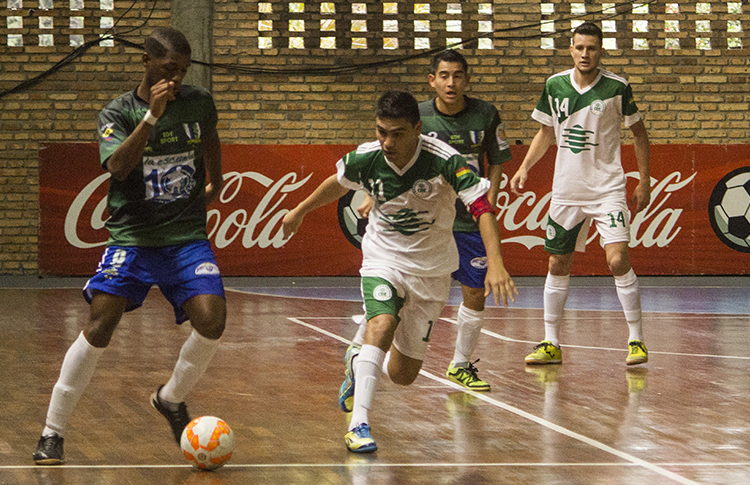
Translating Hardwood To Grass
Hard data backs up this alternative development pathway. A staggering 63% of the current senior national team roster began their organized football careers in local futsal leagues. The skill set they acquired translates directly to surviving the aggressive pressing systems common in CONMEBOL World Cup qualifiers.
A central midfielder who learned to shield the ball from three defenders in a cramped gymnasium finds it noticeably easier to retain possession against a lone pressing forward on grass. The tactical transition from court to pitch requires some positional adjustment. The mechanical foundation, forged through thousands of hours on the hardwood, remains flawless. We see this exact translation when evaluating Bolivian breakthrough players making the leap to the senior squad.
| Development Metric | 11-a-Side Academy | Urban Futsal Court | Transferable Advantage |
| Touches Per Minute | Low (Spread out) | Extremely High | Elite ball familiarity under pressure |
| Decision Time | 2 to 4 seconds | Less than 1 second | Rapid cognitive processing |
| Primary Surface | Natural/Artificial Grass | Concrete/Hardwood | Perfects the sole-of-the-foot control technique |
| Ball Physics | Lighter, high bounce | Heavier, dead bounce | Forces precise ground passing |
Restructuring The Pathway
The Bolivian Football Federation must stop treating the indoor game as an entirely separate entity. The smartest global scouting networks formally integrate court sessions into their youth schedules until players turn 15. The domestic system relies too heavily on chance discoveries rather than a formalized pipeline.
Top-tier Liga Profesional clubs need to permanently station evaluators at regional indoor tournaments. Identifying talent early on the hardwood is the most cost-effective method to secure elite technical prospects. Reviewing the youth pipeline overview shows a glaring disconnect between the talent playing on concrete and the scouts sitting in stadiums.
Tracking South American tactical data reveals a continent trending toward intense pressing systems. Players who panic under pressure will not survive. Bolivia already possesses an army of young athletes conditioned to thrive in claustrophobic sporting environments. The federation simply needs to pave a direct road from the local concrete court to the Estadio Hernando Siles.