

Forget everything you know about teenage prodigies and viral highlight reels. In soccer, a true breakout isn’t about fancy facilities. It’s a magical transformation.
While European clubs focus on genetics, Bolivia bets on grit. Here, talent isn’t found by drones. It’s shaped by the Andes and tough circumstances.
The famous Tahuichi Academy is unlike Barcelona’s La Masia. It’s more like a library with a great fitness program. Eighty-five percent of its kids are on scholarships. They train in thin air at 12,000 feet, then learn calculus and help the community.
This isn’t just training. It’s a complete growth experience. The thin air helps them, and tough times make them stronger.
So, when we talk about a breakout here, we’re looking at more than just goals. We’re watching for when this Andean-forged talent meets its chance. It’s a story of overcoming, not just outdoing, as seen in other defining moments for Bolivian soccer stars.
Performance indicators
Forget about goals and assists. The real signs of Bolivia’s next football stars are in oxygen levels and tactics. Scouting here is more like data science with a twist.
At 3,600 meters high, every training is tough. By 16, players have lungs 12% bigger than others. The key metric isn’t speed; it’s the SpO2 after a long match.
This isn’t just theory. National teams use this high altitude to their advantage. For example, Bolivia moved a World Cup qualifier to a higher altitude to gain an edge. For a Bolivia breakout player, being fit is key.
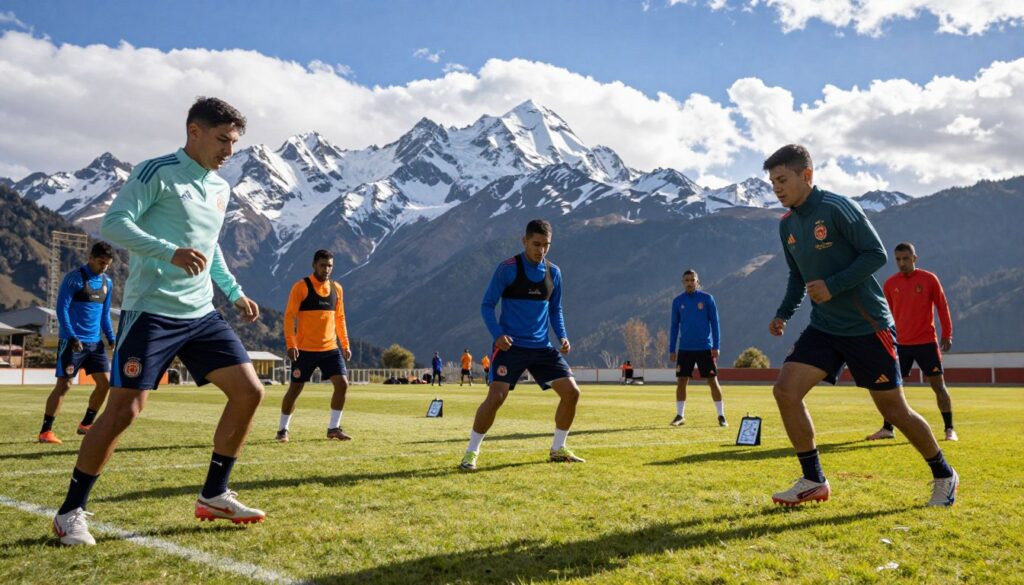
Then, there’s their skill in tight spaces. 63% of the national team started in futsal. It’s about solving problems under pressure.
Can a player control the ball in a small area? That skill helps in tight midfield battles. It’s about creating space, not needing it.
The modern Bolivia breakout player is smart. They learn tactics early and analyze games like film students. They wear GPS trackers for detailed analysis.
Scouts look for quick decision-making and physical speed. They want players who can read the game fast and move well without the ball. The analysis goes beyond simple stats.
Patience is also key. Bolivian players debut later than Europeans. This gap is part of their unique development.
The real test for a Bolivia breakout player is in local leagues. They face tough opponents and prove their worth. This builds mental strength.
Platforms like in-depth analysis of Bolivian football follow these players closely. They see talent as a mix of physical, technical, tactical, and mental skills.
So, when you watch a Bolivia breakout player, you see more than a footballer. You see a product of high altitude, street smarts, tactics, and grit. The signs are in their lungs, feet, mind, and patience.
Media and scout response
The path from a remote village to stardom in Bolivia is guided by scouts and journalists. Scouts use data, while journalists tell stories. Together, they create a unique dialogue.
Scouts now use advanced tools, not just spreadsheets. They measure oxygen levels and track performance. They wait patiently for the right moment to assess young athletes.
Scouts use tools that would impress Billy Beane. They check oxygen levels and use analytics to adjust for altitude. They look for talent beyond what’s seen on social media.
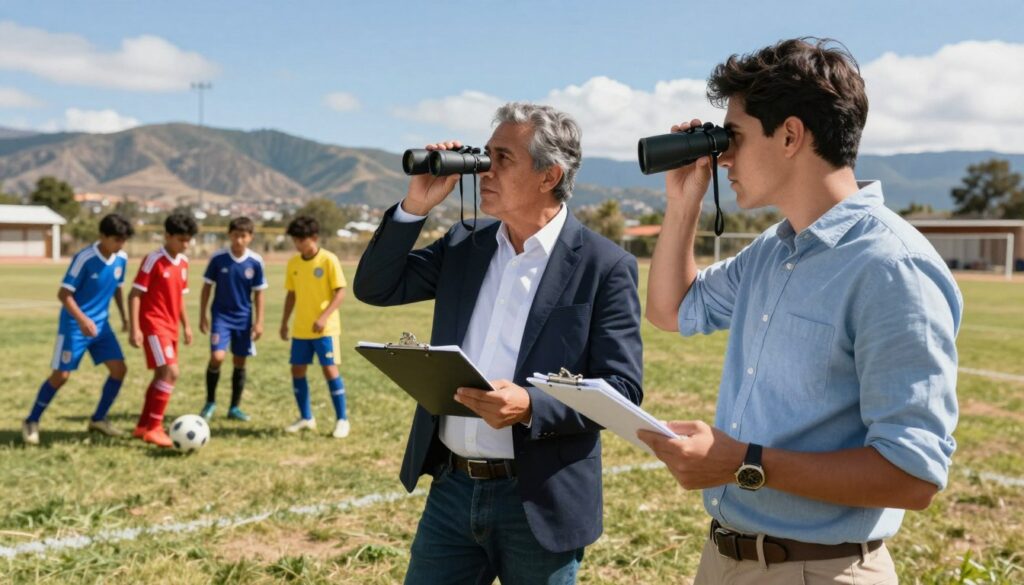
The way scouts work has changed. They listen to local networks for insights. Taxi drivers in La Paz share valuable information about young players.
The media’s role has also changed. They now focus on the game, not just fashion. Stories like Las Ninfas show how coverage can shift.
Las Ninfas changed the way they were seen. They went from being known for fashion to being serious athletes. This change helped them get noticed globally.
The table below shows how scouting and media have changed:
| Approach | Traditional Scouting | Modern Analytics | Community Network |
|---|---|---|---|
| Location | Major city academies | Remote villages (4,000m+) | Local taxis, radio debates |
| Primary Tools | Eyesight, intuition | Pulse oximeters, GPS data | Word-of-mouth, local knowledge |
| Key Metrics | Goals scored, basic skills | Altitude-adjusted VO₂ max, vertical leap | Community respect, work ethic off-field |
| Success Rate | Low (missed physiological factors) | Higher (data-driven predictions) | Surprisingly high (cultural context) |
International clubs now look at Bolivia with interest. City Football Group’s academy in Cochabamba is a key example. They look at more than just a player’s skills.
The media now plays a bigger role. They cover more than just the game. This helps attract more scouts and attention to rising stars.
This system creates tension. Scouts want to wait, but the media wants to highlight stars quickly. The best annual standouts must balance these two.
Bolivia’s football shows how different approaches can work together. When scouts, analytics, and community wisdom meet, you get more than a player. You get a story that captivates everyone.
Sustainability questions
Does Bolivian football have a lasting impact, or is it just a fleeting dream? The answer might be found outside the game. Bolivia has the world’s largest lithium reserves. The government aims to transform the economy through green mining.
This plan is not about fast profits. It’s a long-term strategy, similar to nurturing young football talents like Marcelo Moreno. The connection between football and sustainable mining is clear.
Just as Bolivia’s lithium policy focuses on local tech, football relies on community support, not just money. Both face high expectations. Can Bolivia, known for its resources, also nurture global stars in other fields?
The football model gives us hints. Sustainability in football isn’t just about numbers. It’s about the taxi driver remembering Marco Etcheverry’s first game. It’s the street vendor spotting the next football prodigy.
This grassroots approach might be Bolivia’s secret. For both football and mining, the real win isn’t just one moment of glory. It’s creating something lasting for the next generation in El Alto or Potosí.