

Forget stadiums filled with cheering fans. The real action in Bolivia today happens in a much tighter arena: the central bank’s vaults. Picture a high-altitude party where the dollar keg held nearly $15 billion back in 2012. Today, that stash has dwindled to less than $2 billion.
The guests—importers, businesses, anyone needing foreign currency—are thirsty. This isn’t just a trend; it’s the defining landscape for every financial flow in and out of the country.
The official story is a fixed exchange rate of 6.96 bolivianos to the dollar. The real narrative plays out in the parallel market, where greenbacks trade at a 60% premium. Why does this gap matter? Because every international payment becomes a high-stakes negotiation across this widening chasm.
This dollar scarcity fuels an inflation engine now revving at 25%. The government prints money to cover its tabs, creating what analysts call a critical balance of payments crisis. The broader global remittances market continues to adapt, but Bolivia’s particular squeeze makes local transactions uniquely dramatic.
The trendline here doesn’t point upward. It circles the drain, with a whole economy trying to wire its way out of a tightening corner.
Selling vs buying clubs
Imagine a football game where one team controls the stadium and makes the rules. The other team must use speed and creativity to score. This is what’s happening in Bolivia’s financial world today. The Bolivia transfer market trends are about power, control, and who makes the decisions.
On one side, we have the Traditional Banks, the “Selling Clubs.” They’ve been around forever. The government has a big say in their decisions, thanks to laws like the Financial Services Law. This law lets the state control credit, set interest rates, and dictate terms. It’s like they’re playing at home, but fans (that’s you) often get frustrated.

Trying to send money abroad through this system is a challenge. International wires can take 2-5 days to clear. Fees can be up to 6.2% of your transfer. And, there’s a big problem with dollar scarcity. The central bank limits USD, so banks charge extra fees of 5-5.6% for greenbacks. It’s like trying to buy a hot concert ticket from a 1990s box office window—slow, expensive, and old-fashioned.
Now, let’s meet the challengers: the Fintech disruptors. They are the “Buying Clubs” of our metaphor. They don’t own the stadium but have a digital playbook. Platforms like Mural Pay offer fast settlement in minutes, not days. Fees are often below 1%. They provide multi-currency virtual accounts and batch payment features that can cut reconciliation workload by up to 70%. It’s financial sorcery compared to the old ways.
So, who wins in this matchup? Let’s break it down clearly:
| Feature | Traditional Banks (Selling Clubs) | Fintech Solutions (Buying Clubs) |
|---|---|---|
| Settlement Speed | 2-5 business days | Minutes |
| Typical Fees | Up to 6.2% + dollar premiums | Often below 1% |
| Currency Access | Subject to central bank USD allocation | Multi-currency virtual accounts |
| Operational Efficiency | Manual processes, high admin load | Batch payments, ~70% less reconciliation |
| Regulatory Stance | Fully licensed, state-integrated | Operates in regulatory gray zone |
The Buying Club is playing an away game in a legally foggy stadium. The Bolivian Central Bank has officially yellow-carded cryptocurrency payments. This creates a fascinating regulatory ambiguity. The whistle hasn’t been blown on every fintech move, but the threat hangs in the air. Are they revolutionizing the Bolivia transfer market trends, or are they about to get a red card?
This tension isn’t happening in a vacuum. It mirrors broader shifts in how Bolivia engages with the world, including the new wave trends in Bolivian talent. As professionals and businesses look outward, they demand financial tools that match their global pace. The old guard offers stability and official passes. The new school offers speed and efficiency, but with a question mark hovering overhead.
Your bet depends on your appetite for risk versus your need for speed. Do you prioritize the solid, state-approved path, even if it’s paved with delays and fees? Or do you opt for the digital express lane, accepting that the rules of the road might change mid-journey? In the evolving Bolivia transfer market trends, this isn’t just a financial decision. It’s a philosophical one about trust, innovation, and who really controls the game.
International demand
In Bolivia’s real transfer market, the most sought-after asset isn’t a player but the U.S. dollar. It’s not about sports; it’s about survival. Importers face a simple, brutal equation: no dollars means no goods, and no goods means no business.
The hunger for liquidity here is visceral. The black market premium has soared to 60% above the official rate. Imagine paying a 10% vig just to access the currency needed to keep your supply chain moving. That’s not a business expense; it’s a ransom payment.
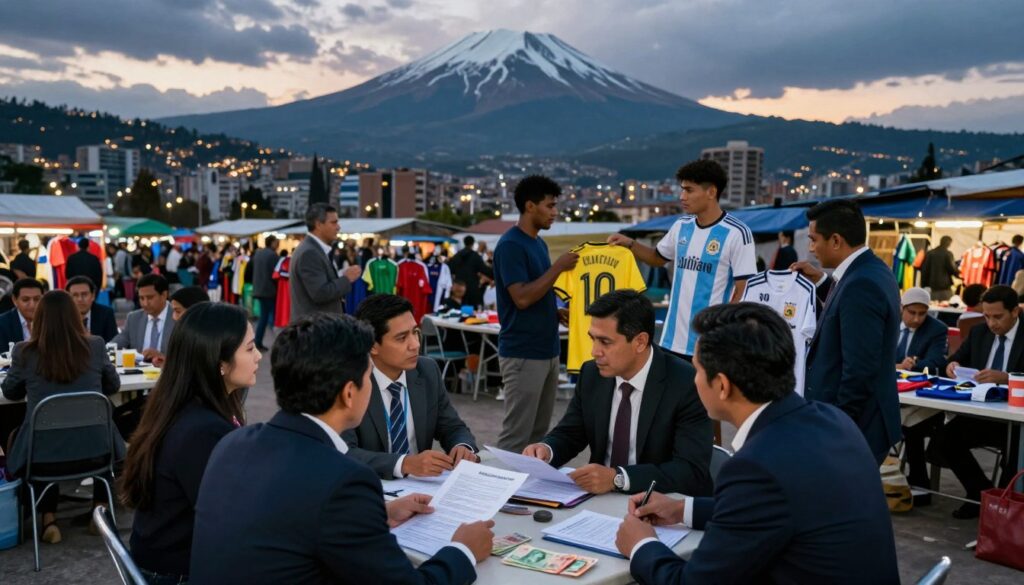
While Bolivian businesses navigate this dollar desert, the global financial system is sprinting in the opposite direction. Stablecoin settlement volumes hit $11 trillion last year—nearly matching Visa’s entire network. The technology exists to make cross-border payments as seamless as sending a text message. It’s the ultimate solution to Bolivia’s transfer market trends.
Yet here’s the cultural offside trap. Bolivia has a deep, almost spiritual relationship with cash. Physical bills represent security in a way digital numbers never could. Add widespread concerns about online fraud, and you’ve got a population that views digital wallets with the suspicion of a referee reviewing VAR.
The international demand here presents a fascinating paradox. One head of the beast screams for immediate dollar access—pay whatever premium necessary. The other head slowly turns toward digital alternatives that the rest of the world embraces. Reconciling these two is the central drama of current Bolivia transfer market trends.
This isn’t just about currency conversion rates. It’s about trust, tradition, and technological disruption colliding in real time. The market isn’t waiting for a policy solution; businesses are paying that 5-10% premium today because their suppliers won’t wait. That’s demand born of pure necessity, not speculation.
What emerges from this tension will define Bolivia’s economic future. Will digital solutions eventually overcome cultural resistance? Or will the black market premium become a permanent cost of doing business? These questions make understanding Bolivia transfer market trends more than academic—they’re essential for anyone watching global trade evolve.
Future outlook
The political penalty kick has been taken. Bolivia’s new administration faces a tough challenge. They need to stabilize the economy by cutting deficits and ending monetary financing. They might also seek help from the IMF.
Experts say it’s essential to close the exchange-rate gap. But will the public accept subsidy cuts after years of long queues for diesel? This is a big question worth billions.
For Bolivia’s transfer market trends, there are two paths. The traditional way is steady currency and open banking. But the new path is digital. When dollar liquidity is low, fintech and stablecoins could be the answer.
The regulatory fog might clear by necessity, not decree. Football shows this dual reality. Bolivia is expected to grow by 6% by 2026 and bid for the 2030 World Cup.
Yet, untapped youth talent suggests the real trends are in high-altitude towns, not boardrooms. Lithium exports might fund stadiums, but will they fund scouts?
My analysis sees a leapfrog, not a return. Bolivia’s players excel at altitude by processing oxygen differently. Its economy might find similar advantage—turning constraint into innovation. The future isn’t about recovering the past. It’s about inventing a new game.