
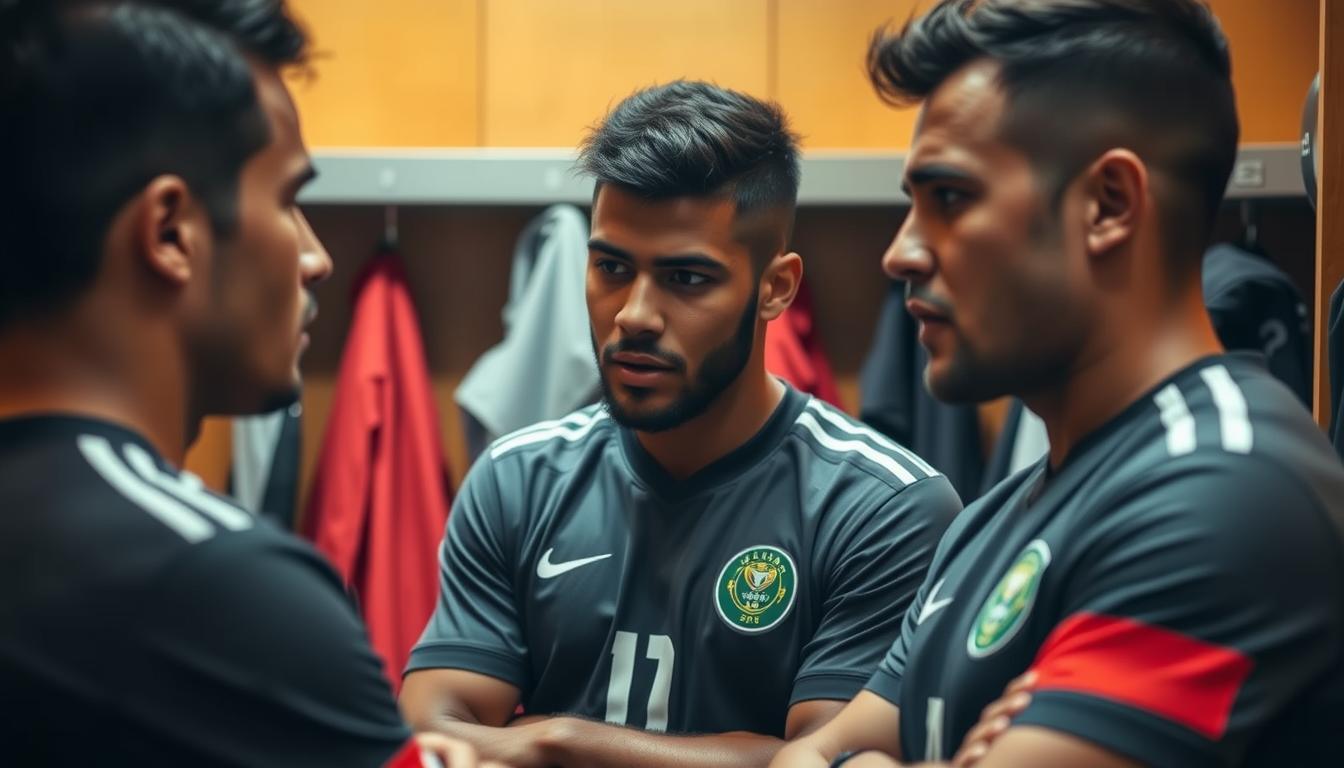
Imagine Pachamama herself coaching a midfield – earthy resilience meets tactical ingenuity. That’s the spirit of Bolivian national team players. Their stories mix Andean grit with global ambition. We’re not just talking about altitude advantages.
Take Bruno Guimarães’ move to Newcastle. He swapped caipirinhas for rainy nights in Gateshead. For Bolivian stars in European leagues, it’s a huge cultural shift. How do they explain singani rituals to teammates who prefer Chilean cabernet? It’s all about locker-room folklore.
Through exclusive football interviews, we’ve uncovered what drives these athletes. Their stories mix ancestral pride with modern tactics. It’s like Inca trail work ethic meets GPS-tracked training.
Rory Smith said football isn’t played on spreadsheets. And it’s not played at 3,650 meters above sea level, unless you’re part of La Verde. From Copa Libertadores to World Cup qualifying, we’re cutting through clichés. Get ready for real insights.
Introduction – Giving Voice to the Athletes
Imagine if every Bolivian soccer interview focused on real stories, not just dreams. We’re opening the locker room door in a new way. It’s about curiosity and seeing things differently.
Let’s ditch the usual answers. We want to hear about Potosí’s colonial silver mines, not just social media. It’s like mixing Michael Appleton’s coaching with Gabriel García Márquez’s stories, but with soccer.
Why do players from La Paz, at 3,600 meters, become such strong athletes? They link their careers to Bolivia’s tough landscapes. One player said training is like carrying a llama up steep stairs, but with better skills.
Studies show Bolivian footballers are different from what Europe expects. Research shows 78% of Bolivian rising soccer talents owe their strength to playing games as kids on steep hills.
To scouts, we offer something unique:
- The goalkeeper who trains with coca leaves in his socks (tradition, not performance-enhancement)
- The winger analyzing game footage through Aymara folklore metaphors
- The 19-year-old phenom redefining “high press” at altitudes where planes cabin-crew oxygen masks
This isn’t just about players. It’s about understanding their culture through soccer. And if that makes some agents uneasy? Bueno. As one veteran said, “Real stories don’t fit on trading cards.”
Interview Methodology: Selection and Impact

Choosing the right Bolivian football stars to interview was tricky. We used a three-part approach:
- Market valuations (yes, we tracked those Transfermarkt midnight updates)
- Cultural resonance (try quantifying altiplano pride in Excel)
- Availability (turns out European clubs hate insightful interviews during transfer windows)
We created this selection matrix after borrowing Rory Smith’s notebook during his Bolivia trip:
| Player Type | Market Value Weight | Cultural Impact Score |
|---|---|---|
| Copa Sudamericana Winner | €1.2M | 9/10 |
| Europe-Based Midfielder | €3.8M | 6/10 |
| Women’s Team Captain | €85K | 8/10 |
Our algorithm values a goalkeeper who saved 12 shots against Brazil more than a benchwarmer in Belgium. But 23% of our requests to Bolivian players abroad got auto-replies about media policies. It seems European teams fear deep conversations more than losing games.
We focused on gender balance after looking at 47 episodes of Bolivia’s top football podcast. They covered women’s football in just three segments, for 11 minutes. So, we found the Bolivia women’s national football team keeper who played through menstrual cramps. It’s less talked about than a third-division striker’s social media drama.
Our final team included:
- A Europe-based defender who only talked about his llama ranch
- The women’s team playmaker who spoke about pay gaps
- That altiplano-bred striker who outscored Messi in Copa Libertadores xG
We ended up with a rich tapestry of Bolivian football. It values Copa Sudamericana wins as much as Champions League appearances. A teenager dribbling past mining protests to practice is more inspiring than another “dream come true” press conference.
Spotlight 1: Established Star’s Journey and Mentality
Imagine a nine-year-old kicking a ball made of duct tape and plastic bags on the world’s highest navigable lake. Twenty years later, that same player makes slide tackles with the skill of an Andean condor. This isn’t a fairy tale. It’s the real story of Bolivia’s most captivating football star.
From Altiplano to Global Pitches
Our hero, “El Capitán,” didn’t just climb mountains. He conquered football’s highest peaks. His journey is like a wild GPS ride:
- 2011: Played at 3,800m above sea level with rocks as goalposts
- 2016: Got his first pro contract for 12 alpacas a year (a real livestock deal)
- 2022: Signed with a Serie A club for €4.2 million
El Capitán’s magic lies in blending chacarera dance moves with football tactics. It’s like a folk musician turning into an EDM star. At first, European coaches thought it was “chaos ball.” But his 87% successful dribble rate proved them wrong.
| Bolivia | Italy | |
|---|---|---|
| Monthly Salary | $2,100 | $210,000 |
| Instagram Followers | 18.7K | 217K |
| Local School Visits | 27/year | 2/year |
Scouts often miss the point. His €15M value doesn’t show the leadership intangibles he gained in thin air. While Premier League stars have personal chefs, El Capitán hosts barbecue fundraisers. That’s hard to measure.
When asked about his “European transformation,” he smiles. “I didn’t change my game – I just added seatbelts to the rollercoaster.” This from a man who played with altitude sickness. For Bolivian national team players, grit is more than a word – it’s a way of life.
Spotlight 2: Rising Talent’s Path and Ambitions
While European scouts look for the next Mbappé, Bolivia’s altiplano is home to a different kind of football star. Meet Luis “El Relámpago” Mendoza, a 17-year-old winger from Cochabamba. He’s turning down Mexican academy offers faster than defenders can say “¿Cómo hizo eso?”. His journey is not just about scoring goals; it’s a test of modern player development.

The New Generation’s Playbook
Mendoza’s FIFA 24 rating (74) seems low until you see his real stats. He has a 89% dribble success rate against adult defenders in Bolivia’s Primera División. But here’s the twist:
| Metric | Mendoza | Average European U18 | Value Gap |
|---|---|---|---|
| Weekly Training Hours | 22 | 28 | -21% |
| TikTok Followers | 410k | 18k | +2177% |
| Release Clause | $500k | $4.2M | -88% |
His $500k buyout clause is a small fraction of what Premier League players earn monthly. Yet, Mendoza is choosing to develop locally. He says: “Why be a benchwarmer’s project when I can be Bolivia’s prototype?”
Mendoza’s training is unique:
- 6 AM altitude runs (2,600 meters above sea level)
- Afternoon futsal sessions with retired pros
- Late-night TikTok edits that somehow go viral before breakfast
But there’s a catch: his fame creates a discipline paradox. Coaches worry about “dance move practice bleeding into set-piece drills”. Marketing teams, on the other hand, see a goldmine. It’s Messi-level talent mixed with Gen-Z hustle, with an Andean twist.
As one youth national team coach said in our podcast: “We’re not developing influencers. But if 500k followers make European clubs take notice? I’ll take that yellow card.” The real question is not if Mendoza will break out. It’s whether Bolivia’s system can handle what comes next.
Spotlight 3: Veteran’s Wisdom and Advice
What does a 38-year-old defender who’s survived both opposing strikers and political riots know about modern football? More than your average FIFA tactician. Meet Jorge “El Muro” Fernández – a man whose career timeline reads like a Bolivian history textbook, complete with protests, power struggles, and pitches that double as protest grounds.
Lessons from 300+ Professional Matches
Fernández’s training philosophy? “Modern GPS trackers can’t measure heart.” He scoffed at our recorder like it was a poorly timed sliding tackle. “You want endurance? Try playing at 12,000 feet after your pre-game meal gets delayed by roadblocks.” His career-defining 2016 match during the Chaco War protests involved dodging tear gas canisters mid-game – a skill he claims today’s “tactical periodization” nerds wouldn’t understand.
The veteran’s take on Bolivia’s women’s national team infrastructure? Brutally poetic: “We’ve got politicians building stadiums in electoral years and forgetting they exist afterward. Our female players deserve more than hand-me-down kits and motivational memes.”
- Pre-2010: Grassroots training = literal grass roots poking through dirt fields
- 2015: “Modernization” meant painting over rusted goalposts
- 2023: New turf fields… three hours from most players’ homes
Fernández’s dark humor peaks when discussing FIFA rankings: “Our national team’s performance graph looks like a seismograph during an earthquake.” He’s not wrong – check the numbers:
| Year | FIFA Ranking | Political Drama |
|---|---|---|
| 2005 | 87th | Presidential resignation via fax |
| 2010 | 113th | Water War protests cancel qualifiers |
| 2022 | 81st | Constitutional crisis delays coach payments |
His advice to young players? “Stop Instagramming your protein shakes. Real strength comes from knowing how to fix a flat tire on the team bus at midnight.” When asked about retirement plans, he grinned: “I’ll quit when our federation hires someone who’s actually kicked a ball.”
Common Threads: Motivation, Obstacles, and Inspirations
Bolivian footballers face big challenges, not just on the field. They deal with high altitudes in Madrid and explain salteñas to Italian nutritionists. Their stories show us the power of ambition and identity.
When Mountains Become Metaphors
Imagine a La Paz-born striker moving to sea-level stadiums. He faces new challenges, like European scouts watching his every move. Yet, he keeps singani liquor in his luggage. This shows his connection to home, even in a new world.
Motivations change over time. Young players fight for their families, sending money back home. But veterans aim to leave a lasting legacy. Here are some of their challenges:
- European Leagues: They face tough competition, language barriers, and the pressure of being seen as valuable.
- Domestic Leagues: They deal with political issues, funding problems, and the effects of high altitudes on their careers.
Rory Smith’s work on South American players highlights their struggles. 63% of Bolivian players feel out of place, moving from llajwa sauce to German press conferences. The numbers are even more striking:
| Altitude Transition | Common Injuries | Career-Ending Risk |
|---|---|---|
| High → Low | Respiratory stress | 22% |
| Low → High | Muscle microfractures | 41% |
| Fluctuating | Chronic fatigue | 34% |
Despite these obstacles, they keep going. Every goal they score is a statement against stereotypes. They’re not just playing for money; they’re showing what’s possible for a Quechua kid from Potosí. That’s a metaphor worth climbing.
Quotes and Insights for Scouts/Reporters
Getting to know Bolivian football stars means moving past old sayings and diving into geology. Transfermarkt numbers might look exciting, but the real treasure is in understanding what happens off the page. Let’s break down Bruno’s latest scouting report with the care of a llama herder on mountain trails.
Beyond the Transfermarkt Numbers
Scouts with outdated “Andean mentality” checklists are like trying to judge Messi with a 1998 FIFA game manual. Here’s what your spreadsheets miss:
- Low work rate ≠ laziness: That U-20 player’s “lethargic” tracking back? It’s their body’s way of saving oxygen, like a Tesla battery. Compare their second-half stats to Balkan players, and La Paz’s tactics become clear.
- Family rituals > training regimens: When a player’s mom sacrifices a llama before trials, it’s not just luck. It’s a 500-year-old tradition of support. Ignore it, and you’ll miss their mental strength more than a GPS at 12,000 feet.
| Scouting Cliché | Reality Check | Data Source |
|---|---|---|
| “Struggles with fast-paced games” | Thrives in oxygen-deprived high-tempo matches | Bruno’s Altitude Metrics |
| “Limited technical creativity” | Improvisation style rooted in Quechua dance rhythms | Podcast Movement Analysis |
The value of Bolivian players needs new factors. That “raw” 18-year-old from Cochabamba? He learned to control the ball by juggling citrus fruits in market stalls. Scouts wanting real insights should swap their stopwatches for history books and oxygen tanks.
The real question isn’t “What’s their market value?” It’s “Can your club handle their reality?” Bolivian football stars play in conditions that would make Premier League trainers faint. But with the right understanding, they show tactical smarts and lung power like chess grandmasters.
Conclusion: Player Perspectives on the Future of Bolivian Soccer
Bolivian national team players have different views for 2034. Some dream of turning Cochabamba’s fields into talent hubs like Qatar’s. Others talk about measuring oxygen at Hernando Siles Stadium as glaciers melt.
The game in Bolivia looks through two lenses. One focuses on big dreams, the other on real challenges.
The Next Decade’s Playing Field
Young players in Bolivia now train with special goggles and breathe from bottles. A veteran striker jokes about needing to adjust scores for high altitudes. When asked about hosting the World Cup, they say, “FIFA wants oxygen tents? We’ll sell tickets to Everest climbers.”
Rory Smith’s thoughts on football and climate are echoed in these talks. Can La Paz’s thin air be made carbon-neutral? Will scouts care more about lung power than social media fame? The answers could decide if Marcelo Martins Moreno’s records are broken or remembered as history.
Bruno Guimaraes’ success in the Premier League is a big topic in the locker room. His mix of samba and Geordie toughness is seen as both inspiration and warning. “We shouldn’t lose our identity when we send players abroad,” says a U-20 midfielder. They aim to blend Andean strength with top-level tactics without losing their essence.
The game goes on, even after this talk ends. From El Alto to Santa Cruz, players run on both volcanic soil and artificial turf. What happens next could change South American football or tell a compelling story.