

The AT&T Stadium upgrades tied to the Dallas Cowboys’ extended partnership with AT&T mark a clear sports-business move: improve the venue as a live-event product while supporting the rising data demands around NFL games, international football and large-scale entertainment. On September 18, 2026, AT&T and the Cowboys announced an extension of their long-term partnership, with fan-facing additions for the 2026 NFL season that include smarter navigation, immersive video, mixed reality and AI-powered features, according to AT&T’s partnership announcement.
For a team that already operates one of the most visible buildings in American sports, the commercial logic is straightforward. The Cowboys are not only selling seats for football. They are selling time inside a venue that competes with high-definition home viewing, social media habits and the expectation that fans can use mobile devices without interruption. That does not guarantee every feature will change behavior equally, but it gives the club and its partner more tools to manage attention, comfort and participation inside the stadium.
AT&T Stadium Upgrades And Partnership Scope
What The AT&T Stadium Upgrades Include
The new fan technology activated for the 2026 NFL season is built around several use cases. The Cowboys app and stadium kiosks gained smarter navigation tools aimed at wayfinding. “Pose with the Pros” expanded augmented-reality photo opportunities with current players, Cowboys Legends and Cheerleaders. “Reception Connection” introduced mixed-reality catch-and-compete moments involving quarterback Dak Prescott. “Connected Cam” allows fans to stream live video directly to the main videoboard. “Starbase Connection” turns fan photos into hype videos through AI, while “Turbo Live” offers reserved, high-priority network access for fans, including non-AT&T customers, during events.
That set of features matters because it spreads the fan-experience strategy across several points in the building rather than relying on one attraction. Wayfinding addresses practical friction before and during the event. Mixed reality and AR photo options target entertainment during breaks in play. Videoboard integration gives fans a chance to appear inside the shared stadium presentation. Priority network access responds to a basic but increasingly important expectation: people want to post, stream and communicate while they are inside the venue.
Why The Partnership Structure Matters
For the Cowboys, the partnership extension keeps the stadium sponsor tied directly to the venue’s technology identity. That alignment is significant. A naming-rights partner can be mostly passive in some buildings, but here the brand connection is visible through connectivity, app functions, fan content and stadium presentation. The AT&T Stadium upgrades therefore sit at the intersection of sponsorship value and operational need.
From a sports-business view, the cautious read is that these changes should be judged by adoption and reliability, not by feature count alone. If fans use wayfinding to reduce congestion, if video uploads work under heavy demand and if interactive features feel connected to the game environment, the partnership has a stronger case. If the tools are underused or hard to access, the business value becomes more limited. The public information supports the scale of the work, but user behavior will determine the practical return.
Connectivity Demand And Event Pressure
Data Use Has Become A Stadium Performance Indicator
AT&T Stadium now contains more than 261 miles of fiber cabling and nearly 1,000 antennas throughout the venue. AT&T described that infrastructure as among the largest connectivity systems in U.S. stadiums. The numbers help explain why connectivity is no longer a background service. It is part of how a venue is evaluated by fans, event operators and commercial partners.
The pressure on the network was visible before the 2026 NFL season began. During the Cowboys’ 2025 home season, which concluded before the start of the 2026 NFL season, fans used approximately 175 terabytes of data inside the stadium. The World Cup brought even sharper stress tests. AT&T Stadium hosted nine matches during the 2026 FIFA World Cup, the most of any U.S. venue in that tournament, and one match, Australia vs. Egypt on July 3, 2026, generated 28.7 terabytes of data at the stadium.
Those figures are useful because they frame the AT&T Stadium upgrades as a response to measured demand rather than a cosmetic technology push. A single high-profile match producing 28.7 terabytes of data shows how quickly a major event can compress network demand into a few hours. For NFL games, the usage pattern can be different, but the expectation remains similar: fans want the building to function as a connected environment even when attendance is high and major in-game moments create traffic spikes.
Operational Value Beyond Social Posting
Connectivity is often discussed in terms of social media, but the operational value is broader. Mobile access can affect ticketing, entry, concessions, navigation, safety communication and post-event movement. The partnership announcement also references smarter navigation, which suggests the fan experience is not limited to entertainment layers. It includes how people move through a very large building.
For readers tracking stadium technology across the league, a related NoticiasBO analysis on AT&T Stadium technology provides added context on how network upgrades, wayfinding and mixed-reality features fit the Cowboys’ 2026 venue strategy. The key point for this article is narrower: connectivity has become part of venue performance, not just a sponsor benefit.
Venue Refresh And In-Stadium Services
Renovation Work Set The Base For Fan Experience
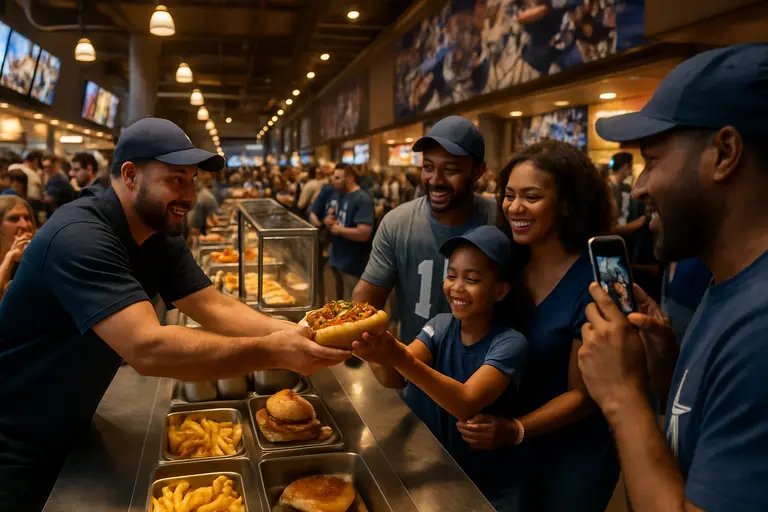
The technology rollout also followed a major physical refresh. AT&T Stadium completed a $295 million refresh across 2023–2025, the most significant renovation since the building opened in 2009. The work included upgraded premium clubs and suites, conversion of the center-hung video board to 4K, added concession points and bars, wellness spaces, updated finishes and technology displays, and redesigned suite-level corridors, according to the Cowboys’ stadium refresh document.
That matters because digital features work best when the physical building can support them. A sharper 4K center-hung board improves the visual layer of the event presentation. Added permanent concession and bar locations can help reduce pressure points in hospitality areas, though public materials do not provide enough detail to quantify wait-time impact. Wellness spaces in the main clubs and upper concourse add a comfort component that goes beyond premium seating alone.
The AT&T Stadium upgrades should be read as part of that broader renovation cycle. The 2023–2025 refresh prepared the building for the 2026 World Cup, but it also left assets that carry into Cowboys games and other events. Premium clubs, suites, corridors, concessions and video displays all affect how fans judge a venue, especially during long event windows.
- Practical access: wayfinding through the Cowboys app and stadium kiosks can help fans move through a large venue.
- Shared presentation: Connected Cam and the 4K videoboard place fans into the stadium show.
- Event comfort: added bars, concession points and wellness spaces support longer stays inside the building.
- Network capacity: fiber, antennas and high-priority access address heavy mobile use during major events.
Premium Areas And General Fan Areas Both Matter
Venue investment often starts with premium spaces because those areas are directly tied to high-value inventory. The Cowboys’ refresh did include clubs and suites, but the available details also point to broader fan-service changes, including concession additions and wellness spaces in both main clubs and the upper concourse. That distinction matters. A stadium can improve revenue potential without improving the experience for most attendees, but the publicly listed work includes elements that reach beyond the most expensive seats.
Still, the evidence should be kept in proportion. The public information confirms the features and scale of the investment, not the measured satisfaction gains from those changes. A fair evaluation will depend on how consistently the building performs on Cowboys game days, international football dates and other high-attendance events. For cross-sport comparisons of how venues and teams are discussed within the same publishing network, this related sports coverage on myalltimebest.com offers more insights.
What AT&T Stadium Upgrades Mean For Cowboys Fans
For Cowboys fans, the main takeaway is that the game-day product has become more layered. The team is pairing a large-scale physical refresh with digital tools that aim to reduce friction, increase participation and keep mobile activity functional under heavy demand. The AT&T Stadium upgrades are not only about spectacle, even though the 4K board, AR photos and mixed-reality pieces are the most visible parts. They are also about movement, connectivity and keeping a large crowd engaged across several hours.
For the Cowboys as a business, the partnership gives the club a stronger technology story around one of the NFL’s most recognizable venues. For AT&T, the building functions as a public demonstration of network capacity and fan-facing services. That mutual benefit is clear from the announced features and infrastructure figures. What remains less certain, based only on the available public information, is which tools fans will use most often and how strongly those tools will affect repeat attendance, dwell time or spending inside the venue.
The cautious assessment is positive but conditional. The investment is substantial, the network demand is documented and the feature set aligns with how modern fans use live sports venues. The performance test is not the announcement itself. It is whether the building delivers reliable connectivity, clear navigation, sharper presentation and better comfort during full-stadium events. If those pieces hold up across the 2026 NFL season and future major dates, the Cowboys’ partnership model will stand as a meaningful case study in sports-business venue strategy.