

Imagine the crushing weight of a silence that blankets a city of nearly three million people. When the final whistle blew on the intercontinental playoff, confirming the reality of the Bolivia World Cup 2026 absence, the Altiplano did not erupt in anger. Instead, it exhaled in exhausted resignation. The 2-1 defeat to Iraq was merely the final physical manifestation of a systemic collapse that had been mathematically brewing for over a decade.
This failure to reach the expanded 48-team tournament is not simply a matter of poor tactical execution or bad luck on foreign soil. It is the undeniable result of an ecosystem that has structurally decayed. To understand why La Verde will not be flying to North America, we must strip away the emotional narratives and examine the harsh socio-economic and physiological data that dictate South American football.
The Tactical Limits Of Home Advantage
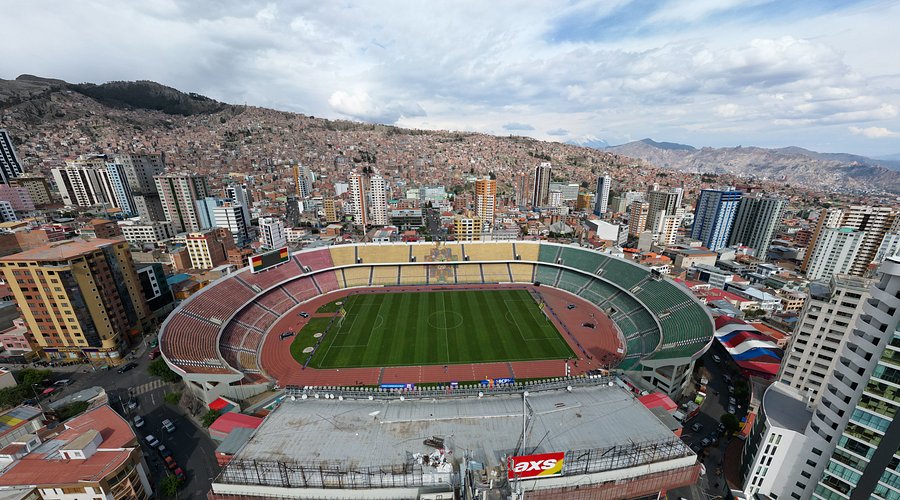
For generations, the Bolivian strategy has been brutally simple: weaponize the thin air of Estadio Hernando Siles to accumulate points, and hope to scrape a miraculous draw away from home. During the 2026 qualification cycle, this blueprint completely disintegrated. Opposing federations have adapted to the altitude, utilizing sophisticated, short-burst arrival strategies engineered by modern sports scientists.
As the physiological edge of La Paz was neutralized by superior sports medicine from lowland giants, Bolivia’s catastrophic inability to secure points at sea level was painfully exposed. When a team operates with a deep psychological block regarding away fixtures, the tactical structure collapses at the first sign of adversity. The midfield drops too deep, the defensive line fractures, and the metabolic shock of defending in dense, humid air overwhelms the squad.
The failure to evolve from a purely environmental reliance to a cohesive, possession-based traveling unit is a profound developmental flaw. As we have seen when analyzing why coaching changes matter within this federation, simply rotating managers cannot fix a squad fundamentally unequipped for modern, fluid transitional play.
Structural Decay And Economic Reality
You cannot engineer a World Cup qualification campaign on a crumbling foundation. The domestic Liga Profesional is currently navigating a severe financial crisis, characterized by unpaid wages, striking players, and a glaring lack of high-performance infrastructure outside of a few elite clubs. The national team is merely a reflection of this domestic chaos.
While rival nations invest heavily in youth pipelines and centralized scouting networks, the Bolivian Football Federation struggles with basic administrative stability. According to global player union reports from FIFPRO, the economic instability faced by domestic Bolivian players creates a constant state of psychological duress. When athletes are worried about their next paycheck or basic club logistics, international sporting excellence becomes an impossible luxury.
This lack of investment means the talent pool remains shallow. The inability to properly fund grassroots academies in both the high-altitude and tropical regions has starved the national team of the technically diverse player profiles required to survive the grueling CONMEBOL gauntlet.
Analyzing The Qualification Data
The statistical breakdown of the 2026 cycle reveals exactly where the campaign died. The disparity between home reliance and away fragility has never been more pronounced, underscoring a tactical inflexibility that opponents easily exploited. The table below breaks down the core metrics of this failed cycle.
| Performance Metric | Hernando Siles (Home) | Sea Level (Away) | Strategic Impact |
| Average Possession | 54% | 31% | Inability to control game tempo abroad |
| Pass Completion | 82% | 68% | Severe technical drop-off under lowland pressure |
| Goals Conceded (Avg) | 1.1 per match | 2.8 per match | Defensive structural collapse |
| Points Yield | 85% of total points | 15% of total points | Mathematical elimination from direct spots |
Rebuilding Beyond The Altitude
The 2026 cycle must serve as ground zero for Bolivian football. The mourning period must be brief, replaced immediately by aggressive, structural reform. The federation can no longer rely on the nostalgia of the 1994 generation or the intimidating altitude of La Paz to save them.
The path forward requires a unified, well-funded national curriculum that prioritizes technical development from a young age, regardless of geographic location. It requires scouting the diaspora for dual-nationals and modernizing the domestic league’s economic protocols. Until the infrastructure off the pitch matches the ambition on it, La Verde will remain trapped in this cycle of Altiplano heartbreak.