

Sekou Koné’s promotion gives Red Bull New York a concrete example of its reserve team helping prepare a young midfielder for MLS responsibility.
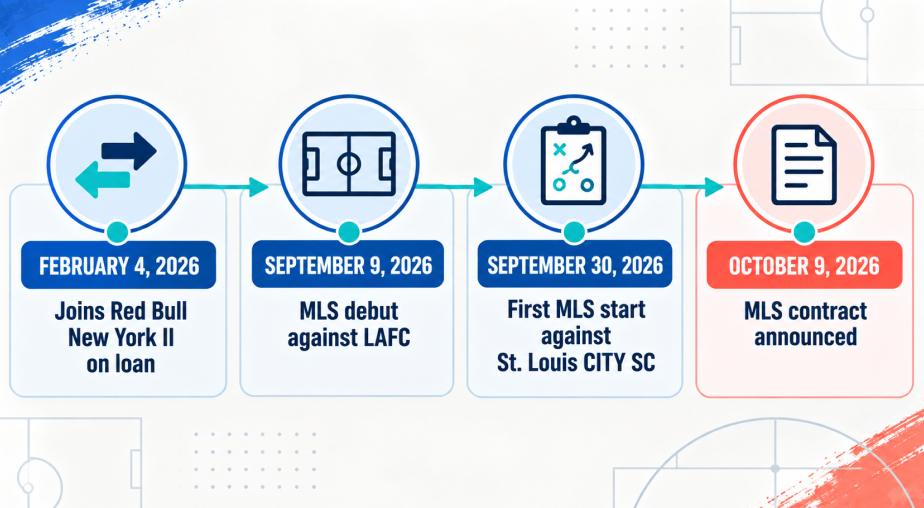
On October 9, 2026, the club announced an MLS contract for the 19-year-old Malian midfielder through the 2027–28 season, with options for 2028–29 and 2029–30. Koné had already experienced first-team competition before the agreement, making the move a continuation of his development rather than his introduction to senior football.
The signing raises a useful question for a club investing in emerging talent: how does a promising reserve-team player become someone the first team can trust?
Koné’s progression suggests a process built around competitive observation, opportunities at a higher level, and assessment of qualities that extend beyond goals and assists. His promotion is an encouraging milestone. The next challenge is turning that opportunity into a sustained role.
The Promotion Followed A Sequence Of Competitive Tests
Koné’s route included a loan from Mali’s Yeelen Olympique, regular involvement with Red Bull New York II, and appearances with the MLS team. By the announcement, he had made 18 MLS NEXT Pro appearances. His first MLS appearance came against LAFC on September 9, followed by his first league start against St. Louis CITY SC on September 30. The MLS signing report documents those steps.
That sequence matters. Reserve matches allow coaches to observe a player repeatedly, including how he responds to mistakes and adjusts to different opponents. First-team appearances introduce another test: whether those habits remain effective when the game becomes less forgiving.
Neither setting provides a complete answer alone. Strong reserve performances can justify an opportunity, but they cannot guarantee an immediate MLS role. A brief senior appearance can reveal promise without establishing consistency.
For Red Bull, the value lies in connecting those observations. Coaches can compare what a player does comfortably at one level with what changes when opponents close space more quickly. Development becomes more specific when the next training objective comes from an identifiable competitive challenge.
Composure And Mobility Explain The Midfield Interest
Head of sport Julian de Guzman highlighted Koné’s composure in possession and ability to cover ground. Head coach Michael Bradley described his progress during the season as sufficient to warrant another step. Those assessments identify the club’s stated reasons for confidence without establishing that the midfielder is already a finished player.
Composure has a practical meaning in central midfield. Receiving the ball is only one part of the task. A player must recognize pressure, know where his next passing option is, and choose whether to turn, release the ball quickly, or protect possession.
Mobility becomes useful when it supports those decisions. Moving into the right position can create an outlet for a defender or close a route through the center. Running without regard to teammates can leave a gap elsewhere.
The combination is what makes the profile interesting. A midfielder who can move effectively and remain calm on the ball may help a team connect its defensive and attacking phases.
These are tactical implications of the qualities Red Bull identified. The announcement does not specify a permanent position within a particular formation, and it would be premature to assign Koné one.
His LAFC Appearance Offers A Useful Starting Point
The club’s September call-up announcement provides a more detailed reference point. Koné entered the September 9 match against LAFC in the 33rd minute. Red Bull reported 72 completed open-play passes, the third-highest total among its players in that game.
That indicates substantial involvement in possession during his debut. It does not, by itself, establish the difficulty or attacking value of those passes.
A full evaluation would examine where he received the ball, how often opponents pressured him, and whether his distribution helped teammates move forward. Passes that retain possession can be valuable, particularly when they relieve pressure. Their significance depends on the situation.
The defensive side needs equal attention. What happened immediately after possession was lost? Did he remain available to support teammates? Could he recognize when to move toward the ball and when to protect space behind him?
Those questions turn a promising number into a useful scouting exercise. The passing total offers evidence of participation; match analysis must explain the quality of that participation.
MLS NEXT Pro Provides Repetition Before Greater Responsibility
A reserve team gives young players opportunities to practice their responsibilities across a competitive schedule. For a midfielder, repeated decisions can be more revealing than an isolated highlight.
Coaches can examine whether a player scans before receiving, changes his positioning when a passing lane closes, or reacts quickly after a teammate loses possession. They can then revisit the same behaviors in later matches.
That is especially relevant when a player moves between football environments. Training introduces expectations, but matches show whether those expectations remain clear under pressure.
The broader evaluation principle also appears in our analysis of Alex Krehl’s MLS NEXT Pro season: visible production needs to be considered alongside the work that allows a team to function. For midfielders, some of the most useful actions may never become goals or assists.
Koné’s rise illustrates one successful promotion decision. It cannot establish the overall effectiveness of Red Bull’s development system on its own. A broader judgment would require examining how many promoted players earn meaningful roles and continue progressing over time.
The Contract Provides Continuity Without Guaranteeing Minutes
The official contract announcement gives Koné a defined place in the club’s plans beyond a temporary first-team call-up. The optional seasons create a possible longer relationship, though they should not be presented as guaranteed extensions.
That continuity can support clearer development goals. Instead of treating each senior opportunity as an isolated audition, the coaching staff can work toward a role over a longer period.
The contract does not settle the selection question. A place on the roster and a place in the starting lineup remain different achievements.
His next opportunities could involve substitute appearances, starts, or further competitive development where appropriate. Red Bull has not announced a fixed allocation of minutes, so any specific prediction would go beyond the available evidence.
The important issue is whether his playing opportunities match his learning needs. A young midfielder needs enough responsibility to improve, alongside feedback that explains what will earn the next opportunity.
Bradley’s Next Task Is To Make The Role Clear
For Bradley and his staff, integrating Koné means defining expectations in situations that recur throughout a match.
When a teammate presses forward, does Koné follow or hold his position? When a defender has possession, where should he offer support? When the team recovers the ball, which passing option takes priority?
Clear answers can reduce hesitation. They also make evaluation fairer: coaches can distinguish an execution error from uncertainty about the assignment.
The same clarity helps teammates. A midfield partnership depends on shared decisions about spacing, cover, and movement. Individual qualities become more useful when the surrounding players understand how to work with them.
The next stage should therefore be judged through repeated performances. Does Koné remain composed against different opponents? Does his positioning help teammates? Can he respond constructively when a match becomes difficult?
His promotion shows that Red Bull has seen enough to make a longer commitment. Sustained first-team trust will come from demonstrating that the qualities identified during his development can hold up across the demands of MLS.