

NBA Roster Changes across June and July 2026 have already altered several team-building plans before the 2026-27 season. The largest deals combined elite-player movement, draft capital, and rotation rebalancing, so the cleanest evaluation is less about declaring winners and more about identifying what each franchise gained, what it gave up, and where on-court fit remains unproven.
As of August 19, 2026, the referenced moves were completed, which allows for a more stable roster read than the first wave of offseason reporting usually permits. The period included a major Milwaukee-Miami trade, a Charlotte-Minnesota guard move, significant Lakers frontcourt turnover, and several Eastern Conference roster swings involving Boston, Philadelphia, Atlanta, Brooklyn, Chicago, and Washington.
NBA Roster Changes That Reset Star Usage
The most striking move came on June 22, 2026, when Giannis Antetokounmpo and Bobby Portis were traded from the Milwaukee Bucks to the Miami Heat. Milwaukee received Tyler Herro, Jaime Jaquez Jr., Kel’el Ware, Kasparas Jakučionis, the No. 13 pick from the 2026 draft, Nate Ament, two future first-round picks, a pick swap, and a future second-round pick, according to the NBA.com primer.
Miami’s Frontcourt Bet
For Miami, the deal shifted the roster toward a larger frontcourt foundation. Antetokounmpo and Portis give the Heat two proven frontcourt pieces, while the cost removed several younger and mid-career assets from Milwaukee’s return package. From a scouting view, the key question is not whether Miami added talent; it did. The more careful read is how the Heat balance spacing, half-court touches, and late-game shot distribution around a player who changes paint pressure immediately.
Milwaukee’s side of the deal moved the franchise toward a deeper asset base. Herro gives the Bucks a guard scorer, Jaquez Jr. and Ware bring younger rotation potential, and Jakučionis and Ament add development inventory. The pick package matters because it gives Milwaukee multiple routes after moving its franchise centerpiece. It does not guarantee a fast reset, but it creates more optionality than a single-player return would have offered.
NBA Roster Changes And Ball Control
On June 25, 2026, LaMelo Ball and Josh Green were traded from the Charlotte Hornets to the Minnesota Timberwolves. Charlotte obtained Naz Reid, an unprotected 2033 first-round pick, pick swaps from 2028 through 2030, and extra second-round picks. Ball averaged 20.1 points, 7.1 assists, and 4.8 rebounds in 72 games for Charlotte in 2025-26, according to AP reporting.
For Minnesota, NBA Roster Changes of this type point directly to initiation and guard creativity. Ball’s 2025-26 production showed scoring and passing volume, while Green adds another wing option. Minnesota’s roster math after the trade depends on how it distributes touches and whether Ball’s playmaking connects with the team’s existing scoring structure. The fit is promising on paper, but any projection should account for timing, defensive assignments, and late-clock responsibility.
Charlotte’s angle was different. The Hornets moved a high-usage guard and added Reid, long-range draft control, and second-round picks. That is a clear asset-based pivot. The later July 10 four-team deal, which sent Julius Randle to Brooklyn, Nic Claxton to Chicago, and Naz Reid plus Mo Gueye to Charlotte, changed that picture again by routing Reid back into Charlotte’s asset and frontcourt mix. The Hornets also received multiple future picks and draft rights in that swap.
Draft Capital And Depth Trades
Several completed deals suggest that teams were not simply chasing single-name upgrades. They were trading years of control, future picks, and role clarity. That matters because the 2026-27 roster picture cannot be judged only by the first five players in a lineup. In an 82-game season, the bench structure, two-way balance, and salary pathways often decide whether a roster can hold form beyond its best units.
Portland And Memphis Exchange Direction
On July 6, 2026, Portland acquired Ja Morant from Memphis, with the Grizzlies receiving Jerami Grant and Kris Murray. The move gave Portland a lead guard while sending Memphis a veteran forward and a younger player. Without adding unsupported claims about internal plans, the confirmed transaction suggests two distinct roster approaches: Portland prioritized a creator, while Memphis accepted a package built around forward depth and future roster flexibility.
Grant’s inclusion gives Memphis an experienced frontcourt option, and Murray adds a younger piece. Portland’s acquisition of Morant changes its possession structure by placing more playmaking responsibility on a single guard. The next evaluation layer will be lineup balance: which players space the floor, who defends the point of attack, and how the second unit functions when the primary creator rests.
Charlotte’s Asset Path
Charlotte’s offseason requires a separate read because the Hornets appeared in multiple transactions. First, they moved Ball and Green to Minnesota. Then, on July 10, the four-team deal brought Reid and Gueye to Charlotte along with future picks and draft rights. This does not make the Hornets’ direction simple, but it does show a preference for accumulating frontcourt options and draft assets after moving a central guard.
For a rebuilding or retooling team, that kind of structure can be useful only if the player development plan is clear. Reid and Gueye give Charlotte frontcourt bodies, while the future picks give the front office more trade and draft pathways. The risk is continuity. Multiple summer trades can leave coaches with a roster that needs role definition before performance stabilizes.
Los Angeles And Frontcourt Rebalancing
The Lakers were active across the frontcourt and rotation. On July 8, 2026, Los Angeles acquired Walker Kessler from Utah through a sign-and-trade, sending out unprotected first-round picks in 2031 and 2033, plus pick swaps in 2028 and 2030. On the same date, Deandre Ayton was traded from the Lakers to Washington for guard Jaden Hardy and second-round picks in 2031 and 2032. Ayton averaged 12.5 points and 8 rebounds per game in 2025-26.
Kessler In, Ayton Out
The Lakers’ NBA Roster Changes indicate a defined center reset. Kessler arrived at a high draft cost, while Ayton’s exit returned a guard and later second-round assets. The short-term basketball read is centered on defensive role, rim presence, and frontcourt pairing choices. The asset read is just as clear: Los Angeles moved major future first-round value to secure Kessler, then recouped smaller future draft pieces in the Ayton deal.
Hardy’s arrival gives the Lakers another guard option, but the larger story is how the team’s frontcourt minutes are redistributed. Ayton’s 2025-26 production leaves a rebounding and interior scoring share to replace. Kessler’s role will be judged through team fit rather than box-score comparison alone, especially if the Lakers lean on him for paint protection and screen-setting.
Free-Agent Rotation Adds
Between July 7 and July 12, 2026, the Lakers added Quentin Grimes, Sandro Mamukelashvili, and Collin Sexton in free agency. Grimes averaged 13.4 points, 3.6 rebounds, and 3.3 assists with Philadelphia in 2025-26. Mamukelashvili averaged 11.2 points, 4.9 rebounds, and 1.9 assists as a Raptor. Sexton averaged 15.4 points, 2.3 rebounds, and 3.3 assists while splitting the season between Chicago and Charlotte.
Those additions suggest Los Angeles targeted rotation scoring and functional depth after changing the center room. Grimes offers a guard-wing profile, Mamukelashvili adds frontcourt skill, and Sexton brings scoring punch. The caution is that adding several useful players does not automatically solve lineup fit. Shot share, defensive matchups, and bench staggering will decide how much of that production transfers into the Lakers’ game model.
Eastern Conference Wing And Defense Shifts
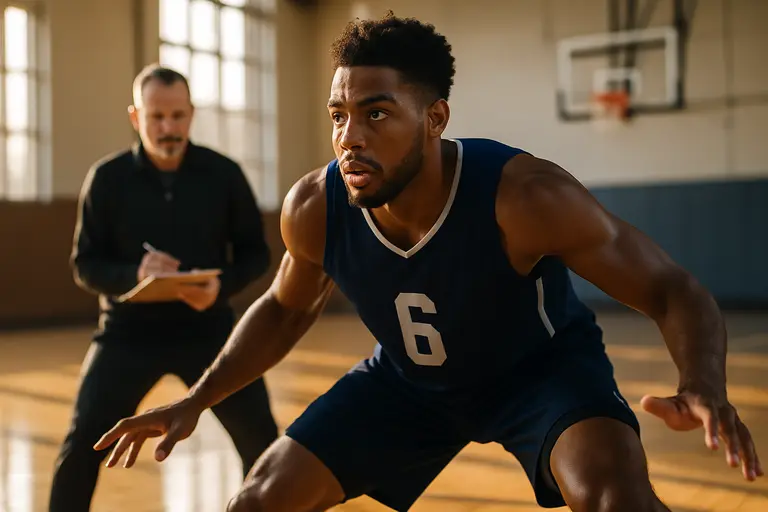
NBA Roster Changes on the wing were not limited to one contender or one market. Boston, Philadelphia, Indiana, Detroit, and Atlanta all appeared in confirmed offseason movement. These deals and signings could shift matchups in the Eastern Conference, but the responsible analysis stays close to role clarity rather than assuming a direct standings impact months before games are played.
Boston And Philadelphia Exchange Star Wings
On July 6, 2026, Boston traded Jaylen Brown to Philadelphia for Paul George, future draft picks, and other compensation. This was one of the cleanest star-for-star framework moves of the summer, even with extra assets attached. Boston took on a veteran wing in George and gained future draft value. Philadelphia added Brown, changing its wing profile and likely its late-game matchup options.
The scouting concern for both clubs is usage balance. Brown’s move to Philadelphia changes shot distribution and transition pressure. George’s move to Boston changes the Celtics’ wing rotation and may alter how they organize perimeter defense and secondary creation. Because the research does not include contract figures or medical updates, any firm claim about long-term value would go beyond the confirmed record.
Atlanta Adds Point-Of-Attack Defense
On July 19, 2026, Atlanta acquired Luguentz Dort and Ryan Nembhard by trade. Dort came from Oklahoma City, Nembhard from Dallas, and the Mavericks received Zaccharie Risacher. Dort’s value profile is strongly tied to perimeter defense, while Nembhard gives Atlanta another guard option. The cost was significant because Risacher was the outgoing piece to Dallas.
Indiana made smaller but notable free-agent moves in early July, adding Larry Nance Jr. on a one-year deal and Kelly Oubre Jr. on a two-year deal. Detroit’s departures included Tobias Harris to San Antonio, Caris LeVert via trade, and Marcus Sasser and Isaiah Stewart moving on. For readers seeking more coverage across the wider sports network, Banat Zayed provides related insights in the same publishing group.
- Star movement: Miami, Minnesota, Portland, Philadelphia, and Boston all changed high-usage roster pieces.
- Draft assets: Milwaukee, Charlotte, and Utah-related Lakers dealings featured major future-pick components.
- Depth planning: The Lakers and Pacers used free agency to fill rotation needs after larger market movement.
- Fit questions: Ball control, frontcourt spacing, and defensive assignments remain the main scouting checkpoints.
NBA Roster Changes In The 2026-27 Read
The confirmed 2026 offseason movement should be evaluated in layers. The first layer is talent: Miami added Antetokounmpo, Minnesota added Ball, Portland added Morant, and Philadelphia added Brown. The second layer is cost: Milwaukee, Charlotte, Utah, Boston, and other teams collected players or draft value that may not pay off on the same timeline. The third layer is fit, where the analysis is less settled because lineups, rotations, and coaching decisions still have to be tested on the floor.
The most cautious view is that several teams became more defined, not automatically better. Miami now has a frontcourt-led identity to build around. Minnesota has a lead guard with a documented 2025-26 scoring and passing profile. Charlotte has more picks and frontcourt pieces after multiple deals. The Lakers changed centers, added guards, and spent future first-round value. Boston and Philadelphia exchanged major wings in a move that will be judged by role balance as much as individual reputation.
For scouting departments and front offices, the next task is to measure how these completed moves affect spacing, matchup coverage, possession control, and bench stability. The offseason did not answer every roster question before the 2026-27 season. It did, however, create a clearer set of questions for each team, and those questions are now grounded in completed transactions rather than rumor.