
Forget the slow fade. A true sporting setback is like a García Márquez plot twist. It happens in ninety seconds of intense pain. One minute you’re flying; the next, you’re looking at an MRI, wondering if your career is over.
We love the crunching tackles, but the real drama is inside. It’s a sudden, biological betrayal.
Now, compare this to a global star in a cryotherapy chamber. When Neymar gets a minor leg injury, it makes big news. His injury has kept him out for almost two years. What makes a Bolivia injury recovery story different?
The answer isn’t just in biology. It’s about altitude, money, and access. A sprained ankle in Paris gets a different story than one in Potosí. Every inspiring injury comeback is a battle against the odds. It’s fought in thin air with very little resources.
Rehabilitation process
The rehabilitation process is a true test of human strength. It combines old wisdom with new science. It’s not like the movies, where heroes quickly get better. Instead, it’s a slow, hard journey.
In Bolivia, they’ve found ways to make do with little. Imagine using Incan herbal wraps and modern tech together. Athletes might use llama fat and train in special chambers.

This isn’t simple medicine. It’s creative problem-solving because of need. Instead of fancy pools, they use mountain spring ice baths. Traditional healers work with sports scientists in a unique way.
The mental side of recovery is also innovative. Sports psychologists team up with amautas, Andean wisdom keepers. Together, they tackle doubt with therapy and rituals.
Mauricio Ramos’s 419-day recovery is a great example. His journey was a community effort, mixing old healing with new tech. This made one of Bolivia’s most inspiring return stories.
Now, compare this with Neymar’s fast recovery after his injury in November 2022. His team used top-notch tech to speed up his healing. Every minute was optimized with expensive technology.
Both stories aim to rebuild athletes. But they show different ways to do it. Bolivia uses creativity, while Europe focuses on using resources well.
The mental fight is different too. Andean athletes face community pressure and limited chances. Global stars like Neymar deal with national pride.
Ramos’s story shows return stories can come from anywhere. His 14-month recovery mixed old and new medicine. It shows comebacks are about more than just resources.
Neymar’s story shows the power of science in quick recoveries. His team worked hard to get him ready for the World Cup. This shows another side of return stories.
What do these stories share? They show that recovery is about becoming who you need to be. It’s not just about going back to who you were.
The Bolivian way often includes community support. Families, healers, and fans help athletes recover. This makes their return stories even more inspiring.
Looking at surgical precision in sports medicine shows how tech helps. But both paths need mental strength.
These stories teach us about human adaptability. Whether using mountain springs or cryotherapy, the goal is the same. It’s about building confidence and strength.
The most inspiring return stories often come from overcoming big challenges. Bolivia’s creative solutions to lack of resources are worth more attention.
Exploring Bolivian soccer stories shows how culture affects recovery. Old practices meet new science in interesting ways.
Rehabilitation shows the true nature of sports. It’s not just about talent but about building resilience. Every return story shows our amazing ability to overcome.
The process changes athletes in many ways. They become something new, shaped by pain, science, and willpower.
Performance post-return
In Bolivia, scouts have turned post-injury evaluation into a dark art. The medical clearance is just paperwork. The real test happens when the whistle blows and the repaired body meets the unforgiving pitch.
Forget simple speed checks. Here, they diagnose “Monsoon Mentality”—the subtle performance drop when seasonal rains change the game. They watch for the “Switchback Stutter”: that micro-hesitation before a sharp cut, a ghost of ligament trauma haunting muscle memory.
Then there’s “Peak Vanishing.” A player dominates at sea level but becomes a ghost at 3,600 meters. In La Paz, that’s not a bad day—it’s a red flag written in thin air.
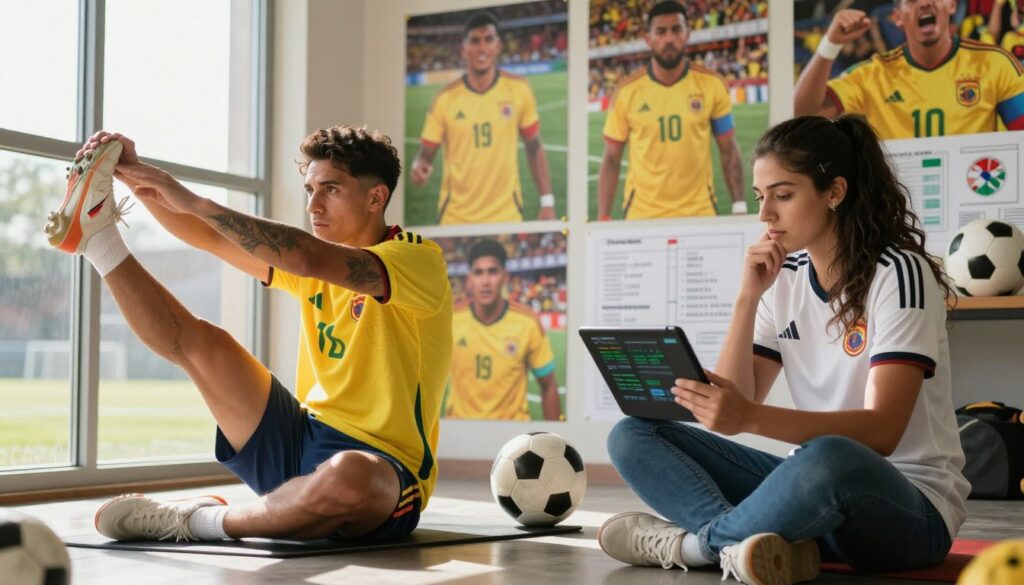
This is where altitude-adjusted analytics become critical. Raw data lies. A player’s sprint time in Santa Cruz means nothing if their oxygen-carrying capacity was compromised. True Bolivia injury recovery is measured in moments of unthinking trust—when the knee obeys the brain’s command without that millisecond of doubt.
Now, contrast this with the global stage. Take Neymar in Qatar 2022. His penalty against South Korea was a cinematic release. The world sighed: “He’s back!”
But the scout’s eye saw the subtext. Was he avoiding the explosive, defense-splitting runs? Was his famous dribble now a calculated risk, not a spontaneous weapon? The penalty was a data point. The spaces he didn’t invade told the real story.
A comeback isn’t games played. It’s moments seized. It’s the difference between a player who uses his recovery as a secret weapon and one who’s just learned to hide his limp.
| Metric | The Phoenix Comeback | The Sentimental Return |
|---|---|---|
| Psychological Tell | Seeks contact, embraces physical duels | Shies from challenges, prefers safe passes |
| Altitude Performance | Maintains or improves decision-making speed at high elevation | Shows “Peak Vanishing”—skills deteriorate with oxygen debt |
| Movement Signature | No “Switchback Stutter”; cuts are decisive and fluid | Visible hesitation before directional changes |
| Clutch Moment Impact | Creates or converts in game-defining situations (like Neymar’s penalty) | Fades when the game’s intensity peaks; contribution becomes peripheral |
| Long-Term Trajectory | Performance curve trends upward post-return | Initial burst followed by plateau or decline |
The table doesn’t lie. A successful Bolivia injury recovery shows in the data and the daring. The sentimental return shows in the caution and the calculated plays.
So, how do you spot the difference? Watch the eyes. The phoenix scans for opportunity. The forger scans for escape routes. The comeback is complete only when the player, not the injury, is writing the story. Every pass, every sprint, every tackle becomes a sentence in their new narrative.
In the end, performance post-return is the ultimate audit. The balance sheet doesn’t care about medical reports. It only cares about impact. Did the player come back, or did just his shadow return?
Career reset
The most interesting return stories aren’t about getting back to youth. They’re about making a smart change. A break can be a chance to edit your career.
Take Paul Pogba’s Monaco chapter. At 32, after 811 days off, he’s not the same player. Now, he’s a leader and a mentor. This isn’t a step back. It’s a smart move, using his experience as his new strength.
This is a global trend. In Bolivia, retirement is seen as halftime. Stars like Mauricio Ramos move from playing to coaching. An ex-striker now works to change CONMEBOL rules. Their careers ended, but they found new ways to make an impact.
Neymar is at a turning point too. The 2026 World Cup is a big moment for him. Will he be the same or will he evolve? True return stories are about growing, not just coming back. The injury is the start of a new chapter. The career doesn’t just bounce back. It gets better.