
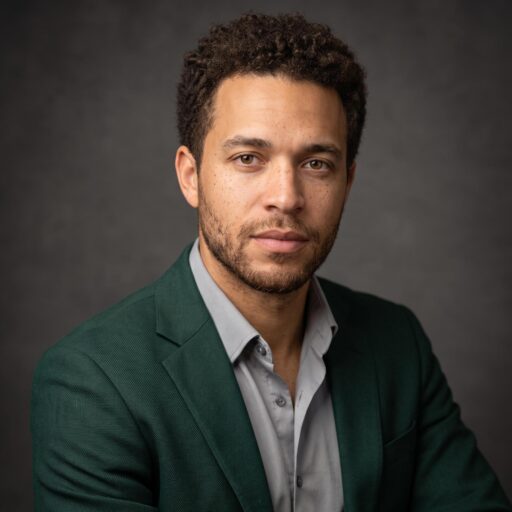
Interest in the Los Angeles 2028 Olympic Games is accelerating faster than the qualification plans of many national teams.
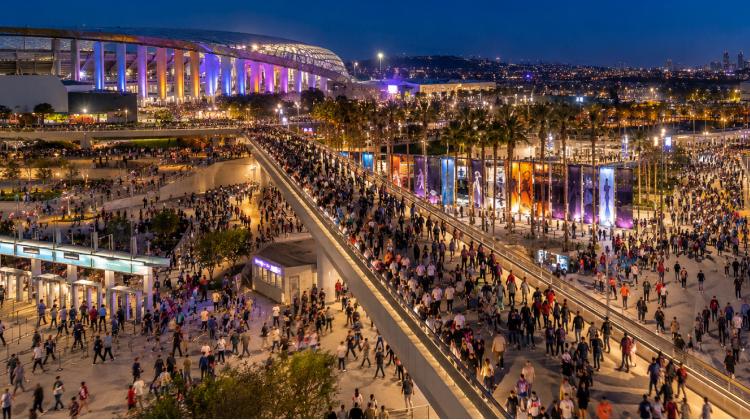
On July 29, 2026, LA28 announced that more than 12 million people from over 200 countries had registered for an opportunity to purchase Olympic tickets. That figure had risen from five million registrations in February, while the first sales phase had already placed more than four million tickets with spectators.
Those numbers do not mean that 12 million tickets have been sold. Registration only enters a fan into the process for receiving a purchase time slot. The demand nevertheless demonstrates how quickly the 2028 Games are moving from a distant objective into an active global event.
The Olympics will take place from July 14 to July 30, 2028, followed by the Paralympic Games from August 15 to August 27. With less than two years remaining, Bolivia must determine whether its own preparation is moving at the same urgency.
The country has taken several institutional steps. The Comité Olímpico Boliviano has approved a 2026 budget, announced a program targeting Bolivia’s first Olympic medal and begun connecting youth competitions, international events and the 2029 Bolivarian Games in La Paz.
The central concern is that the publicly available plan remains broader than the Olympic challenge. Bolivia has started preparing, but it has not yet presented a detailed, sport-by-sport LA28 strategy identifying priority athletes, qualification tournaments, annual funding, performance targets and technical support. (United States After the 2026 World Cup: What the Loss to Belgium Revealed)
Twelve Million Registrations Show How Quickly LA28 Is Advancing
The official LA28 ticket update described the Los Angeles Games as the most in-demand Olympic ticketed event at this stage of the process.
Registrations more than doubled between February and July 2026. LA28 also reported that residents of the Los Angeles and Oklahoma City regions purchased nearly 75% of the four million tickets sold during the first release. That phase included approximately 500,000 tickets priced at $28 and 95% of all available tickets priced below $100.
The scale of the operation extends far beyond ticketing. Los Angeles will become the third city to host the Summer Olympics three times, following the 1932 and 1984 editions. Oklahoma City will host canoe slalom and softball events, while existing stadiums, arenas and temporary venues will be used across Southern California.
LA28 will also introduce or restore baseball and softball, cricket, flag football, lacrosse and squash. The expanded program creates new qualification possibilities, but it also increases competition among countries seeking limited athlete quotas.
For Bolivia, the ticket milestone should serve as a calendar warning. Fans are already purchasing seats, organizing travel and selecting events. Athletes hoping to compete in those venues must be entering international ranking systems, qualification tournaments and structured preparation programs now.
Bolivia Began Discussing LA28 Before the Current Ticket Surge
Bolivia did not wait until 2026 to acknowledge the need for a longer Olympic plan.
In March 2025, the La Paz municipal sports authority and the Comité Olímpico Boliviano organized a workshop titled “Construction of the Strategic Sports Plan Los Angeles 2028–Brisbane 2032.” The event was held at the Cine Teatro Municipal 6 de Agosto and was presented by Carlos Iván Bermeo, a technical specialist connected to the Organización Deportiva Bolivariana.
The stated objective was ambitious: build a national pathway capable of producing Bolivia’s first Olympic medal. The workshop was opened to sports federations, clubs, associations and other institutions, recognizing that Olympic preparation cannot be managed by one organization alone.
The Bolivian Olympic strategy workshop was an important starting point because it connected Los Angeles 2028 with Brisbane 2032. That longer horizon acknowledges that athletes require sustained development rather than emergency funding during the final months before an Olympic Games.
A workshop, however, is not the same as a funded performance system.
The value of the initiative will depend on whether its recommendations have been converted into athlete contracts, coaching programs, international competition schedules and measurable qualification targets.
The 2026 COB Plan Provides A Foundation
The Comité Olímpico Boliviano approved its 2026 institutional budget during a general assembly held in Cochabamba on January 24.
The organization described the budget as a tool for financial sustainability and direct athlete support during a year with significant international competition. It also identified four strategic projects: a new COB building, the “First Olympic Medal for Bolivia” high-performance program, preparation for the 2029 Bolivarian Games and implementation of a national sports arbitration tribunal.
The COB’s 2026 strategic agenda also included efforts to strengthen cooperation with the Viceministerio de Deportes. That relationship is essential because the committee, national federations and government institutions must coordinate travel, facilities, sports science and funding.
These developments suggest that Bolivia is not beginning from zero.
The difficulty is assessing how much of the approved budget is directed specifically toward LA28 qualification. The public announcement did not identify the size of the Olympic preparation fund, the number of supported athletes or the conditions required to enter the “First Olympic Medal” program.

| Area | Evidence Of Progress | Information Still Needed |
|---|---|---|
| National strategy | LA28–Brisbane 2032 workshop held in March 2025 | Published implementation schedule and annual targets |
| Athlete funding | COB approved its 2026 institutional budget | Amount assigned to each priority athlete and sport |
| High performance | “First Olympic Medal for Bolivia” program announced | Named athlete group, coaches and sports-science support |
| Youth development | Bolivia is competing in regional youth events | Clear transition from youth teams to Olympic qualification |
| International calendar | Participation in Bolivarian and South American events | Complete LA28 qualification schedule for each federation |
| Institutional coordination | COB and Viceministerio de Deportes began new cooperation | Defined responsibilities, reporting and transparent evaluation |
The conclusion is not that Bolivia has no Olympic plan. It is that the plan needs to become more visible, specific and accountable.
Paris 2024 Demonstrated The Size Of The Challenge
Bolivia sent four athletes to the Paris 2024 Olympic Games.
Héctor Garibay competed in the men’s marathon, Guadalupe Tórrez ran the women’s 100 meters, María José Ribera entered the women’s 50-meter freestyle and Esteban Núñez del Prado competed in the men’s 200-meter individual medley.
All four were making their Olympic debuts. The delegation’s size illustrated how difficult it remains for Bolivian athletes to achieve qualification standards or secure universality places.
The swimmers and sprinter entered through universality mechanisms, while Garibay obtained the marathon qualification standard. That distinction is important for the next cycle. Universality places help maintain worldwide representation, but Bolivia’s long-term goal should be to qualify more athletes through standards, rankings and continental events.
Núñez del Prado presents one of the clearest examples of why Olympic planning should begin early. He was 20 during Paris 2024 and will be 24 when the Los Angeles Games begin. He has already competed at Olympic, Pan American and regional youth levels, giving his federation a full cycle in which to improve his international ranking and qualification opportunities.
The same principle applies across sports. Bolivia must identify athletes whose age, performance trajectory and access to international competition make LA28 a realistic target—not simply select the best available national performers shortly before qualification closes.
Recent Regional Results Offer Candidates, Not Guarantees
Bolivia’s 2025 Bolivarian Games campaign produced 33 medals from a delegation of 260 athletes.
The country earned one gold, seven silver and 25 bronze medals. Triple jumper Valeria Quispe won Bolivia’s only gold, while Benita Parra earned silver in the women’s 5,000 meters. The delegation finished outside the leading positions, but the medal total improved significantly from the 14 Bolivia earned at the 2022 Bolivarian Games.
The official COB assessment of the 2025 Bolivarian Games described the event as the beginning of the current Olympic cycle and directly connected the results to the goal of winning Bolivia’s first Olympic medal in Los Angeles.
Regional medals should help identify athletes for further investment, but they cannot be treated as proof of Olympic competitiveness.
The performance gap between Bolivarian events and the Olympic Games is considerable. Athletes such as Quispe and Parra need regular opportunities at South American championships, Pan American events, World Athletics competitions and ranking tournaments to determine whether their results can progress toward Olympic standards.
The same evaluation must take place in swimming, shooting, cycling, judo, taekwondo, archery and other sports where Bolivia maintains national federations and active competition calendars.
Selection should be based on international potential, not only domestic titles or regional podiums.
Youth Competition Must Feed A Defined Olympic Pathway
Bolivia competed in the 2026 South American Youth Games in Panama, with Yatsen Soza and Noelia Paz serving as flagbearers during the opening ceremony at Estadio Rommel Fernández.
Youth events are useful because they introduce athletes to international travel, anti-doping requirements, athlete villages and multi-sport competition. They also allow federations to compare national prospects with athletes of the same age from across South America.
The Bolivian youth delegation in Panama should therefore be viewed as part of the longer development system rather than an isolated event.
The problem appears when youth results are not followed by senior-level support.
A promising 16- or 17-year-old needs access to stronger coaching, physical preparation, medical monitoring and international competition after returning home. Without that continuation, a youth medal may become the final highlight of an athlete’s career rather than the beginning of an Olympic pathway.
Bolivia needs a central database tracking athletes from national youth championships through South American, Pan American and world-level competition. The COB and federations should be able to identify who is improving, who is receiving regular coaching and who is approaching an Olympic qualification standard.
Qualification Costs Must Be Funded Before 2028
Olympic qualification is often more expensive than the final trip to the Games.
Athletes must travel repeatedly to approved competitions where they can achieve standards or collect ranking points. Those events may be held in Europe, Asia, North America or other parts of South America. Airfare, accommodation, visas, equipment, coaching and medical support can become decisive competitive factors.
The International Olympic Committee has already confirmed that Tokyo, Shanghai, Montreal and Orlando will host the expanded Olympic Q-Series between May and June 2028. The series will provide qualification opportunities in sports expected to include 3×3 basketball, beach volleyball, BMX freestyle, climbing, flag football and skateboarding.
The LA28 Olympic Q-Series pathway demonstrates why countries cannot wait until 2028 to organize their athletes. To reach those final qualification events, competitors first need rankings, continental experience and federation support.
Other sports use different systems. Athletics depends heavily on entry standards and world rankings. Swimming combines qualifying times with universality rules. Combat sports generally rely on continental tournaments or rankings, while cycling disciplines require consistent international points.
Each Bolivian federation therefore needs its own LA28 calendar. A general national plan cannot replace sport-specific qualification management.
La Paz 2029 Can Help, But It Comes After LA28
The confirmation of La Paz as host of the 2029 Bolivarian Games creates an important infrastructure and development opportunity.
COB president Marco Arze has said Bolivia wants to prepare its national team differently for the event, with greater emphasis on athlete support as well as venues and equipment. Bolivia’s best historical Bolivarian performance came in Sucre in 2009, when the country won 19 gold, 25 silver and 87 bronze medals.
Hosting in 2029 could leave improved facilities, equipment and administrative experience. It may also motivate more children and teenagers to enter organized sport.
The timing creates a potential problem.
The Los Angeles Olympics will take place one year earlier. If the largest investments, renovated venues and athlete-support programs are designed primarily around 2029, they may arrive too late for LA28 candidates.
The COB’s La Paz 2029 preparation goals should be integrated with the Olympic cycle. Athletes targeted for Los Angeles should receive the first benefits from new coaching, equipment and performance systems rather than waiting for the home event.
Bolivia Should Concentrate Resources Instead Of Spreading Them Thinly
Bolivia cannot realistically fund every Olympic sport at the same level.
A focused strategy would identify a limited first group based on international performance, athlete age, qualification proximity, coaching quality and realistic access to competitions. A second development group could include younger athletes with stronger potential for Brisbane 2032.
The priority group should receive complete support rather than small, irregular assistance. That means competition travel, coaching, strength and conditioning, nutrition, sports psychology, medical care and transparent performance reviews.
Funding should also be predictable. Athletes cannot build a two-year program when support is confirmed one tournament at a time.
The national strategy must recognize that Bolivia’s strongest regional disciplines are not always Olympic events. Success in a non-Olympic sport still has national value, but it cannot be counted as part of the LA28 medal pathway. Olympic resources should follow the actual Los Angeles program and its qualification rules.
Is Bolivia Preparing Early Enough?
Bolivia is preparing earlier than it did for some previous Olympic cycles.
The March 2025 strategic workshop, the approved 2026 COB budget, the “First Olympic Medal” program, participation in youth events and planning for La Paz 2029 all show institutional movement.
That progress is real.
It is not yet enough to demonstrate that Bolivia has a complete Los Angeles 2028 performance system.
The sources publicly available as of August 2026 do not clearly identify a final priority-athlete group, annual budgets by sport, qualification calendars, international training bases or performance benchmarks. Without those details, it remains difficult to measure whether the country is investing in athletes with enough time and precision.
LA28’s 12 million ticket registrations underline the urgency. The host city is already selling millions of seats and moving into operational readiness. Olympic qualification is also beginning across multiple sports.
Bolivia still has time, but the phase of general planning should be ending.
The next step must be a named, funded and measurable LA28 program. Every priority athlete should know which competitions matter, what performance is required and what support will be available through July 2028.
The objective of Bolivia’s first Olympic medal is powerful. Achieving it will depend less on announcing the ambition than on building the daily structure behind it.