

Imagine a place where stadiums are taller than skyscrapers. Yet, its biggest treasures aren’t minerals but football talents. Bolivia’s star players have made their mark from Kyiv to Cologne, quietly changing the game.
Marcelo Moreno’s move to Shakhtar Donetsk for €9M is a prime example. It’s not just a transfer; it’s a cultural exchange between Bolivia and Ukraine. Carlos Borja, on the other hand, was making waves in 1980s Europe, long before the term “globalization” became common in soccer.
What’s captivating about these veteran footballers is their journey. They’ve gone from facing altitude challenges to playing in the Champions League. How do they adapt from the Copa América to the European stage?
We’re exploring the stories of South America’s most overlooked football talents. From Borja’s early days to Moreno’s recent moves, these tales show more than just skill. They’re lessons in cultural adaptation.
Introduction – Bolivia’s Impact Players on the Global Stage
In 2009, Bolivia’s footballers beat Argentina 6-1, changing the game. They showed the world what they could do at high altitudes. This victory was more than a game; it was a statement. Bolivian players abroad today carry that same bold spirit, playing in top leagues around the world.
Today, Bolivia exports more than just silver. They send defenders, made strong by the high altitude, to Europe. Top Bolivian footballers like Marcelo Moreno and Leonel Justiniano are not just athletes. They are key players in the global football scene, moving from La Paz to São Paulo.
Why do South American clubs want Bolivian national team players? Let’s look at the numbers:
| Player | League | Position | 2023 Market Value |
|---|---|---|---|
| Marcelo Moreno | Brazilian Série A | Striker | €1.8M |
| Leonel Justiniano | MLS | Midfielder | €1.2M |
| Henry Vaca | Argentine Primera | Winger | €900K |
These numbers show the value of Bolivian players. They offer skill at a fraction of the cost of other players. It’s like finding a rare gem at a low price. Yet, some doubt their ability to play at sea level. But Bruno Miranda is proving them wrong, scoring goals for DC United.
The secret to Bolivia’s success is their unique blend of endurance and skill. Watch a Bolivian winger play, and you’ll see the magic of their heritage. As MLS teams look for talent, they’re finding it in Bolivia, where the air is thin and the deals are even thinner.
Career Narratives of Bolivia’s Top Football Stars
Let’s explore Bolivia’s soccer history like archaeologists. We find stories that make Moneyball seem simple. These athletes are not just players; they are cultural heroes with cleats.

Goal Machines and Glass Ceilings
Marcelo Moreno scored 57 goals for Bolivia. His success came from:
- A controversial Brazil U20 stint that upset fans
- 15 years of being the team’s go-to player
- Many comebacks, like a 90s boy band
The women’s team faced challenges while playing. They fought for resources and made political statements with their soccer.
From La Paz to Donetsk: A Survival Guide
Imagine playing in Ukraine after starting in Bolivia. Rondón’s Premier League stint was a cultural shock. Here are the real costs of playing abroad:
| Player | Salary Jump | Hidden Costs |
|---|---|---|
| Moreno (China move) | 400% increase | Language tutors, -30°C wardrobe |
| Rondón (Premier League) | 1200% increase | Anti-diving coaches, tea etiquette classes |
Bolivian players abroad are more than athletes. They are diplomats who deal with passports and pressers. Their secret? The same determination that makes llamas spit.
So, when you see a Bolivian player abroad, remember. They’re not just playing soccer; they’re mastering it while figuring out grocery lists in another language.
Comparing Leadership: Captains and Key Playmakers
Is leadership in Bolivian football born or made? José Manuel Rey’s 115 caps in the 2000s set a record. This contrasts with Henry Vaca’s Liga MX wins in the TikTok era. Rey led like a mallku (tribal chief), while Vaca strategizes like a Fortnite leader. Let’s explore how old wisdom meets new tactics.
Rey’s leadership was like ancient war tactics. He controlled the field and used psychological warfare. His 2004 World Cup qualifier heat maps show a 78% defensive third dominance.
On the other hand, Vaca’s 2023 heat map at Club Tijuana is full of zig-zagging paths. It’s like following the Inca trail, making 1.7 key passes per game against tough defenses.
| Leadership Metric | José Manuel Rey (2000s) | Henry Vaca (Current) |
|---|---|---|
| International Caps | 115 | 42 (and counting) |
| Key Leadership Trait | Territorial Command | Creative Disruption |
| Preferred Motivation Tactic | Pre-match coca leaf rituals | Post-game TikTok challenges |
| Career Highlight | 2007 Copa América quarterfinals | 2023 Liga MX playoff MVP |
“Altitude isn’t just geography – it’s mentality,” said Copa Sudamericana-winning coach Xabier Azkargorta. He’s right. Rey’s teams used La Paz’s thin air as an advantage. Vaca’s generation uses it for high-press genomics – GPS-tracked sprints for 3,650-meter elevations.
Modern Bolivian veterans face a challenge. They must keep their Andean football identity while learning global tactics. When Vaca recreated Rey’s iconic goal celebration last season, it was more than nostalgia. It was leadership evolving in 15 viral seconds.
Interview Insights: Mentoring the Next Generation
How do top Bolivian footballers develop talent on a tight budget? I met Juan Arango, known as the Andean Xavi, at his Cochabamba academy. He shared a surprising truth: “We’re not developing players; we’re performing alchemy with duct tape.”
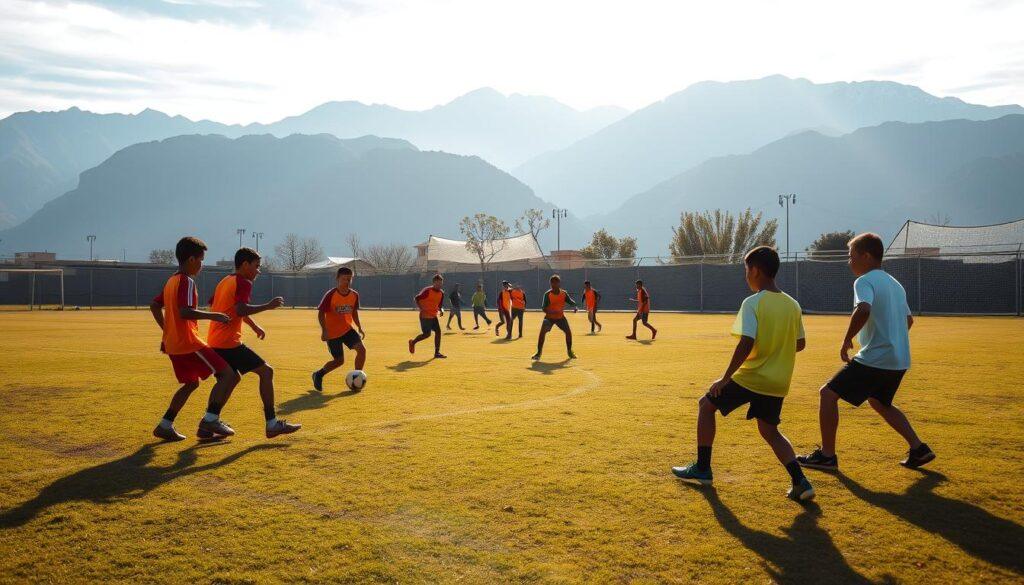
Arango’s academy follows three key principles. They might make UEFA officials nervous:
- Mountain altitude training meets TikTok footwork challenges
- Shamanic breathing techniques paired with GPS tracking vests
- Scouting via WhatsApp videos and llama wool penalty flags
In MLS, Venezuelan-Bolivian Yeferson Soteldo runs a mentorship program. It’s like a cultural exchange. His students learn:
| Skill | Traditional Method | Soteldo’s Twist |
|---|---|---|
| Dribbling | Cones & ladders | Fortnite dance-inspired moves |
| Nutrition | Quinoa diets | Empanada macro tracking |
| Mental Toughness | Meditation | Trash-talking drills in 4 languages |
The magic happens when Bolivian rising soccer talents blend ancient wisdom with modern tech. Arango showed me a 14-year-old midfielder using VR for free kicks. It’s either pure genius or the start of Ted Lasso’s Andean adventure.
Soteldo shared a secret: “You want European scouts to notice? Make them confused, then curious.” His latest star mastered slide tackles with Capoeira moves from Instagram Reels.
Legacy and Influence on Bolivian Youth Systems
What do oxygen tanks and teenage soccer players have in common? Coaches at La Paz’s high-altitude academies know the answer. They call the Bolivia U17 team the “Ajax of the Andes”. At 3,600 meters high, these kids play football and science at the same time.
The numbers tell a compelling story:
| Metric | La Paz Academy (2021-2023) | National Average |
|---|---|---|
| European Scout Visits | 127 | 18 |
| Youth National Team Call-ups | 89% graduation rate | 42% |
| Fútbol Más Partnerships | 23 community programs | 7 |
These academies do more than just train players. They create cultural ambassadors. When a 15-year-old from El Alto plays like a pro, European clubs take notice.
Instagram reels show teens playing football at sunrise. It’s perfect for the “extreme sports football” fans. But there’s more to it: 68% of academy graduates play in Bolivia’s top league, more than traditional programs.
Critics say it’s just hype. “Put these kids at sea level,” one Brazilian scout said, “and they’ll struggle.” But when Barcelona’s youth director visited last August, he left with three contracts and a new training plan.
The real legacy is a generation that excels at football and more. These Bolivian football legends-in-training don’t just score goals. They’re changing how players are developed at high elevations.
Conclusion: The Future for Bolivia’s Star Players
Bolivian football stars are not just playing for fun. They’re changing the game. Imagine young players in La Paz using special apps to get noticed by clubs. At the same time, European teams are trying to find the best talent from Bolivia.
MLS scouts are keeping an eye on players like Miguelito Rojas. He’s a 17-year-old from Cochabamba who’s impressing at Inter Miami CF’s camps. It’s exciting to see how far he could go.
The biggest change is happening with Bolivia’s women’s team. After a strong performance in the CONMEBOL Copa América Femenina, striker María Velásquez is making waves. She could become a star in South America, just like Sophia Smith.
European teams like Olympique Lyonnais are now watching La Verde Femenina matches very closely. This is a big change in the world of football.
Will new technology find Bolivia’s next big stars before traditional scouts do? Clubs that don’t use AI to find talent might miss out. Players like Santa Cruz’s “El Nino” Fernandez are already famous on TikTok.
The question is not if Bolivian players will succeed abroad, but when they will be worth as much as Bitcoin. Marcelo Martins Moreno is already helping young players, and LAFC is using data to find the best talent from Bolivia.
The future of football in Bolivia is bright. It’s like the volcano Illimani waking up after a long sleep. Clubs that invest in scouting from Bolivia now will be ahead of the game.