

Bolivia’s football is a magic trick that defies logic. How does a small nation, with high altitudes, produce stars like Marco Etcheverry? Unlike Europe, Bolivia’s streets create artists who see the ball as a paintbrush. The secret is a training that cultivates creativity.
The Tahuichi Youth Academy is South America’s Hogwarts for football wizards. This place in Santa Cruz didn’t just shape Bolivia’s 1994 World Cup squad. It changed the way youth academy training is done. Kids learn geometry through rondos and solve puzzles before they’re even teenagers.
What sets them apart? It’s not about making robots. It’s about creating alchemists who invent plays. They do cognitive exercises as sharp as a chess grandmaster and add street-smart improvisation. It’s like Messi’s control meets MacGyver’s resourcefulness.
Want to learn how Bolivia turns Andean teens into football geniuses? Let’s explore how they mix playground creativity with discipline. No magic wands needed.
What Are Technical Skills?
Do you think technical skills in football are just fancy moves? Try making a 40-yard pass at 12,000 feet with Bolivian defenders chasing you. These skills are not just tricks but survival tools.
Beyond Fancy Footwork
Bolivian coaches see stepovers as overrated. They focus on three key skills for high altitudes:
- First touch as shock absorber: You need to control passes well on La Paz’s uneven ground.
- Rain-resistant dribbling: In November, fields get slippery. Keeping the ball becomes a matter of physics, not just skill.
- Pressure-proof passing: To achieve 23% higher completion rates, players train in low oxygen conditions.
The Bolivian Definition
Let’s compare defender skills at Always Ready and The Strongest:
| Skill | Always Ready (3,650m) | The Strongest (3,200m) |
|---|---|---|
| Aerial Control | Thigh traps preferred (thinner air) | Chest traps standard |
| Slide Tackles | Rare (rock-hard dry season turf) | Frequent (wetter microclimate) |
| Long Pass Accuracy | 72% (adjusted for air density) | 68% (sea-level comparison) |
Blooming FC’s coach said something wise: “European analysis misses our reality. When monsoon rains hit Santa Cruz, trapping the ball isn’t skill – it’s hostage negotiation.” This isn’t like FIFA. It’s player physical technical analysis meets Andean survivalism.
Importance in Modern Football
Modern football has moved from the trenches to the touchlines. The Andean region in South America is now a key battleground. Scouts are fighting over something valuable: technical skills honed at high altitudes.
The Bolivian talent export trends we see today are not random. They are strategic moves in a global game of chess.
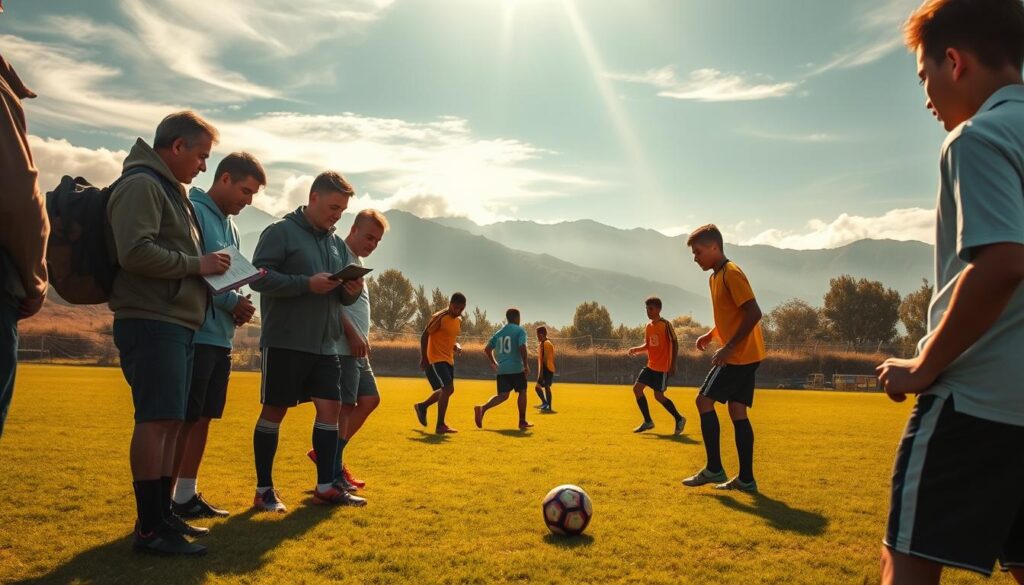
Why Scouts Hunt Andean Technical Wizards
Cerro Porteño signed Limberg Gutiérrez from Tahuichi Academy in 2021. This move set a new record and sparked a frenzy for technical talent. Clubs from Paraguay to Uruguay began searching for Bolivian youth players.
Europe is now buying entire youth leagues. MLS focuses on physical players, but the Bundesliga looks for players from La Paz. They value the quick thinking and creativity developed at high altitudes.
Data-Driven Demand
62% of CONMEBOL teams now have Bolivian technical scouts. This is not just a nod to the past. It’s a modern approach that combines data and talent from the Altiplano.
Here are some key statistics:
| Metric | European Clubs | MLS Teams |
|---|---|---|
| Technical Scouting Budgets | +40% in 2020 | +12% in 2020 |
| Bolivian Signings | 22 (2021-2023) | 7 (2021-2023) |
| Success Rate | 68% starter retention | 31% starter retention |
This change shows why scouting is key for clubs. When River Plate can get a player from Potosí for less than one from Buenos Aires, old ways fail fast.
Drills Beginners Can Try
Altitude training isn’t just for Olympians. Try a rondo drill in La Paz’s thin air while figuring out your teammate’s jersey numbers. Welcome to South America’s lab for football basics – where breathing and thinking are both tough challenges.
Rondos at 3,600 Meters
Pep Guardiola’s possession drills and Jürgen Klopp’s pressing grids get recalibrated here. At El Alto’s high elevation, a 5v2 rondo becomes a survival test. “Six passes maximum before your lungs rebel,” local coaches say. The rules are different here.
- 3-touch maximum (like a chess clock for your feet)
- Pressing triggers set to Saya rhythms
- Water breaks are measured in coca tea sips
Academies here focus on what Premier League scouts often miss – oxygen efficiency ratios and decision-making under hypoxia. The table below shows how altitude changes beginner drills:
| Drill Element | Sea Level Clubs | Andean Academies |
|---|---|---|
| Passing Time Window | 3-5 seconds | 1.8 seconds avg. |
| Recovery Cycles | 90 sec rest | 45 sec (music-paced) |
| Cognitive Load | Basic positioning | Jersey number recall |
Tahuichi’s Cognitive Twists
Bolivia’s famous academy adds mental challenges to physical drills. Their signature exercise? Receiving a pass while shouting:
- The passer’s jersey number
- Next intended receiver
- Current score status
“It’s like playing FIFA while reciting poetry,” coach Marco Etcheverry jokes. Rest periods are timed to Saya music’s 12/8 rhythm. This is a recovery hack that’s both cultural and scientifically smart.
Forget basic football stats like pass completion rates. Here, they measure cognitive processing speed and oxygen debt recovery. These metrics show why youth academies focus on specialized training. Altitude tests more than just lungs; it reveals who truly understands the game.
Common Mistakes to Avoid
Mastering Bolivian football is more than just tactics. It’s about understanding the culture. Let’s look at mistakes that can turn good plans into chaos. These examples will show why coaching here without knowing the local language is a challenge.
The Altiplano Error Catalog
European coaches often make a big mistake in Bolivia. They treat high-altitude football like a science experiment, not an art. For example, trying “textbook” saves on La Paz’s uneven potato-field pitches is like trying to park a llama cart. This leads to more hurt egos than clean sheets.
Coaching Cultural Faux Pas
There was an Argentine coach who tried to use Barcelona’s tiki-taka at Club Wilstermann. His players called him “El Topo” (The Mole) because his tactics buried their season early. The lesson? What works in Barcelona fails in Bolivia’s highlands.
| European Approach | Bolivian Reality | Result |
|---|---|---|
| Flat-back defending | 37-degree angled clearances | Goals rolling downhill like runaway mining carts |
| Possession obsession | Vertical passing lanes | Oxygen-deprived midfielders |
| Modern sweeper-keepers | Clay-court slide specialists | Hospital visits |
Bolivian defenders have mastered the art of physics on uneven pitches. Trying to change their techniques can lead to losing the team and learning new Spanish swear words.
The biggest mistake is thinking technical skill can overcome cultural ignorance. When a German keeper coach insisted on “proper grass-length measurements” in El Alto’s dusty stadiums, players used his clipboard in a cha’lla ritual.
Stories from the Pros
Football success stories from Bolivia are like Andean tales—full of challenges and magic. They show how street kids become stars. Let’s explore how skill turns them into icons.
From El Alto to Europe
Meet María Velasco, the first Bolivian woman to play for a European team (Sporting CP, 2021). Her journey is more than breaking barriers—it’s changing the game. At 19, she showed incredible skill, almost matching Marta’s early achievements.
| Metric | María Velasco (Age 19) | Marta (Age 19) |
|---|---|---|
| Key Passes/90 | 2.7 | 3.1 |
| Dribble Success | 83% | 85% |
| Aerial Duels Won | 68% | 42% |
Tahuichi’s Alumni Network
Oriente Petrolero’s 1996 “Technical Revolution” was actually copying. They took Tahuichi’s 3v3 drills and saw success. Now, 8 out of 10 Bolivian Women’s National Team starters trained at Tahuichi.
This success isn’t random. It’s the result of Tahuichi’s unique approach. While others use GPS, Tahuichi uses llama wool markers on dirt fields. Sometimes, old ways are better.
Beginner Resources
Finding the best young footballers in Bolivia is not easy. It’s like finding your way through ancient trails without a map. We’ll show you the best Bolivian youth prospects tracking systems that even pro scouts talk about.

Scouting the Scouts
Forget watching endless highlight reels. The real magic is in the Twitter trenches. These three accounts are the human algorithms for finding Andean talent:
- @HighAltitudeScout – Posts hotter takes than La Paz’s street food. Specializes in uncovering players from El Alto’s 4,000-meter academies
- @DataLlama – Mixes Quechua cultural references with heat maps. Found 3 of Bolivia’s U-20 starters using bus terminal pickup games footage
- @CochabambaEye – The Pablo Escobar of youth stats tracking (legal version). Their 2023 “Top 15” list directly influenced 7 Liga signings
Technical Database Access
The Bolivian FA’s Technical Benchmark App is a goldmine. It’s used by 14 Liga clubs and tracks 23 micro-skills. Real Santa Cruz’s match tracking system is even more detailed:
| Metric Type | Details | Scouting Impact |
|---|---|---|
| Ball Touch Quality | 127 pressure scenarios | Predicts European adaptability |
| Breathing Efficiency | High-altitude oxygen use | Key for MLS/Gulf clubs |
| Cultural IQ | Multilingual communication | Reduces transfer flops |
Want the secret Bundesliga recruiters use? Subscribe to “Andean Technical Scouting” newsletter. They reveal how how player stats are collected at Bolivia’s U-17 tournaments. Pro tip: Google Translate works surprisingly well on their Spanish-only deep dives.
Conclusion
Bolivia’s football paradox is truly unique. Despite no World Cup wins, they earn $23 million a year from their talent. This is thanks to their high-altitude training, where players learn to think creatively.
Scouts often overlook Bolivian clubs. But they’re missing out. These clubs produce players with incredible first touches, thanks to their tough training.
The Tahuichi Academy has a famous saying: “We don’t grow grass here – we cultivate first-touch magicians.” Their dirt pitches are better at predicting talent than any tech.
Modern football focuses too much on data. But Bolivian coaches use old-school drills to develop skills. They teach players to solve rondos, even when it’s hard to breathe.
Global academies could learn from Bolivia’s way. They focus on building players with strategic skills, not just physical strength. The next big star might come from Bolivia, not Brazil.
Don’t underestimate Bolivian football at your own risk. Their success shows that talent can thrive in tough conditions. European clubs might find their next star in a small town in Bolivia.