

Bolivia and the United States are developing the players who could define their senior national teams by 2030, but they are doing so from very different positions. Copa Patria Begins in Santa Cruz as U.S. Youth Soccer Stages Massive National Championships.
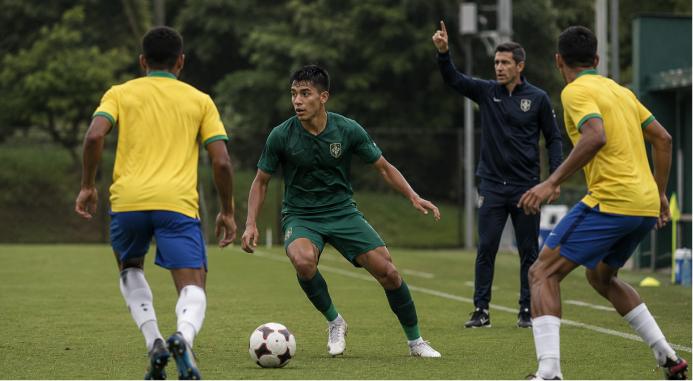
In August 2026, Bolivia’s U-20 squad entered an important two-match window against Brazil at Granja Comary in Teresópolis. The games on August 9 and August 12 formed part of both countries’ preparation for the 2027 South American U-20 Championship.
At almost the same time, the United States completed an entire regional qualification cycle.
The Americans reached the final of the 2026 Concacaf U-20 Championship in Mexico, secured a place at the 2027 FIFA U-20 World Cup in Azerbaijan and Uzbekistan and gained another series of competitive matches for players expected to remain relevant well beyond youth football.
Mexico ultimately defeated the United States 2-0 in the August 9 final, but the Americans had already achieved one of the tournament’s most important objectives by reaching the semifinals and securing World Cup qualification.
The comparison is useful for Bolivia because these players are not being developed for a distant future.
Most members of the current U-20 generation will be approximately 22 or 23 years old during the decisive stages of the qualification cycle for the 2030 World Cup.
The question is therefore not which country has the better U-20 team in August 2026.
It is which system is giving its young players the strongest chance of becoming useful senior internationals four years from now.
Bolivia Chose The Right Level Of Opposition In Brazil
Facing Brazil away from home is exactly the type of test Bolivia needs before the 2027 South American Championship.
Brazilian U-20 coach Paulo Victor selected 24 players for the August camp and described the Bolivia matches as opportunities to observe individuals, test alternatives and apply concepts developed during training.
The Brazil U-20 preparation plan shows a federation using international windows primarily for evaluation rather than protecting results.
Brazil had already used the same approach earlier in 2026.
Paulo Victor’s team beat Paraguay 3-1 twice in March. It then faced Chile twice in June, winning the first match 1-0 before losing the second 2-0.
The defeat did not cause Brazil to abandon the process. The coaching staff treated the window as another opportunity to rotate players, examine combinations and determine which areas needed improvement.
Bolivia should use the August games the same way.
Playing weaker opposition might create better scorelines. It would provide less information.
Brazil can expose whether Bolivian defenders are comfortable when pressed, whether midfielders can play quickly in tight spaces and whether attacking players can create chances against technically strong opponents.
Those lessons are valuable months before the South American championship.
Discovering the same weaknesses during qualification would be much more costly.
The United States Already Completed A Competitive Qualification Cycle
The strongest advantage in the U.S. system is not simply infrastructure.
It is the number of meaningful competitive environments available before players reach senior football.
The United States entered the 2026 Concacaf U-20 Championship with a 21-player squad selected by Gonzalo Segares. Interestingly, the Americans used their U-19 national team in an U-20 competition, deliberately exposing a younger generation to older opponents.
The U.S. Soccer tournament roster contained players connected to MLS academies, professional reserve teams and other developmental environments.
That team then had to perform under tournament pressure.
The United States defeated Haiti 3-0 in its opening group match and followed with another 3-0 victory against El Salvador.
Dino Klapija, Ruben Ramos, Santiago Morales and Christopher Cupps were among the players contributing goals during those opening games.
The competition then moved into knockout football, where the consequences changed immediately.
Advancing to the semifinals meant qualification for the 2027 FIFA U-20 World Cup.
That is a different developmental experience from a friendly.
A defender knows that one mistake could eliminate the team. A goalkeeper must perform under pressure. Midfielders must manage the rhythm of the match rather than simply demonstrate technical quality.
Those situations are difficult to reproduce in training.
The U.S. World Cup Qualification Matters More Than The Final Defeat
Mexico’s 2-0 win over the United States in the Concacaf final was important, but it should not erase what the Americans gained from the tournament.
The United States reached the stage required to qualify for the next U-20 World Cup.
That means its current generation will receive another major international competition in 2027.
This creates a development chain.
Regional competition in 2026 leads to a U-20 World Cup in 2027. Los Angeles 2028 provides another possible international stage. Club football continues throughout the process.
The Concacaf U-20 qualification format made the stakes clear: all four semifinalists qualified for the 2027 U-20 World Cup, while the regional champion also earned an Olympic place.
The United States was already qualified for LA28 as host, but the tournament still allowed its players to compete in an environment where opponents were fighting for both World Cup and Olympic qualification.
That is valuable pressure.
Bolivia needs more of it.
Bolivia’s Main Challenge Is Continuity Between Windows
Playing Brazil is useful.
What happens after Brazil is more important.
A youth-development system becomes effective when international windows connect to one another.
Players called in August should not disappear from the federation’s evaluation process until the next major tournament.
The coaching staff should know which players improved at club level, which lost minutes, which changed positions and which performed well enough against Brazil to deserve further responsibility.
That requires consistent tracking.
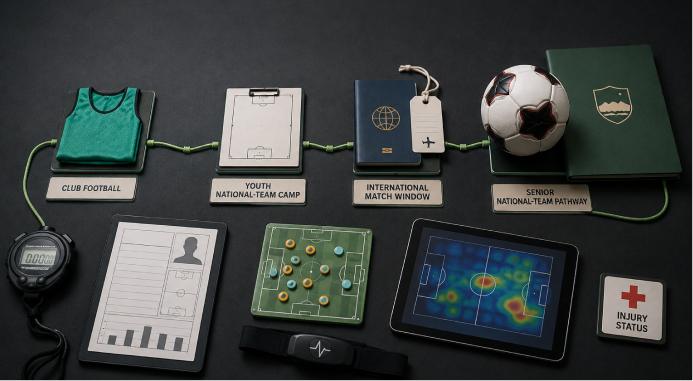
Bolivia should maintain a live database for every serious U-17 and U-20 prospect, including club minutes, position, physical development, injuries and national-team performances.
The federation should also track eligible players based abroad.
The objective is not to create a huge list.
It is to prevent promising players from falling out of the system because one coaching staff changes or one camp ends.
Club Minutes Are The Foundation Of Every Youth National Team
National-team camps are short.
Most development takes place at club level.
The United States benefits from an increasingly broad professional structure that gives teenagers several possible competitive environments.
A player can develop through an MLS academy, MLS NEXT Pro, the USL system, college soccer or an overseas club.
The national federation does not need to provide every training session.
It needs to know what is happening to the player between camps.
Bolivia faces a more difficult problem.
A talented U-20 player may train with a professional first team without receiving enough competitive minutes. Others may remain in reserve or academy football where the level of competition varies considerably.
That makes domestic playing time one of the most important measurements for the 2027 generation.
A player who spends the next five months competing regularly will probably develop faster than a more naturally talented prospect who trains but rarely plays.
Bolivia’s U-20 coaching staff should therefore evaluate club situations as closely as national-team performances.
Brazil Offers Another Useful Development Model
The United States is not the only relevant comparison.
Brazil’s preparation is instructive because Paulo Victor has been rotating players while maintaining a clear international calendar.
The Brazilian coaching staff has used matches against Paraguay, Chile and Bolivia to compare different profiles.
That creates competition within the squad.
A player who performs poorly cannot assume his reputation guarantees selection. Another athlete can enter during the next camp and change the hierarchy.
Bolivia needs that same internal pressure.
The U-20 team should not become fixed too early.
The coaching staff needs enough stability to build relationships but enough openness to reward players who improve rapidly during the remainder of 2026.
This is particularly important at youth level because development is rarely linear.
A player overlooked at 17 can transform physically and tactically by 19.
A highly rated 17-year-old can also stop progressing.
Selection must remain responsive to evidence.
Bolivia Needs Different Types Of International Opponents
Brazil provides one kind of test.
Bolivia should not spend the entire preparation cycle facing teams with the same profile.
Strong youth development requires tactical variety.
One opponent might dominate possession and force Bolivia to defend for long periods.
Another might sit deep and force La Verde to create chances against a compact block.
A more direct team can test center backs in aerial situations and second balls.
Fast transition teams can expose defensive spacing.
The United States experienced this variation during the Concacaf tournament because group and knockout matches changed the tactical demands every few days.
Bolivia should recreate that variety through its friendly schedule.
The objective is not simply accumulating international matches.
It is collecting different football problems.
The 2027 South American Championship Must Not Be An Experiment
By the time Bolivia enters the South American U-20 Championship in January 2027, the coaching staff should already understand most of its squad.
The tournament should confirm decisions, not create them from zero.
The preferred goalkeeper should have international experience.
Central defenders should already have played together.
The coaching staff should understand which midfielders can resist pressure and which forwards provide different tactical options.
Set-piece responsibilities should be established.
Substitutes should know what is expected when entering matches.
This does not require Bolivia to have one permanent starting eleven months in advance.
It requires the tactical framework to be familiar.
The United States entered Concacaf qualification with players already integrated into a wider youth structure.
Bolivia should aim to reach January with the same type of clarity.
Tournament Experience Accelerates Decision-Making
One of the most difficult qualities to develop in football is speed of thought.
Youth players can look technically excellent when they have time.
International tournaments remove that time.
A midfielder receives with an opponent already closing space. A defender has seconds to decide whether to step forward or drop. A goalkeeper must choose whether to leave the penalty area before the ball arrives.
Repeated exposure changes those decisions.
This is why qualifying for the 2027 U-20 World Cup matters so much for the United States.
The Americans have guaranteed themselves another tournament against strong international opposition.
Even players who never reach the senior USMNT will benefit from that level of competition during a crucial development period.
Bolivia cannot guarantee equivalent opportunities.
That makes South American qualification even more important.
The 2030 Generation Will Need More Than Attackers
Bolivia’s recent senior national-team development has produced several exciting attacking players.
The next generation must also improve depth in less visible positions.
Central defenders, defensive midfielders, fullbacks and goalkeepers often mature later than attackers.
They require repeated exposure to difficult game situations.
The Brazil friendlies are especially useful for those positions.
A center back who spends much of a match defending against high-level movement receives an education that cannot be replicated through routine academy training.
The same is true for a goalkeeper facing quicker combinations or a defensive midfielder trying to play through an aggressive press.
Bolivia’s 2030 project cannot depend only on finding another exceptional attacking talent.
It needs complete positional depth.
Youth Results Should Be Evaluated Five Years Later
The most important comparison between Bolivia and the United States will not be visible in 2026.
It may become clear around 2030.
How many players from the current U.S. group become regular senior internationals?
How many Bolivians from the Brazil camp establish themselves in professional football?
How many move abroad?
How many play meaningful minutes during World Cup qualification?
Those questions determine whether a youth system works.
Winning a U-20 tournament can be valuable, but youth trophies can also create misleading confidence.
A federation can dominate one age group and still fail to convert players into senior professionals.
Bolivia should therefore define success through transition.
The objective is not simply qualifying from the South American championship.
It is producing players capable of helping La Verde several years later.
Bolivia Cannot Copy The U.S. System, But It Can Copy Its Continuity
The United States possesses resources Bolivia cannot reproduce.
Its player population is larger. Its academy structure is deeper. Its professional pyramid offers more developmental environments.
That does not make the comparison useless.
Many of the most important advantages are organizational.
Bolivia can schedule regular camps.
It can maintain player databases.
It can coordinate with professional clubs.
It can monitor players abroad.
It can define tactical principles across age groups.
It can build international windows around specific developmental questions.
It can ensure that strong U-17 players move naturally into U-20 consideration.
Those steps do not require the budget of U.S. Soccer.
They require planning.
The Brazil Window Should Start The Next Phase
The August matches at Granja Comary should be treated as the beginning of an evaluation phase rather than an isolated international trip.
Bolivia’s coaches should leave Brazil with clear answers.
Which players handled the speed of the game?
Which struggled under pressure?
Which combinations deserve another opportunity?
Where does the team lack depth?
Which players need more club minutes before January?
The next camp should then respond directly to those findings.
That is how preparation becomes a process.
The United States has already moved through group play, knockout football, World Cup qualification and a regional final with its current generation.
Bolivia is earlier in its cycle.
That is not automatically a disadvantage.
It becomes a disadvantage only if the months before the 2027 South American Championship are not used deliberately.
The Real Race Is Toward 2030
The U.S. and Bolivian youth systems are not competing directly with one another.
Their players may never meet.
The useful comparison is about timing.
Both countries are developing footballers who could be entering their prime years when the 2030 World Cup cycle reaches its decisive stages.
The United States already knows that its current group will play at the 2027 U-20 World Cup.
Bolivia must still build toward the South American championship and earn its own opportunities.
Facing Brazil is the right kind of preparation.
But one difficult opponent cannot transform a development system.
Bolivia needs continuity between camps, stronger connections with clubs, more international matches and systematic tracking of prospects from U-17 football into the senior national team.
If those pieces are connected, the Brazil window could matter long after the 2027 U-20 tournament ends.
The real objective is not January.
It is creating players who are ready when La Verde needs them in 2029 and 2030.