

The 2026 NFL preseason opened on August 6 at Tom Benson Hall of Fame Stadium in Canton, Ohio, where the Carolina Panthers and Arizona Cardinals launched another season of roster evaluation, rookie development and competition for jobs at the highest level of American football.
For most athletes in Bolivia, reaching one of those NFL sidelines remains an extremely distant objective.
But it is no longer an impossible pathway simply because a player was born outside the traditional American football system.
The NFL’s International Player Pathway has developed into a formal route for elite athletes from around the world. The league announced 13 players representing 10 nations in its 2026 IPP class. Since the program began in 2017, 70 international athletes have signed with NFL teams through allocation, the draft or free agency, and the NFL reported that 22 IPP athletes were on league rosters when the 2026 class was announced.
One of the names on that historical list matters particularly to South America.
Sammis Reyes, who grew up in Chile before moving to the United States as a teenager, entered the program after a basketball career and ultimately became the first Chilean-born player to make an NFL 53-man roster.
His story does not mean Bolivia can simply identify a tall basketball player and send him to an NFL training camp.
It does demonstrate something more useful: unconventional athletic backgrounds can become legitimate entry points when physical tools, professional coaching, opportunity and long-term development come together.
Sammis Reyes Did Not Follow A Traditional Football Route
Reyes’ path to Washington was unusual even by NFL standards.
He grew up in Chile and moved to the United States at age 14, initially pursuing basketball rather than American football. He eventually played college basketball, including time at Tulane, before shifting his attention toward football.
At approximately 6-foot-5 and 260 pounds when Washington signed him in April 2021, Reyes possessed a physical profile that immediately attracted attention at tight end.
The important part of his development was not simply his size.
Reyes entered the International Player Pathway environment and spent intensive time learning a sport in which tactical knowledge is unusually specialized. Route concepts, blocking assignments, defensive fronts, special-teams responsibilities and playbook terminology all had to be learned at professional speed.
Washington signed him before he could be allocated elsewhere through the IPP process.
He then achieved the milestone that transformed his story from experiment into precedent.
Reyes made Washington’s 53-man roster in 2021, becoming the first Chilean-born player to make an NFL roster. He appeared in 11 regular-season games and made one start that year.
He did not become an NFL star. He did not accumulate major receiving statistics or establish a long-term starting career.
That actually makes his example more relevant.
Reyes demonstrated how difficult merely reaching the league is. An international athlete can possess exceptional size, train inside an NFL organization and still face an enormous challenge establishing a permanent role.
For Bolivia, the lesson is about access and development—not promising that the next experiment will become an All-Pro.

The International Player Pathway Is Much Bigger In 2026
When Reyes entered the program, international development was still a relatively specialized NFL project.
By 2026, the structure is considerably more established.
The latest IPP class contains athletes from 10 nations, with backgrounds extending beyond American football into rugby, basketball, Gaelic football, track and field and other sports. The league explicitly describes the program as a way to identify elite global athletes and develop them toward NFL roster opportunities.
The NFL has also adjusted roster rules to make international development easier.
Each NFL club can carry one qualifying international player under a roster exemption from the beginning of the offseason program until teams reduce their rosters to 53 players. After that point, qualifying players may be placed in a 17th practice-squad position reserved for international athletes.
That extra space matters.
A conventional developmental prospect competes directly against players who may have spent a decade or more studying American football through high school and college. International athletes frequently need additional time simply to understand technique, terminology and tactical structure.
The IPP mechanism gives clubs more flexibility to make that investment.
The system has already produced players with very different levels of success. Australian offensive tackle Jordan Mailata developed into the program’s most prominent example and earned second-team All-Pro honors in 2024. Other IPP players have reached active NFL rosters from Germany, Nigeria, the United Kingdom, Ireland, Zimbabwe, Zambia and the Netherlands.
Reyes remains the most relevant precedent for Bolivia because he showed that South American geography itself is not an automatic barrier.
Bolivia Would Need To Find Athletes, Not Just Football Players
The first Bolivian NFL candidate may not begin his career playing tackle football.
That is one of the most important lessons from the international pathway.
The NFL does not search only for experienced quarterbacks, receivers or linebackers from foreign leagues. It also evaluates athletes whose physical abilities could translate into highly specialized football positions.
Several Bolivian sporting backgrounds could theoretically produce relevant profiles.
Basketball is the most obvious comparison with Reyes. Tall forwards and centers already develop coordination, jumping ability, lateral movement and experience using their bodies to create space. Those skills can have some relevance to tight end or defensive-line development, although football technique would still require years of specialized training.
Rugby can offer another transferable base because athletes already understand contact, acceleration, tackling angles and operating under physical pressure.
Track and field offers different possibilities. Sprinters can provide raw speed for receiver or defensive-back development, while throwers may possess the size and explosive strength associated with line positions.
Soccer presents perhaps the most immediately understandable specialization for Bolivia: kicking.
The NFL has increasingly examined players from international kicking backgrounds. Ireland’s Charlie Smyth, another International Player Pathway athlete, is one example of the league developing specialists outside traditional U.S. pipelines.
None of this means an accomplished Bolivian basketball, rugby, athletics or soccer player should automatically switch sports.
It means Bolivia does not need a mature domestic NFL-style system before its first elite prospect can be identified.
The Physical Profile Is Only The First Filter
A common mistake when discussing international NFL prospects is to concentrate almost entirely on height, weight and speed.
Those measurements matter. They are not enough.
An offensive lineman may need exceptional size but must also learn hand placement, footwork, pass-protection angles and how to recognize complex pressure packages within seconds.
A tight end needs more than strength and catching ability. He must understand route spacing, blocking responsibilities, defensive leverage and adjustments based on coverage.
Even kicking requires precise operation times, consistent contact and the ability to perform when an entire stadium knows exactly when and where the kick is coming.
Reyes spent months learning before he signed with Washington and continued developing after reaching the roster. Washington later described how he was still becoming more comfortable with NFL fronts, responsibilities and special-teams assignments during the 2021 season.
That development curve explains why Bolivia would need coaching infrastructure before talking seriously about producing NFL players.
Finding an athlete is step one. It’s not easy when the player get injured. Here are some of the main injury types and how to recover from them.
Bolivia Is Behind Its South American Neighbors In Flag Football
There is another reason the NFL conversation is becoming relevant beyond the professional league.
Flag football will be part of the Los Angeles 2028 Olympic Games.
The sport is played by more than 20 million people across more than 100 countries, according to the NFL, while the league and the International Federation of American Football are collaborating on global expansion.
That creates a development route much more accessible to Bolivia than immediately building expensive tackle-football programs.
Regional evidence shows how quickly neighboring countries are moving.
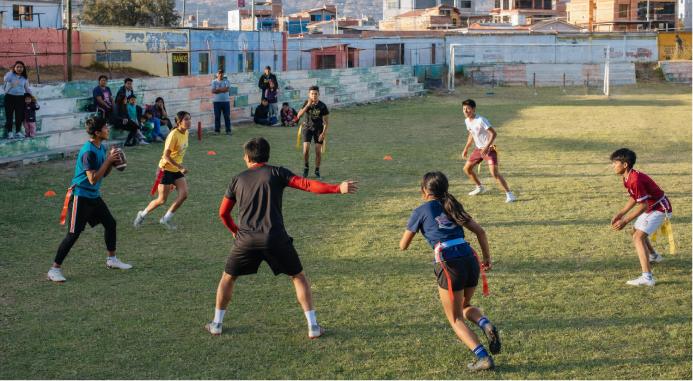
The 2026 South American Regional Flag Football Championship was held in Medellín, Colombia, from June 26-28. Argentina, Brazil, Chile, Colombia and Venezuela entered both men’s and women’s competition. Bolivia was not among the participating nations.
Earlier in 2026, flag football also debuted at the South American Youth Games in Panama. Argentina, Brazil, Panama, Uruguay and Venezuela sent U17 teams. Again, Bolivia did not participate.
That does not prove American football has no activity inside Bolivia.
It does show that Bolivia has not yet established the international competitive presence visible among several regional neighbors.
For a country interested in eventually developing athletes toward either Olympic flag football or the NFL international pathway, that gap matters.
Flag Football Could Be Bolivia’s Practical Starting Point
Tackle football requires helmets, shoulder pads, specialized fields, large coaching staffs and significant medical and safety infrastructure.
Flag football has a much lower entry barrier.
It retains core American football concepts—passing, route running, defensive coverage, quarterback decision-making and spatial awareness—while removing tackling and much of the specialized equipment required for the tackle version. The IFAF guide to flag football describes a non-contact format in which defenders stop plays by removing a flag from the ball carrier.
For Bolivia, this makes flag football useful in two different ways.
First, it is now an Olympic sport. A national federation and competitive program would therefore fit naturally within broader Bolivian planning for Los Angeles 2028 and Brisbane 2032.
Second, it could become a basic talent-identification system for athletes interested in American football.
Quarterbacks could develop throwing mechanics and decision-making. Receivers could learn route concepts. Defensive players could develop coverage awareness. Coaches and referees could begin learning the structure of the sport.
A functioning flag ecosystem would not directly create an NFL player, but it would give Bolivia something it currently lacks at international level: an organized base from which talent can be evaluated.
Chile Shows How Regional Development Can Accelerate
Reyes is not Chile’s only reason to matter in this discussion.
Chile now participates in organized IFAF competition.
Its men competed at the 2026 South American regional championship in Medellín and entered the event ranked 25th in the world. Chile had also participated at previous Americas championships and the 2024 Flag Football World Championships. Its women returned to international regional competition in 2026 as well.
This is an important distinction.
Reyes reached the NFL before Chile had developed into a major flag-football power. His pathway was largely individual: basketball, migration to the United States, elite physical characteristics and the IPP opportunity.
The next Chilean prospect could grow inside a more recognizable football structure.
Bolivia would benefit from learning that lesson early.
Waiting for a physically gifted Bolivian athlete to discover football accidentally is not a development strategy.
Creating domestic flag leagues, coaching education and international competition would make talent discovery deliberate.
Bolivia Would Need A Federation-Level Structure
IFAF says a national federation should manage competition, referee development, coaching education, athlete representation, talent development, safeguarding and welfare. It also expects a federation to work toward recognition from its government or National Olympic Committee.
Those requirements offer a useful blueprint.
A realistic Bolivian plan would not begin with an announcement that the country intends to send somebody to the NFL.
It would begin with fundamentals:
- Establish or strengthen a nationally recognized governing structure for American football and flag football.
- Build youth and senior flag competitions in cities such as Santa Cruz, Cochabamba, La Paz and El Alto.
- Train coaches and officials through IFAF-aligned education.
- Create athletic combines that measure height, weight, sprint speed, jumping ability, throwing ability and change of direction.
- Identify crossover athletes from basketball, rugby, athletics and soccer.
- Enter regional South American flag competitions before attempting larger international events.
That system would create value even if Bolivia never produces an NFL player.
Flag football now has an Olympic pathway, and organized competition could offer opportunities to both men and women.
LA28 Gives Bolivia Another Reason To Move Quickly
American football’s international expansion is no longer driven exclusively by the NFL.
Flag football’s inclusion in Los Angeles 2028 has changed the development equation.
IFAF is recognized by the International Olympic Committee, and national federations are increasingly building youth teams and continental competitions around Olympic qualification.
Bolivia has already been discussing its broader Olympic strategy for LA28.
American football should therefore be evaluated from two directions.
The immediate Olympic opportunity is flag football.
The longer, much harder professional opportunity is the NFL.
Developing the first can help create the environment necessary for the second.
The South American landscape suggests Bolivia should not assume it can wait. Brazil, Argentina, Chile, Colombia, Uruguay and Venezuela have already appeared in significant regional flag-football events during 2026.
Every year without comparable competition increases the development gap.
The NFL Pathway Is Real, But It Is Exceptionally Narrow
The NFL’s 2026 preseason provides another reminder that roster spots are scarce even for athletes who have spent their entire lives playing American football.
Carolina and Arizona were given an additional preseason game because they opened the schedule in Canton on August 6. For undrafted rookies and developmental players, those games are opportunities to earn jobs before rosters are reduced for the regular season.
International athletes enter an even more difficult competition.
They must adapt to a new sport or a much higher level of the sport while competing against players developed through U.S. high schools, NCAA programs and professional coaching systems.
The current IPP statistics illustrate both opportunity and difficulty.
Seventy international players signing with NFL organizations since 2017 is significant. Only a much smaller group has reached active NFL rosters. The league listed 11 IPP athletes who had been elevated to active rosters when it announced the 2026 class.
Sammis Reyes was one of them.
That should make his accomplishment more impressive, not make the path look easy.
Bolivia Should Search For The Right Athlete Before The Right Position
If Bolivia eventually produces an NFL candidate, the smartest strategy would be to identify unusual physical ability first and football position second.
That is how many international conversion projects work.
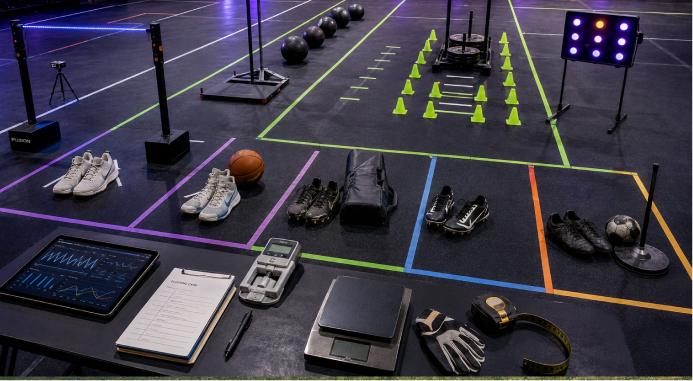
A powerful 2-meter basketball player might become a tight-end candidate.
A large, agile rugby forward might be evaluated for the defensive or offensive line.
A soccer player with exceptional kicking range could be tested as a specialist.
A sprinter with strong change-of-direction numbers could become a developmental receiver or defensive back.
The athlete would then require technical evaluation by qualified American football coaches before any NFL discussion became serious.
This approach avoids one of the biggest dangers in international-sports development: inventing prospects based on nationality and enthusiasm.
Bolivia does not currently need a headline declaring that it has found “the next Sammis Reyes.”
It needs a system capable of recognizing such an athlete if one appears.
Sammis Reyes Offers Bolivia A Model, Not A Promise
Reyes’ story remains powerful because of what it proved.
A Chilean athlete who did not grow up inside American football reached an NFL roster after building his athletic base in basketball and receiving specialized development through the International Player Pathway.
He played 11 regular-season games for Washington in 2021. (More about Sammis Reyes)
That is a genuine South American precedent.
Bolivia is not yet in the same developmental position. Its neighbors are more visible in regional flag football, and there is no publicly established Bolivian NFL pipeline comparable to the systems now emerging elsewhere.
But the opportunity structure around the sport is improving.
The NFL has institutionalized its international scouting program. Every team has additional flexibility to develop qualifying international players. Flag football is expanding rapidly and will make its Olympic debut at LA28. South American nations are creating regional competitions and youth programs.
Bolivia’s first step should therefore not be trying to manufacture an NFL prospect.
It should be entering the ecosystem.
Build flag football. Educate coaches. Measure athletes. Compete regionally. Watch basketball, rugby, athletics and soccer for transferable physical profiles. Then connect the most exceptional candidates with international evaluation.
Sammis Reyes showed that South America can produce an unconventional NFL player.
The question for Bolivia is whether it wants to wait for a similar story to happen by accident—or build the structure that gives one a chance to happen deliberately.