

Bolivia’s Copa América journey has seen both triumph and struggle. They celebrated their only title in 1963, hosting the tournament. This was a highlight in their football history. Yet, they’ve faced big challenges, winning just one of their last thirty matches.
Now, Bolivia is ranked 84th in FIFA’s world rankings. They’ve lost thirteen matches in a row, starting in 2015. For the 2024 Copa América, they’re in a tough Group C. They’ll face the USMNT, Uruguay, and Panama.
Despite these challenges, Bolivia has created legendary players. These players have made a lasting impact on the tournament. Despite their small population and limited resources, Bolivia keeps striving for greatness.
Tournament History and Trends
Bolivia’s Copa América record shows their resilience and challenges in South American football. They face big hurdles, mainly when playing away from their high-altitude home. The Estadio Hernando Siles in La Paz, at nearly 12,000 feet, gives them an edge.
Visiting teams often bring oxygen tanks to cope with the thin air. But, Bolivia’s home and away performances show a big difference. Their last win outside their mountainous home was against Ecuador over nine years ago.
The Copa América format has changed a lot, with 2024 being the second with 16 teams. This change has brought in new teams like Mexico, the United States, and Canada. Bolivia has found it hard to score points away from home, returning with zero points from seven of their last eight tournaments.
Bolivia’s football history is marked by struggles against top CONMEBOL teams. Uruguay and Argentina have each won 15 titles, while Brazil has five of its nine trophies from 1989. Bolivia’s single title is a highlight in their football history.
| Year | Opponent | Result | Location |
|---|---|---|---|
| 1996 | United States | 1-0 Win | San Diego, CA |
| 2011 | Argentina | 0-0 Draw | La Paz, Bolivia |
| 2019 | Peru | 1-3 Loss | Salvador, Brazil |
| 2021 | Paraguay | 0-3 Loss | Cuiabá, Brazil |
Knowing these trends helps us understand Bolivia’s ongoing challenges in Copa América. For more on Bolivia’s football history, visit this page.
Greatest Copa América Moments
Bolivia has had many unforgettable moments in the Copa América. These moments show the nation’s football spirit and pride. In 1963, Bolivia hosted the tournament and won its only Copa América title.
This victory is a key moment in Bolivian football. They beat Paraguay in the final, 3-1. The celebration showed the nation’s love for the sport. It’s a symbol of hope for future Bolivian players.
In 1997, Bolivia again used home soil to their advantage. They reached the final against Brazil. Though they lost, it showed Bolivia’s strength in South American football.
Marco Etcheverry’s goal against the United States in 1995 is unforgettable. It was a 1-0 win that extended Bolivia’s unbeaten streak against the USMNT. Fans remember this moment proudly, showing Bolivia’s skill against strong opponents.
It’s also important to remember the challenges faced by legends like Pele and Maradona in the Copa América. Pele scored eight goals in 1958 but Brazil lost to Argentina. Maradona never won the trophy in three tries. Their stories highlight the difficulty of achieving greatness in football, making Bolivia’s 1963 victory even more remarkable.
Here’s a summary of Bolivia’s most significant moments in Copa América:
| Year | Achievement | Opponent | Result |
|---|---|---|---|
| 1963 | Champion | Paraguay | 3-1 |
| 1995 | Group Stage Victory | United States | 1-0 |
| 1997 | Finalist | Brazil | 1-3 |
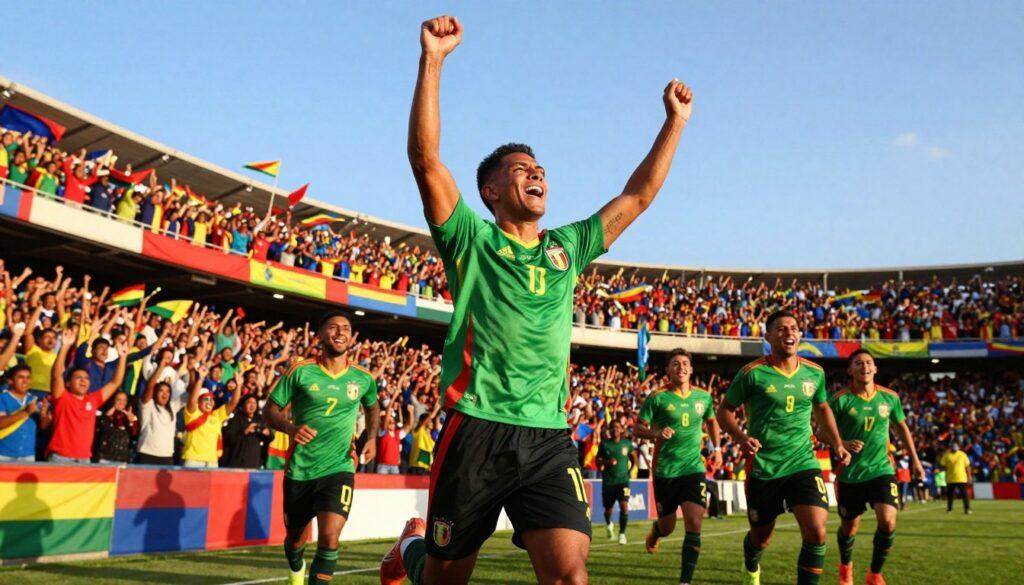
These moments show Bolivia’s journey through triumphs and challenges. For more details on Bolivia’s Copa América victories, visit this link. Each game, each goal, and each player has contributed to Bolivian football’s rich history, ensuring their legacy will last.
Key Player Contributions
The impact of key players has been huge in Bolivia’s Copa América journey. Over the years, many athletes have shown their skills. Their contributions are remembered by fans and players.
Marco Etcheverry is a legend in Bolivian football. He scored a key goal against the USMNT in 1995. His creativity and vision made him stand out. This moment is a highlight in Bolivian football history.
Erwin “Platini” Sánchez was a key player in the 1990s. Known for his technical skill, he was the heart of the team. His playmaking skills helped Bolivia reach the 1997 Copa América final.
The 2024 squad includes promising players like Carlos Lampe, Leonel Justiniano, and Rodrigo Ramallo. Lampe is a seasoned goalkeeper. Justiniano’s style is physical. Ramallo’s work rate is key in pressing the opposition.
The 2024 squad mostly comes from Bolivian clubs like Bolivar, The Strongest, and Always Ready. This shows the close-knit nature of Bolivian football. But, it might also present challenges compared to opponents from Brazil, Argentina, or Uruguay.
| Player | Position | Key Contribution | Club |
|---|---|---|---|
| Marco Etcheverry | Midfielder | Scored the winner against USMNT in 1995 | D.C. United |
| Erwin “Platini” Sánchez | Midfielder | Key playmaker in 1997 Copa América | Bolivar |
| Carlos Lampe | Goalkeeper | Provides stability in defense | Bolivar |
| Leonel Justiniano | Midfielder | Combative style and tackles | The Strongest |
| Rodrigo Ramallo | Forward | High work rate in pressing | Always Ready |
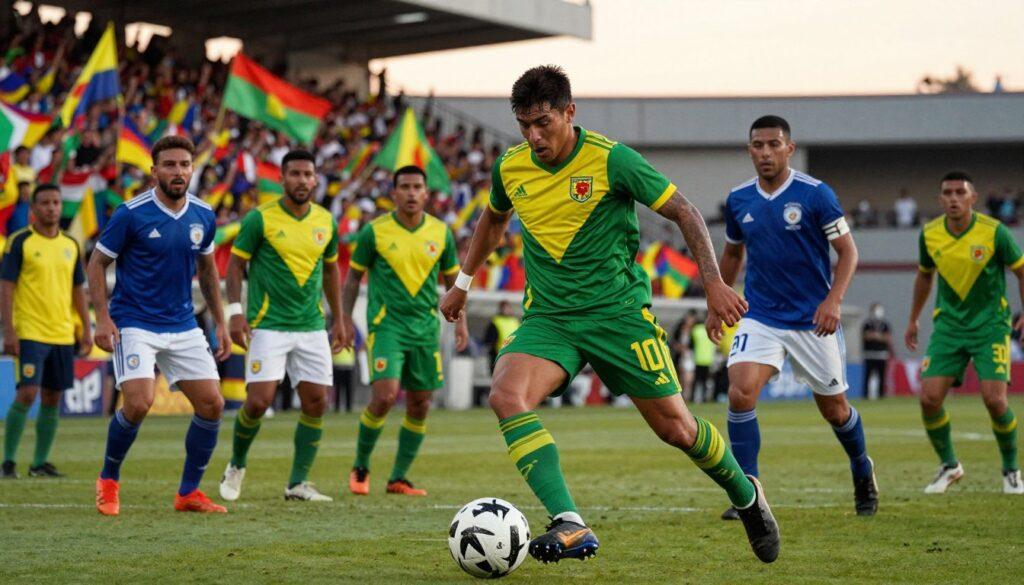
Rising Talents from Recent Editions
The future of Bolivian football looks bright with a new generation of players. Young stars like Gabriel Villamil are making a name for themselves. At 22, Villamil plays for LDU Quito and shows great versatility.
He can control the midfield for the full 90 minutes, showing a modern style of play. Another talent is Ramiro Vaca, who plays for Bolivar. Vaca is great in both defense and when pressing.
His work has helped Bolivia lead in interceptions during World Cup qualifying. This proactive approach is key for the team’s success. Miguel Terceros, developing at Santos in Brazil, also adds to the promise of Bolivian football.
Head coach Antônio Carlos Zago is excited about this new talent. He wants his team to play fearlessly against big nations. Young players like Boris Cespedes and Robson Tome are joining the squad, building a strong future for Copa América.
While results may be tough in the short term, the future looks bright. Bolivia’s defensive style and commitment to growth promise exciting times ahead.