

The journey of Bolivia in international football is filled with resilience and passion. Despite many challenges, the team has made a mark on the world stage. A key moment was in 1994 when they beat Brazil, showing their competitive spirit.
The Estadio Hernando Siles, at nearly 12,000 feet, is key to the team’s identity. The high altitude is tough for visitors but helps local players. This stadium is a symbol of pride and controversy in football.
From the 1920s to today, the team’s growth shows the story of South American football. They’ve had highs like winning the 1963 South American Championship and lows like FIFA’s altitude rules. Knowing this history helps us understand their unique story.
Notable Qualifications & Debuts
Bolivia’s journey in World Cup qualifiers has seen many highlights, like the 1994 FIFA World Cup. This event is a key moment in Bolivian football history. It showed the team’s strength and smart tactics.
In the qualifiers, Bolivia faced strong competition from other CONMEBOL teams. Led by coach Xabier Azkargorta, they made history by beating Brazil 2-0 at the Estadio Hernando Siles. This win was huge, as it was Brazil’s first loss in 40 years. It proved Bolivia could match the top teams.
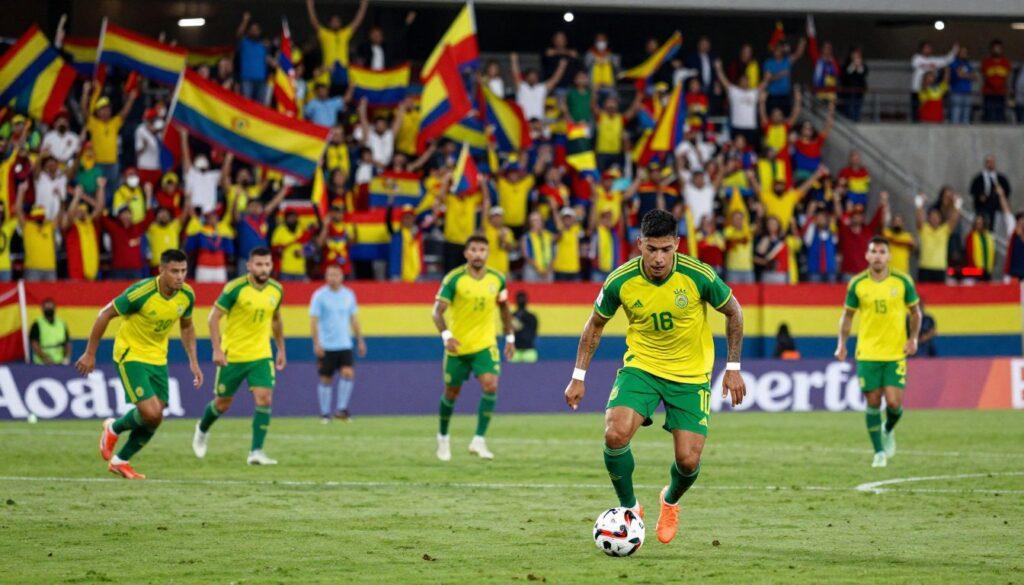
In the 1994 World Cup, Bolivia played against Germany at Soldier Field in Chicago. The game was close, with Bolivia losing 1-0. Despite the loss, their disciplined play showed they could hold their own against the best.
Over the last four World Cup qualifying cycles, Bolivia has won 14 games at home, the Hernando Siles. This stadium is a key place for the team, with most of their wins and draws coming here. The high altitude of La Paz, where the stadium is, helps them a lot.
- 1994 FIFA World Cup: Bolivia’s last appearance in the tournament.
- Historic Win: Defeated Brazil 2-0, a result that shocked the football world.
- Home Advantage: All qualifying victories achieved at Hernando Siles.
- FIFA Controversy: The 2007 ban on matches above 8,200 feet threatened Bolivia’s competitive edge.
The 2007 FIFA ban on matches above 8,200 feet was a big challenge for Bolivia. But, they got a special exemption to keep playing at their altitude. This showed how important altitude is in football.
Despite their successes, Bolivia has struggled to get back to the World Cup. Their away games are often tough, making it hard to get points. Knowing this helps scouts and analysts understand Bolivia’s chances in future tournaments.
For more detailed insights into Bolivia’s football history, you can visit the Bolivia national football team page.
Key Players at the Biggest Stage
Bolivia’s football legacy is shaped by key players who have left a lasting mark on the World Cup stage. From the golden generation of the early 1960s to today’s athletes, these individuals have defined Bolivia’s World Cup history.
The 1963 South American Championship-winning side is a highlight. It showed players who won Bolivia’s only major international trophy. This victory inspired many to play football at the highest level.
Marco Etcheverry is often seen as Bolivia’s greatest player. His skill and vision helped the national team during the 1994 World Cup. A team mostly of domestic players faced the world’s best.
Carlos Trucco, the goalkeeper, made remarkable saves against tough opponents like Germany. His saves are remembered by fans and analysts.
Recently, Carlos Lampe emerged as a key player. As of 2018, he was Bolivia’s most experienced active international with 21 caps. His performances kept the team competitive.
Bruno Miranda shows the growing globalization of Bolivian football talent. He played for the Richmond Kickers and D.C. United, showing opportunities abroad.
The friendly match against the United States in 2016 is notable. During this match, Christian Pulisic became the youngest player to score for the U.S. Men’s National Team. This match showed Bolivia’s competitive level.
Bolivian footballers have technical skill and physical advantages from altitude acclimatization. This unique style has produced moments of brilliance, even in tough games.
| Player | Position | World Cup Appearances | Notable Achievements |
|---|---|---|---|
| Marco Etcheverry | Midfielder | 3 | Key player in 1994 World Cup |
| Carlos Trucco | Goalkeeper | 3 | Outstanding saves against Germany |
| Carlos Lampe | Goalkeeper | 21 | Most experienced active player as of 2018 |
| Bruno Miranda | Forward | 2 | Career reflects globalization of Bolivian talent |
As Bolivia continues its World Cup history, the contributions of these players are vital. For more insights, visit this link.
What Past Campaigns Teach Scouts and Analysts
Bolivia’s recent games show they could be big players in international football. Their wins over Chile and Argentina in 2017 are key examples. These victories changed the game for everyone in CONMEBOL qualifiers.
Playing at the Hernando Siles Stadium, Bolivia’s home, is a big advantage. The high altitude in La Paz is tough for visitors. This makes Bolivia’s home games very challenging for other teams.
Bolivia focuses on strong defense and quick counter-attacks. This strategy helps them win more games. They also work hard on set pieces to beat stronger teams.
Now, sports science and data analysis are key for Bolivia’s football. Coaches use past games to improve their plans. New athletes might bring fresh ideas to the team.
Looking at Bolivia’s World Cup history is very helpful. It shows how geography, tactics, and determination work together. As Bolivia grows, knowing these things will help predict their future in football.