
The United States entered the 2026 FIFA World Cup with home-field expectations, a talented generation approaching its competitive prime and Mauricio Pochettino overseeing the most ambitious men’s national team project in the country’s history. The Americans delivered genuine progress, but their tournament ended on July 6 with a 4-1 Round of 16 loss to Belgium at Seattle Stadium.
That scoreline was harsher than some of the United States’ earlier performances suggested, yet it was not misleading. Belgium converted defensive mistakes, controlled decisive moments and exposed the gap between competing confidently against capable opponents and surviving against an experienced European team with elite finishers.
The official USMNT match report recorded 66,925 spectators in Seattle, seven American shots, only two attempts on target and 15 Belgian efforts. Those numbers summarized the problem: the United States remained competitive in possession for stretches, but Belgium created more danger and punished nearly every major lapse.
A Historic Run Ended At A Familiar Ceiling
Judging the United States only by the Belgium defeat would ignore meaningful progress. Pochettino’s team won three matches, finished first in Group D and reached the Round of 16 after defeating Bosnia and Herzegovina in the newly introduced Round of 32.
The Americans opened the competition by beating Paraguay 4-1 before recording a 2-0 victory over Australia. Although they lost 3-2 to Türkiye in their final group match, six points were enough to win the section. It was only the third time the United States had finished first in a men’s World Cup group, following the 1930 and 2010 tournaments.
The team then defeated Bosnia and Herzegovina 2-0 on July 1 in Santa Clara, California. That was the country’s first World Cup knockout victory since its run to the quarterfinals in 2002.
| Opponent | Stage | Result | Main Takeaway |
|---|---|---|---|
| Paraguay | Group D | 4-1 win | Direct attacking play produced an authoritative opening result |
| Australia | Group D | 2-0 win | The United States controlled the match and secured early qualification |
| Türkiye | Group D | 3-2 loss | Defensive vulnerability remained visible despite attacking production |
| Bosnia and Herzegovina | Round of 32 | 2-0 win | The team protected a lead after being reduced to 10 players |
| Belgium | Round of 16 | 4-1 loss | Elite opposition punished defensive errors and unstable transitions |
According to U.S. Soccer’s group-stage review, the team collected a program-record six group points and scored eight goals before the knockout rounds. It finished the tournament with 11 goals, the most the United States had scored in a single World Cup.
Those achievements matter. The United States did not simply advance because it was a host nation or because the expanded format created another knockout round. It won its group, defeated three opponents and demonstrated greater attacking variety than in several previous World Cups.
The ceiling, however, remained familiar. Once the Americans encountered an experienced European side capable of exploiting small positional errors, the difference became substantial.
Belgium Punished Every Loss Of Control
Belgium established the tone almost immediately. Matt Freese was forced into a save inside the opening minute, and Charles De Ketelaere scored in the ninth after Nicolas Raskin found space near the American penalty area.
Malik Tillman equalized from a direct free kick in the 31st minute. It was his second free-kick goal in consecutive knockout matches and briefly appeared to reset the contest.
The United States then conceded again only two minutes later.
That sequence may have revealed more than any tactical diagram. Strong tournament teams often become most disciplined immediately after scoring because opponents tend to respond with greater urgency. The United States instead allowed Belgium to reestablish its lead before the match had settled.
De Ketelaere moved between American defenders and headed in Leandro Trossard’s delivery for a 2-1 advantage. In the 57th minute, pressure on Freese outside his penalty area produced another mistake, allowing Hans Vanaken to score into an exposed goal. Romelu Lukaku completed the 4-1 result during second-half stoppage time.
Belgium finished with a 15-7 advantage in shots and a 7-2 edge in shots on target. The Associated Press described the result as a match in which Belgium repeatedly took advantage of American defensive lapses, including the goalkeeping mistake that produced the third goal.
The defeat was not caused by one isolated error. It was produced by a chain of breakdowns: pressure arrived late, defensive spacing widened, Belgium found runners between the lines, and the United States struggled to regain structure after turnovers.
The American Press Needed Better Protection
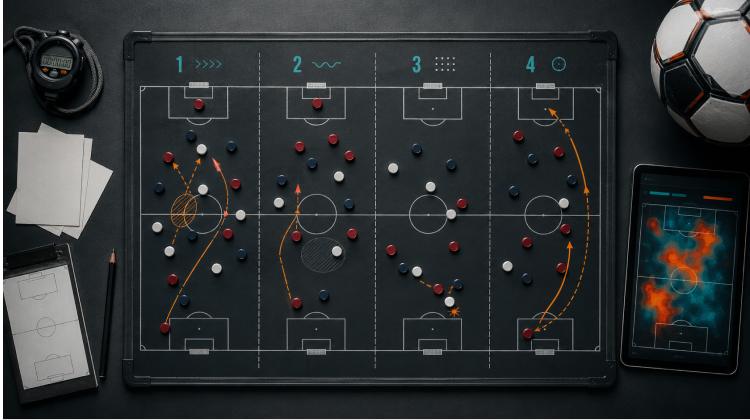
Pochettino’s best teams have traditionally tried to press aggressively, recover possession high and attack before opponents can reorganize. The United States showed elements of that approach throughout the World Cup.
Against Paraguay and Australia, its athletic midfield and forward pressure disrupted buildup play. Weston McKennie, Tyler Adams and Tillman could step forward, while Sergiño Dest and Antonee Robinson provided width from the fullback positions.
That aggression carried risk. When the first line of pressure failed against Belgium, the American defense was left managing attackers with more space than it had faced earlier in the tournament.
Belgium possessed several players comfortable receiving under pressure and quickly moving the ball away from congested areas. De Ketelaere’s movement, Trossard’s positioning and Raskin’s passing repeatedly forced the United States to defend toward its own goal.
This is where the concept of rest defense becomes important. Rest defense refers to the positioning of the players who remain responsible for stopping a counterattack while their team has the ball. Against Belgium, the United States occasionally committed numbers forward without maintaining enough control behind the attack.
The problem does not mean Pochettino should abandon pressing or reduce the team to a defensive block. The World Cup showed that proactive soccer can help the United States dominate opponents. It also showed that aggressive positioning must be supported by faster recovery runs, clearer midfield coverage and better communication between the center backs and fullbacks.
Goalkeeper And Central Defense Depth Remain Major Questions
Freese had positive moments during the tournament, including two clean sheets. He was part of the team that shut out Australia and Bosnia and Herzegovina, and he made important early saves against Belgium.
His error before Vanaken’s goal nevertheless became one of the defining images of the elimination. Freese left his penalty area to deal with a loose ball but could not complete the clearance under pressure from De Ketelaere.
It would be simplistic to make the goalkeeper solely responsible for the defeat. Belgium had already scored twice, created more shots and repeatedly reached threatening areas. The United States’ problems began before the ball arrived at Freese.
Even so, the position remains central to the next cycle. A team seeking to reach a World Cup quarterfinal needs a goalkeeper who can stop high-quality chances, control aerial situations and make reliable decisions when asked to participate outside the penalty area.
Central defense also requires careful planning. Tim Ream brought leadership and composure, while Chris Richards entered the tournament with experience in England and Germany. Belgium still exposed moments when the American back line lacked recovery speed or failed to identify runners quickly enough.
The next version of the USMNT needs more than two dependable central defenders. It needs several players competing for minutes across different tactical systems, particularly because injuries, club form and tournament scheduling can change a depth chart quickly.
Tillman And Balogun Expanded The Attacking Core
The most encouraging development was that the United States did not depend entirely on Christian Pulisic for goals.
Folarin Balogun scored three times during the tournament, including the opening goal in the Round of 32 victory over Bosnia and Herzegovina. He became a reliable central reference who could attack space, occupy defenders and finish quickly inside the penalty area.
Tillman also strengthened his position within the team. His free kicks against Bosnia and Belgium demonstrated technical quality, but his value extended beyond set pieces. He offered another player capable of receiving between midfield and attack, combining with Balogun and arriving in scoring positions.
Their performances gave the United States a broader attacking foundation. Pulisic remains the most established creative figure, but opponents should no longer be able to focus all their defensive planning on stopping one player.
The next step is creating more consistent connections among Pulisic, Balogun, Tillman, Gio Reyna, Ricardo Pepi and the wide options competing around them. Against Belgium, the United States had attacking talent on the field but generated only two shots on target.
That contrast matters. Individual quality can decide group matches, but deeper knockout runs normally require coordinated chance creation against compact and experienced defenses.
The Established Midfield Must Become More Precise
Adams, McKennie and Pulisic have now carried major responsibility across multiple international tournaments. They remain essential, but experience alone will not close the gap against the strongest national teams.
Adams provides defensive awareness and midfield discipline. McKennie contributes physicality, aerial ability and forward movement. Pulisic can create chances from wide areas or central positions.
Belgium demonstrated that the United States needs greater precision when progressing through midfield. Too many promising possessions became rushed passes, isolated dribbles or attacks that ended before the forwards could occupy the penalty area.
The Americans must become more comfortable changing tempo. Pressing and vertical attacks are valuable, but elite tournament teams also know when to retain possession, move an opponent across the field and prevent a match from becoming chaotic.
That development is tactical as much as technical. The midfield must recognize when to accelerate, when to draw pressure and when to protect the defense through possession. It must also create enough competition that Pochettino—or whoever ultimately leads the next major cycle—is not forced to use the same structure regardless of the opponent.
The World Cup Raised Expectations Without Resolving The Main Problem
The United States achieved several measurable goals in 2026. It won its group, recorded its first knockout victory in 24 years and produced the highest-scoring World Cup campaign in program history.
Pochettino also became the winningest USMNT coach in World Cup play with three victories. The team’s performance while reduced to 10 men against Bosnia showed organization and competitive maturity. U.S. Soccer’s account of that match emphasized the group’s calmness and collective response after Balogun’s dismissal.
Those results should not be dismissed simply because the tournament ended in the Round of 16.
They also cannot obscure the unresolved question: can the United States defeat an established global power in a knockout match?
The country has now reached the Round of 16 in five of its World Cup appearances since 1994 without advancing beyond that stage. The quarterfinal run in 2002 remains the exception.
Belgium showed why that barrier persists. The Americans can match strong opponents for periods, but they still struggle to maintain tactical discipline, defensive security and finishing efficiency over an entire elimination match. (Developing Technical Football Skills: Tips from Bolivian Coaches)
What The Belgium Loss Should Change Before 2030
The next cycle should not be framed as a complete rebuild. Balogun and Tillman emerged as important attacking players, while Adams, McKennie, Pulisic, Richards, Dest and Robinson retain significant international experience.
The priority is to build around that core without treating roster positions as permanent.
Goalkeeper competition must remain open. Younger central defenders need meaningful international minutes. Midfield depth must include players who can control possession as well as press. The attack needs rehearsed combinations that function when opponents deny Pulisic space.
Most importantly, the United States must use the Belgium match as a competitive baseline rather than an isolated disappointment. The 4-1 score showed how quickly a capable team can lose control against elite movement and finishing. It also identified specific areas that can be improved through selection, tactical work and stronger club-level development.
The 2026 World Cup proved that the United States can win matches, score goals and create national momentum on the sport’s largest stage. Belgium revealed the more demanding standard waiting beyond that progress.
Reaching it will require fewer defensive gifts, more control after important moments and a deeper roster capable of changing the direction of a knockout match rather than merely reacting to it.