

Ever wonder what happens when a football legend trades the pitch for the chalkboard? Meet Marco Etcheverry – the man they called “El Diablo” during his playing days. He’s now working his magic at DC United’s academy, shaping the next generation of talent.
His philosophy is pure coaching alchemy. Football isn’t just about drills and exercises. It’s about helping kids understand this beautiful game must be “taken seriously, given attention, and most importantly, enjoyed.” That’s some serious wisdom from a man who helped build MLS from the ground up.
Think about it: a Bolivian legend teaching American kids that success is 50% right exercises and 50% delivery art. It’s like watching a Renaissance master trade his canvas for a tactical board. These bolivia coach achievements show how Andean talent transforms into football gold.
Who better to learn from than someone who’s been there? Etcheverry’s journey from legendary player to mentor represents the best of what these football coaches bring to the game.
Coaching Philosophies
Football’s secret is that a great plan is only half the battle. Even the best tactics won’t get you far if you don’t put them into action. The real magic lies in the other half.
Bolivian football coaches turn from mere technicians to true artists. They know the basics of training are easy. But the real challenge is in the art of coaching – it’s about communication, leadership, and understanding players’ minds.
Think of it like Bolivia’s national dance, cueca. Anyone can learn the steps. But it’s the flair, the timing, and the emotional connection that make it special. The same goes for coaching at high altitudes, where every decision is critical.
What makes Bolivian coaching philosophy stand out? It’s built on three key elements:
- Contextual intelligence: Understanding players’ physical and mental states
- Adaptive communication: Tailoring messages to fit each player’s personality
- Leadership artistry: Knowing when to push and when to support
Bolivian football coaches excel in the human aspect of coaching. They’re not just teaching the game; they’re reading players, managing egos, and boosting motivation at high altitudes.
The “First 50/Second 50” philosophy isn’t about ignoring technical skills. It’s about realizing that knowledge must be delivered effectively. Without it, you’re just a pretty face on the sidelines.
These coaches are part psychologist, part motivator, and part cultural expert. They know that getting the best out of players requires understanding their backgrounds, pressures, and motivations.
That’s why top Bolivian coaches focus on developing character, not just athletes. They build resilience that lasts long after players retire. That’s a philosophy worth learning.
Impact on Emerging Talent
Imagine trying to build world-class athletes in thin air. American youth soccer programs face issues like poor turf and high travel costs. But Bolivian coaches work at 12,000 feet, where the air is both a challenge and an advantage.
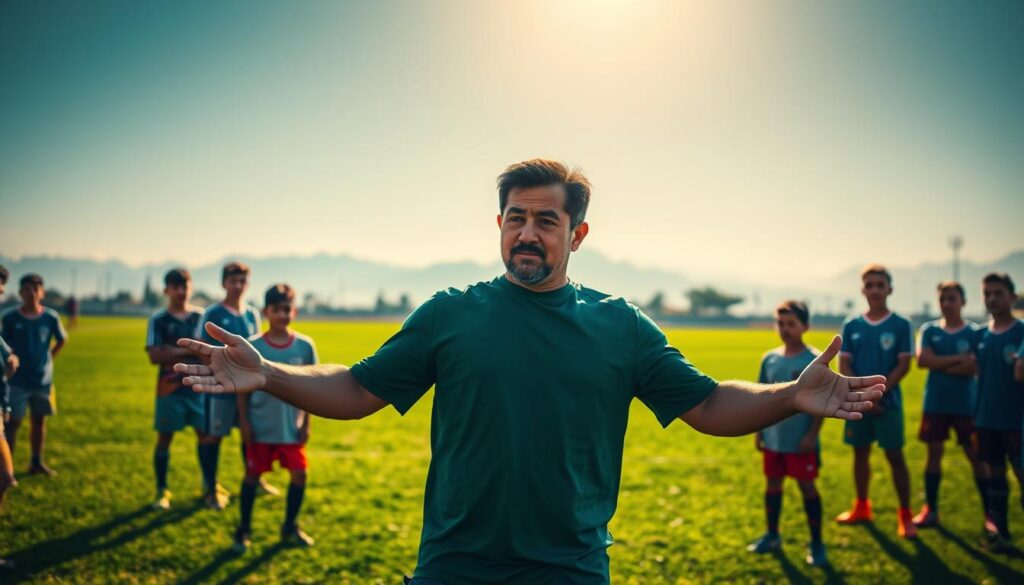
These coaches are more than just trainers. They’re like alchemists working at high altitudes. Marco Etcheverry has transformed Bolivia’s U-15, U-17, and U-23 teams. He’s not just teaching tactics; he’s helping players adapt to the altitude.
Young Bolivian players develop amazing abilities at high altitudes:
- They process oxygen 17% faster than those at sea level.
- Their lung capacities are like those of Olympic cyclists.
- They recover faster than expected, defying sports science.
When these physical abilities meet tactical smarts, the results are incredible. Bolivian coaches create players who outsmart and outrun their opponents. This is despite the environmental challenges they face.
This approach pays off big time. While top European academies spend millions, Bolivia gets a 9:1 return on investment. They grow talent in thin air, not buy it.
The bolivia coach achievements in youth development are truly remarkable. They turn disadvantages into advantages. This makes altitude a competitive edge, not a hindrance.
These players aren’t just skilled; they’re resilient. They learn to make the most of what they have. This lesson goes beyond sports.
This soccer coach role in Bolivia shows how limits can spark creativity. Without the best equipment, they focus on human talent. This leads to players with inspiring stories of overcoming adversity.
The real bolivia coach achievements might not always be seen on the world stage. But they’re clear in every young player who learns greatness is about attitude, not circumstances.
Case Studies
Ever wonder what makes a coach stand out? Marco Etcheverry’s career is like a global treasure hunt for coaching wisdom.
He started in 2006 at DC United’s academy, the top of American soccer. Then, he became an assistant coach for the US U-20 team in 2008. But he didn’t aim for MLS fame. Instead, he went to Ecuador’s second division from 2009-2010.

Why choose Ecuador’s second tier over fancy academies? It’s where real coaching skills are tested. By 2011, he led Club Deportivo Oriente Petrolero’s U-18s to victory.
Next, he spent five years coaching Bolivia’s national youth teams. It wasn’t just a job change. It was a journey in learning football’s true essence. He moved from MLS fields to La Paz’s high-altitude games, learning that tactics need real-world experience.
Etcheverry’s career shows bolivia coach achievements are more than winning games. They’re about creating coaches who grasp football’s complexity worldwide.
Coach Progression Pathways
Getting to the top in Bolivian coaching is like climbing a sacred mountain. It takes both tactical smarts and knowing the culture. This journey is not just about winning games.
The path combines Tahuichi Academy’s high-altitude training with “Vertical Football” from clubs. It’s like being a mining engineer and a tactician at the same time. Coaches must adjust their plans for the thin air and the red tape.
Coaches don’t always move up in a straight line. They might start with young players, then move to management roles. For example, Marco Etcheverry went from coaching to being an administrator in 2018. This career path is tough, like driving a 4×4 on rough roads.
To succeed, coaches need to understand both the game’s tactics and the local way of doing things. They must be good at planning, as meetings can start late due to Andean time. It’s like a mix of jazz and ancient rituals.
The top Bolivian football coaches know how to blend new training methods with old wisdom. They create a coaching style that’s fresh yet deeply connected to the local culture.
These coaches can handle the challenges of high altitude, politics, and developing players. It’s a tough journey, but the rewards are huge. They get to shape the future of Bolivian football.
Changing Methods
Bolivian coaching is evolving faster than a La Paz downhill counterattack. Now, traditional wisdom meets AI analytics. This mix includes altitude-adjusted training and grandma’s medicinal teas. The modern soccer coach role requires turning high-altitude grit into global gold.
Coaches here do more than teach formations. They’re geopolitical strategists, preparing talent for battles at any altitude. The smartest coaches measure success not just in trophies but in turning young athletes into global assets. It’s not just football; it’s economic alchemy with cleats.
We mix blockchain contracts with local shaman blessings. We analyze GPS data from players chasing goats on mountain slopes. The Bolivian handball federation’s microcycle approach shows our commitment to local solutions for global success.
The future combines tradition and technology seamlessly. We use WhatsApp for training sessions that include ancient coca-leaf rituals. Our philosophy? If it works at 12,000 feet, it’ll conquer the world.