

U.S. Soccer Fall Dates became a useful scouting file in September and October 2026 because the calendar placed senior friendlies, a USWNT camp, and youth World Cup events close together. As of October 24, 2026, the senior men’s four-match fall slate had been completed, the USWNT Spain camp had ended, the U-20 Women’s World Cup in Poland had concluded, and the U-17 Women’s World Cup in Morocco was still active. That sequence gave evaluators a compact set of dates to review, without needing to turn limited match information into unsupported claims.
The safest reading is calendar-based. Results from the senior teams can be stated where the research provides them. For youth tournaments, the record supports dates, opponents, venues, and one U-20 score, but not a full statistical review. That distinction matters in scouting work because a player’s trajectory should not be built from gaps in the public record.
U.S. Soccer Fall Dates And The Senior Window
U.S. Soccer Fall Dates: Men’s Results
The USMNT’s fall window opened on September 26, 2026, against Peru at Inter.co Stadium in Orlando, Florida. The match was listed as a Fan Appreciation Match, and the United States won 4-1. Three days later, on September 29, the U.S. faced Chile in St. Louis in the Impact Match, Presented by New York Life, and won 4-2. The third match came on October 3 against Mexico at State Farm Stadium in Glendale, Arizona, where the U.S. won 3-0. The fourth match was played on October 6 against Canada at Allianz Field in St. Paul, Minnesota, and the U.S. won 1-0. U.S. Soccer listed the fall camp framework and match details on its official fall camp page.
For scouts, U.S. Soccer Fall Dates gave the men’s staff four different opponent profiles in an 11-day span. The research does not provide lineups, minutes, or player-specific grading, so the responsible takeaway is limited to the structure and results. A 4-1 result against Peru and a 4-2 result against Chile pointed to higher-scoring matches early in the window. The 3-0 win against Mexico and 1-0 win against Canada closed the slate with two clean sheets, though no defensive personnel analysis can be made from the supplied notes alone.
Senior Match Tracker
| Date | Team | Opponent | Venue | Supported Result Or Status |
|---|---|---|---|---|
| September 26, 2026 | USMNT | Peru | Inter.co Stadium, Orlando | U.S. won 4-1 |
| September 29, 2026 | USMNT | Chile | St. Louis | U.S. won 4-2 |
| October 3, 2026 | USMNT | Mexico | State Farm Stadium, Glendale | U.S. won 3-0 |
| October 6, 2026 | USMNT | Canada | Allianz Field, St. Paul | U.S. won 1-0 |
| October 10, 2026 | USWNT | Spain | Audi Field, Washington, D.C. | U.S. lost 0-2 |
| October 13, 2026 | USWNT | Spain | Subaru Park, Chester | 2-2 draw |
The spacing of those senior matches mattered as much as the locations. The men’s team moved from Florida to Missouri, then Arizona, then Minnesota. That travel pattern can affect preparation time, but the research does not include training loads, player availability, or recovery data. A cautious review should treat the calendar as the verified frame and leave performance causes unassigned.
Youth Tournaments And Scouting Context
Poland Offered A U-20 Reference Point
The FIFA U-20 Women’s World Cup in Poland ran from September 5 to September 27, 2026. The U.S. U-20 Women’s National Team competed in the tournament and opened Group D on September 6 with a 1-2 loss to Italy at Stadion Miejski LKS in Łódź. The research also lists U.S. group matches against Japan on September 9 and New Zealand on September 12, but it does not provide those results. FIFA’s tournament page listed the competition dates, fixtures, stadiums, and results hub for Poland 2026 through its official schedule page.
From a scouting standpoint, that U-20 tournament served as a formal age-group checkpoint rather than a complete evaluation record. A single confirmed score against Italy is not enough to judge a class of players, but the group schedule showed the type of compressed international test that youth prospects must handle. The strongest use of this information is to anchor names and evaluations to verified competition dates, then wait for full match reports or official data before making broader claims.
Morocco Kept The U-17 Calendar Active
The FIFA U-17 Women’s World Cup in Morocco was scheduled from October 17 to November 7, 2026. The U.S. U-17 Women’s National Team was placed in Group E, with group matches listed at the Women’s Football Complex in Salé, Morocco. The U.S. schedule included Samoa on October 19 at 1 p.m. ET and 6 p.m. local time, Kenya on October 22, and China PR on October 25. As of October 24, the Samoa and Kenya dates had passed, while the China PR match was still ahead on October 25.
The research does not include scores from the October 19 or October 22 U-17 matches, so those games should be treated here as schedule checkpoints rather than performance evidence. That is a useful boundary for scouting coverage. Evaluators can mark the tournament window, opponent order, and venue, but they should not infer player form, tactical selection, or group standing from incomplete notes.
For readers tracking the wider U.S. development path, the youth calendar also connects to broader questions about how prospects are identified before they reach senior camps. A related Noticias BO analysis on U.S. talent pathways fits that discussion, especially where national-team camps intersect with scouting access.
Roster Clues From The USWNT Spain Camp
Hayes Mixed Returns With Uncapped Players
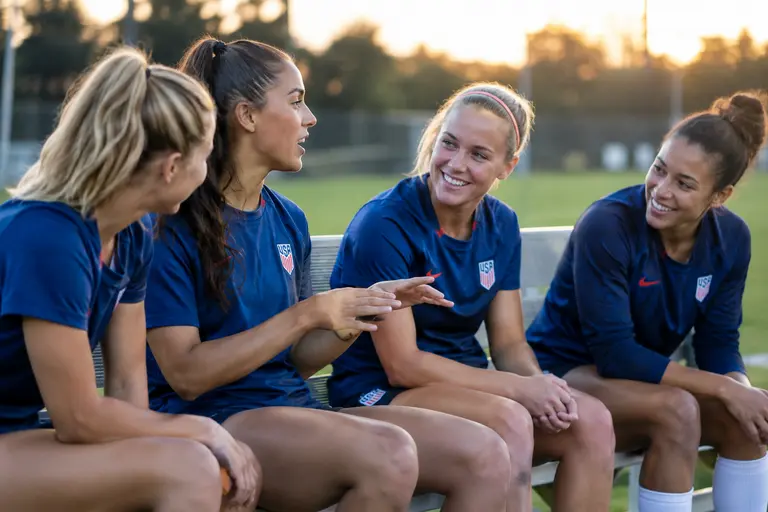
The USWNT held a camp from October 6 to October 13, 2026, at the new Arthur M. Blank U.S. Soccer National Training Center before two friendlies against Spain. Head coach Emma Hayes selected a 26-player roster announced on September 29. The roster included four uncapped players: Jordan Silkowitz, Evelyn Shores, Trinity Byars, and Pietra Tordin. It also included the return of Ashley Sanchez, Naomi Girma, Sam Coffey, and Mallory Swanson.
The match record from that camp was split by result and response. On October 10, Spain defeated the USWNT 2-0 at Audi Field in Washington, D.C. On October 13, the teams drew 2-2 at Subaru Park in Chester, Pennsylvania, with U.S. goals credited in the research to Ashley Sanchez and Mallory Swanson. Those two games supplied different scouting contexts: one defeat without a U.S. goal, then a draw in which two returning attackers were listed among the scorers.
The value of U.S. Soccer Fall Dates in this case is not just the scoreline. The roster construction gave the staff a chance to bring uncapped players into camp while also reintegrating established names. The research does not confirm minutes played or role assignments, so the cleanest assessment is that the camp broadened the player pool on paper and gave the staff two Spain matches for reference.
Why The Spain Dates Carried Weight
Spain offered a high-profile benchmark, but the evidence here remains match-result based. The October 10 loss showed the U.S. did not score in Washington, while the October 13 draw showed a response in Chester. Without shot data, lineup detail, or substitution patterns, any stronger performance claim would go beyond the supplied record.
That restraint is not a weakness in scouting coverage. It is the difference between logging verified signals and filling empty space with assumptions. Camp call-ups, opponent level, match dates, and confirmed goal scorers are enough to create a useful file for future reference. For broader background tools in the same publishing network, Wikiapp can help readers track related sports reference topics.
U.S. Soccer Fall Dates And Scouting Signals
What The Calendar Can Support
Taken as a file, U.S. Soccer Fall Dates showed three layers of evaluation. The USMNT completed four matches from September 26 to October 6 and won all four based on the research. The USWNT completed an October 6-13 camp tied to two Spain friendlies, losing once and drawing once. The youth teams had two World Cup settings: the U-20 women in Poland from September 5-27, and the U-17 women in Morocco from October 17-November 7.
That makes the fall 2026 period useful for scouts because it created multiple comparison points across age groups. Senior results can help frame team-level momentum. USWNT roster choices can identify which players were brought into a high-standard camp. Youth tournament dates can show which prospects were exposed to international competition windows. None of those items, by itself, proves a player’s long-term standing.
Known Limits In The Record
The main caution is the uneven depth of the available information. The men’s senior results are clear. The USWNT Spain results and selected roster notes are clear. The U-20 record includes one confirmed match result and two listed group opponents. The U-17 record includes the tournament window, group opponents, venue, and the October 25 China PR fixture still pending as of October 24, but it does not include the outcomes of the first two U.S. group dates.
That is why U.S. Soccer Fall Dates should be read as a tracking document, not a final grade sheet. The dates establish when and where the evaluation windows occurred. The next layer of scouting would require official lineups, minutes, match reports, and player-specific data. Until those details are confirmed, the strongest analysis stays with what the calendar and results can support.