

The sellout of Athletic Club Premiums at the A’s planned Las Vegas ballpark gives the club an early business signal before the venue’s scheduled February 2028 opening. By October 2026, the team’s most exclusive hospitality space behind home plate had sold out 17 months before first use, according to MLB.com. The result does not settle every question about broader ticket demand, but it does show that the highest-priced inventory moved quickly among a limited group of buyers.
For a franchise relocating to a market with a distinct mix of residents, corporate buyers, tourism traffic, and event-driven spending, the buyer profile matters as much as the sellout itself. The reported figures point to a demand base that was not limited to casino operators, major hospitality groups, or out-of-market collectors. MLB.com reported that roughly 76% of the buyers were Southern Nevada residents and nearly 70% were individuals rather than businesses. Those two figures frame the sellout as a local-market result, not only a corporate hospitality play.
That distinction is useful for sports-business analysis. Premium seating is often treated as a corporate sales category, but the early uptake here suggests the A’s found a consumer tier willing to commit well before the stadium opens. The sample is small by design, yet the timing and local concentration give the club a firmer data point as it continues selling other premium products.
Athletic Club Premiums Demand And Buyer Mix
Athletic Club Premiums As A Limited Product
The Athletic Club was positioned as the most exclusive premium hospitality area at the planned ballpark. The Review-Journal reported that the club includes roughly 300 season ticket memberships and sits behind home plate, making scarcity part of the product structure from the start. Buyers also were required to purchase a personal seat license, a one-time fee tied to the right to a specific seat, according to the Review-Journal.
From a revenue standpoint, that structure matters. A sellout of roughly 300 memberships cannot be read the same way as a full-stadium season-ticket sellout. It is a targeted sale of the rarest club inventory. Still, early movement at the top of the ticket ladder can influence how the team evaluates demand for nearby products, hospitality access, and long-term seat licensing.
The most relevant data point is not just that the club sold out, but who bought it. A 76% Southern Nevada buyer share indicates the product reached residents in the team’s future home market. Nearly 70% individual buyers also suggests the demand was not dominated by company accounts. That does not eliminate the role of business entertainment in the category, but it adds evidence that affluent local fans and local households were central to the first premium push.
Why Local Buyers Change The Reading
Local adoption is especially significant because the A’s are entering a market where MLB will compete with established entertainment options and other major sports properties. Las Vegas has shown it can support high-demand events, but a baseball schedule presents a different test because it relies on repeated attendance across many home dates. Premium commitments made 17 months ahead of opening are therefore useful, though limited, evidence of early market confidence.
The presence of individual buyers also changes the risk profile. Corporate accounts can be sensitive to entertainment budgets, client demand and macro conditions. Individual buyers can be sensitive to household wealth, personal attachment and seat location. A mix led by individuals may help the team build a more fan-centered premium base, but it also means the club will need to maintain perceived value across food, beverage, service, and game-day access once the stadium opens.
Why The Sellout Matters For Stadium Revenue
Premium Seating As An Early Revenue Signal
Premium seat sales are a key part of modern stadium economics because they can generate revenue before a team has sold the broader building. In this case, the Athletic Club Premiums sellout gives the A’s an early read on what the upper end of the market would accept. The reported inclusion of all-inclusive food and beverages, including beer, wine, and spirits, means the product is not only a seat purchase. It is a bundled hospitality package tied to location, exclusivity, and access.
That bundle can help explain why the most exclusive inventory moved first. Behind-home-plate access is often valued by buyers who want proximity to the field and a predictable hospitality setting. For the team, the sale of this inventory can support pricing logic for adjacent club areas, while giving sales staff a concrete reference point when discussing remaining products.
Still, caution is warranted. A sellout of roughly 300 memberships is strong, but it is not a full measure of demand for the entire ballpark. Premium buyers represent a narrower segment than standard season-ticket buyers, families purchasing partial plans, or fans deciding on single games. The sellout is best viewed as an early indicator at the top of the market, not a complete forecast of attendance patterns after February 2028.
What The PSL Requirement Shows
The personal seat license requirement is one of the clearest signs that the A’s treated this product as a long-term asset rather than a simple season-ticket package. PSLs ask buyers to commit capital before annual ticket costs, which tends to narrow the buyer pool. The fact that the club still sold out points to demand among buyers comfortable with a significant upfront structure.
That does not mean every future premium category will move at the same pace. The Athletic Club had the advantage of being the most exclusive space. Scarcity can accelerate decisions because buyers understand there may not be a comparable replacement once the allotment is gone. Other premium areas may require different sales arguments based on price, location, and access.
What Remains Available In The Premium Tier
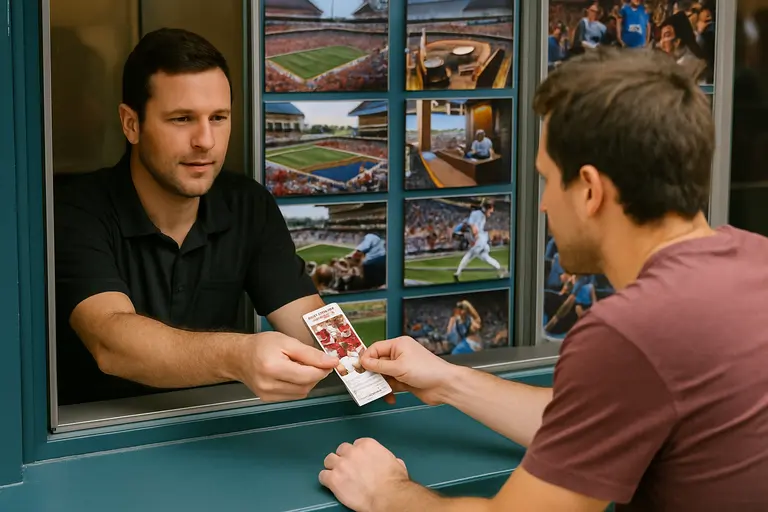
With the top club sold out, attention shifts to the next premium options. The research indicates that Diamond Club became the most exclusive premium option still available after the Athletic Club sellout, with limited space remaining. Dugout Clubs and Legends Lounge seats also remained on sale for buyers seeking premium access at a lower level of exclusivity.
That sequence is common in stadium sales. The rarest and most expensive inventory can sell quickly if the target market is deep enough, then the sales challenge moves to larger categories that must appeal to a wider group. The A’s will need to convert interest across multiple buyer types: local individuals, businesses, hospitality users, and fans who want improved comfort without the highest-tier commitment.
For readers tracking sports-business trends across different markets, a wealth of related insights is presented at Texas Sportsmen. The A’s case is notable because it combines relocation, premium hospitality, and a market known for event spending, but the strongest confirmed signal remains the early sellout of a very limited product.
What The A’s Athletic Club Premiums Sellout Indicates
The confirmed sellout of Athletic Club Premiums indicates that the A’s found immediate demand for their highest-end Las Vegas baseball product. The local share of buyers is the most meaningful part of the report because it supports the idea that Southern Nevada residents were active in the first premium wave. The individual-buyer share also suggests that demand was not simply a business-to-business sales result.
The cautious reading is straightforward: the sellout is a positive premium sales marker, not proof of full-market certainty. It supports the A’s pricing and packaging strategy for a small, scarce, behind-home-plate club. It also gives the franchise a selling point as Diamond Club, Dugout Clubs, and Legends Lounge inventory continue through the sales process.
By October 22, 2026, the most defensible assessment is that Athletic Club Premiums performed strongly against their intended market. The next test is whether that early demand extends beyond the first 300 memberships into broader premium inventory and, later, into the regular ticket base needed to fill an MLB venue across a long home schedule.