

Austin FC recovered from a three-goal deficit to draw 3–3 with San Diego FC at Q2 Stadium on September 26, 2026. Christian Ramírez scored twice late in the second half, preserving Austin’s eight-match unbeaten run and keeping its playoff pursuit alive.
The performance adds substance to the discussion about Ramírez’s importance. Austin’s September 28 update credited him with four goals in his last three matches and a team-leading nine MLS goals this season. His contribution is becoming a recurring part of the team’s attacking production.
The challenge is turning that scoring into more victories. Austin demonstrated that it could recover from a difficult position. A more reliable attack would help the club establish leads earlier and reduce its dependence on late rescues.
How Austin Recovered Against San Diego
After a scoreless first half, San Diego scored three times in 14 minutes. Aníbal Godoy opened the scoring in the 50th minute, a Mikkel Desler own goal followed in the 58th, and Marcus Ingvartsen extended the advantage in the 64th.
Brandon Vazquez started Austin’s recovery with a header in the 73rd minute. Ramírez then scored in the 82nd and 86th minutes, completing the club’s first successful recovery from a three-goal deficit, according to Austin’s official match report.
The sequence provides two different lessons. Austin created enough late opportunities to overturn a substantial disadvantage. It also allowed the match to deteriorate rapidly after reaching halftime level.
Both deserve attention. The comeback demonstrated persistence and scoring ability, but those qualities would be more valuable if Austin could use them to protect an advantage rather than repair the damage.
For supporters at Q2 Stadium, the final stages supplied a memorable result. For the coaching staff, the full match provides a more complicated assessment of progress.
Ramírez’s Scoring Form Provides A Stronger Foundation
One productive match can exaggerate a striker’s apparent influence. Ramírez’s recent output offers a broader reason to take his form seriously.
Scoring across several fixtures suggests that Austin is finding ways to involve him repeatedly. His role as the club’s leading MLS scorer also makes him an important reference point when evaluating how the attack should function during the remaining schedule.
The numbers still require context. A three-match stretch is a small sample, and finishing efficiency can change quickly. Austin should examine how often Ramírez receives the ball in dangerous positions, how much pressure he faces when shooting and whether the team can reproduce the deliveries behind his goals.
The club’s Team of the Matchday announcement confirmed his selection to the weekly bench after the San Diego draw. Recognition reflects the impact of his performance; consistent service will determine how much of that impact Austin can sustain.
The practical objective is to make scoring opportunities easier to repeat. A forward can finish only the chances that reach him. Better movement and accurate passes around the penalty area would give Ramírez a stronger platform than relying on difficult finishes under late pressure.
Several Providers Helped Make The Comeback Possible
Ramírez finished the decisive chances, but Austin’s recovery depended on contributions from several teammates.
Ervin Torres delivered the cross for Vazquez’s header. Jon Bell supplied Ramírez’s first goal after involvement from Desler, while Jon Gallagher provided the feed for the equalizer. Those combinations show why the attack deserves analysis beyond its leading scorer.
Multiple providers can complicate an opponent’s defensive decisions. Restricting one wide player may leave another route available. Following a central forward closely can create space for a supporting runner or a delivery from deeper.
Those possibilities depend on coordination. Players need to recognize when to advance, when to offer a short passing option and when to remain behind the ball. Simply placing more teammates around a striker does not guarantee better chances.
NoticiasBo’s analysis of St. Louis CITY’s attacking depth examines a similar question: how shared attacking responsibility can make a team harder to contain.
Austin’s next step is to reproduce its combinations when the match is level. An attack becomes more dependable when it can create against an organized opponent before urgency forces a change in approach.
Vazquez Adds Another Scoring Option
Vazquez’s goal was his first since returning from an ACL injury, according to Austin’s match report. His contribution matters because Ramírez did not have to begin and finish the recovery alone.
The header gave Austin a foothold in the contest. It also demonstrated the value of having another forward capable of converting service into the penalty area.
That creates choices for the coaching staff. Different opponents may call for different attacking combinations, and substitutions can alter the type of threat Austin presents late in matches.
Field Level Media’s account of the comeback describes Vazquez’s diving header and Ramírez’s subsequent finishes. The variety is useful: Austin found more than one way to attack the space near goal.
The challenge is making those options complementary. Two forwards occupying the same area can simplify a defender’s task. Coordinated runs, different starting positions and well-timed support can create more difficult decisions.
Vazquez’s scoring return expands the discussion about Austin’s attack. His future contribution should be assessed through match involvement and performance rather than assumptions about workload or availability.
Eight Unbeaten Matches Have Produced Three Wins
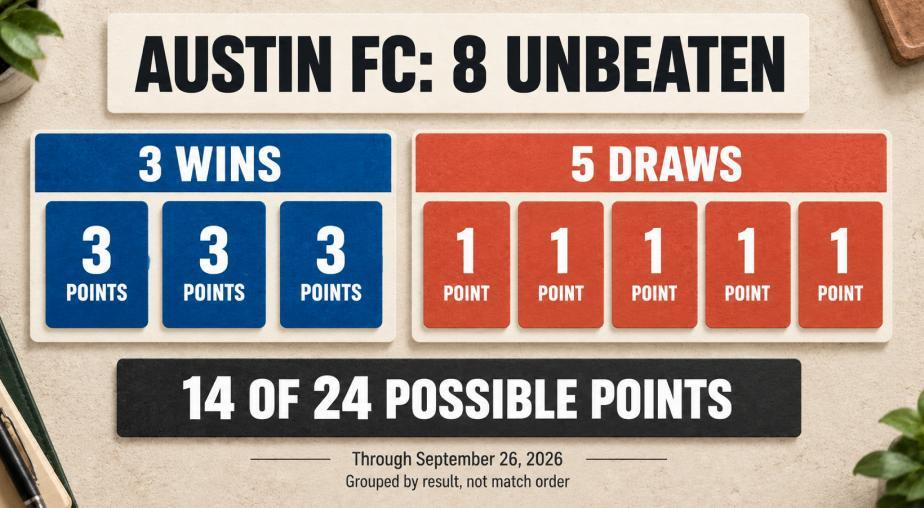
Austin’s unbeaten run contains three victories and five draws, producing 14 points from a possible 24. That record demonstrates sustained competitiveness while explaining why the club still needs to gain ground.
A draw recovered from 3–0 carries obvious value. Across a longer sequence, a team outside the playoff positions also needs results that close the gap more quickly.
The distinction matters when evaluating attacking reliability. An equalizer prevents defeat, while a winning goal adds two points beyond a draw. Austin needs more situations in which its forwards can deliver the latter.
That does not mean the club should abandon defensive discipline to chase every match. An overly aggressive approach can turn a possible point into a loss. The objective is to create enough controlled attacking pressure that victories become more achievable.
After the San Diego result, MLS reported Austin sitting four points outside the Western Conference’s final playoff position with seven regular-season matches remaining. The league’s comeback report places the unbeaten sequence within that continuing qualification challenge.
Ramírez’s form gives Austin a useful asset for the remaining games. The team must convert that asset into a stronger return from close contests.
Defensive Stability Would Make The Goals More Valuable
Austin’s three concessions came during a short second-half spell after San Diego failed to register a shot before halftime. That contrast makes the loss of control an important part of the review.
The analysis should examine the sequence around each goal. Pressure on the ball, defensive coverage, communication and reactions to second balls all influence whether an opponent can create a clear opportunity.
There is an attacking cost to defensive instability. Once Austin fell several goals behind, it had to accept greater risk to recover. More players needed to advance, and each unsuccessful possession increased the urgency.
A stronger defensive platform would allow the forwards to operate under different conditions. One goal could establish an advantage rather than merely reduce a deficit.
The comeback therefore supports a measured assessment. Austin has demonstrated scoring capacity, but its overall reliability depends on how effectively attacking ambition and defensive protection work together.
Nashville Will Test Whether Austin Can Build On The Recovery
Austin’s next scheduled MLS match is against Nashville SC at Q2 Stadium on October 10, with kickoff at 7:30 p.m. Central Time.
The break offers an opportunity to review both the productive combinations and the lapses that preceded them. The most useful signs of improvement would be earlier chances, coordinated support around the forwards and fewer periods in which the team loses control.
Ramírez is giving Austin reasons to trust his finishing. His recent output and the contributions of teammates around him provide a foundation for a more dependable attack.
The next step is to make that production useful before another emergency develops. Austin has shown it can recover a point from a difficult position. Turning its scoring form into victories would give the comeback greater significance in the playoff race.